
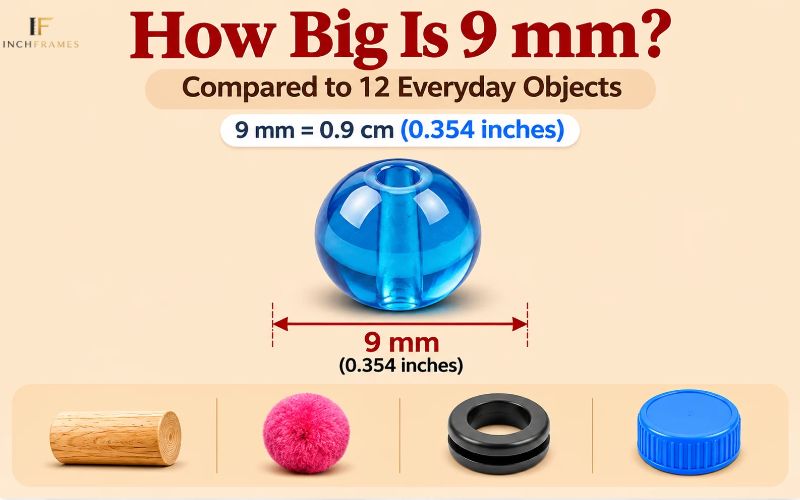
Have you ever wondered how big 9 mm really is? It is a small measurement, but you can see it more easily when you compare it with things you already use. 9 millimeters (mm) is equal to 0.9 centimeters (cm), 0.354 inches, or just over one-third of an inch.
That means 9 mm is smaller than half an inch and about the width of a small button. It is also close to the size of a pea or a small craft bead.
Although 9 mm may sound tiny, this measurement appears in many everyday places. You might come across it when choosing craft supplies, checking a drill bit, buying small hardware, or looking at the thickness of a building material.
In this guide, we will compare 9 mm with 12 familiar objects. You will also learn how to picture this measurement without a ruler and how to check whether something is close to 9 mm.
How Big Is 9 mm, Really?
Nine millimeters is a little less than one centimeter. If you imagine a line drawn across a small button, that gives you a useful idea of its length. The distance is also close to the width of a narrow pencil eraser, depending on the pencil.
Another way to picture it is to look at the edge of a small household item. A 9 mm space is not large enough to fit a typical coin across its face, but it is easy to see when placed next to a larger object. For comparison, 2 cm equals 20 mm, which is more than twice as wide.
You may find this size when working with small screws, craft pieces, and fittings. It is also a useful measurement when checking small gaps or choosing materials for a home project.
9 mm in Real-World Use
Nine millimeters is useful in several everyday tasks. For example, people working on home repairs may come across this measurement when checking small hardware, choosing fittings, or measuring a narrow opening.
It also appears in craft work. Beads, buttons, and other small decorations are often sold by their diameter in millimeters. Knowing what 9 mm looks like can help you choose the right size before placing an order.
You may also see measurements close to 9 mm in building materials. A sheet sold as 9 mm plywood, for example, has a thickness around this size. This is why understanding small measurements can save you from buying something that is too thick or too thin.
Everyday Things That Are 9 mm Big
A measurement of 9 mm can be difficult to picture on its own. The objects below give you some familiar reference points.
Some are designed around this measurement, while others are naturally close to it. Their actual sizes can vary by brand, material, and design, so use them as visual guides rather than exact measuring tools.
| Everyday object | Approximate size |
|---|---|
| Small craft bead | 9 mm |
| Small shirt button | 9 mm |
| Ddrill bit | 9 mm |
| A plywood | 9 mm |
| Small round pea | 9 mm |
| A bolt | 9 mm |
| Small decorative tile spacer | 9 mm |
| Small wooden dowel | 9 mm |
| Round craft pom-pom | 9 mm |
| Small rubber grommet | 9 mm |
| Small plastic cap | 9 mm |
| Small glass bead | 9 mm |
A Small Craft Bead
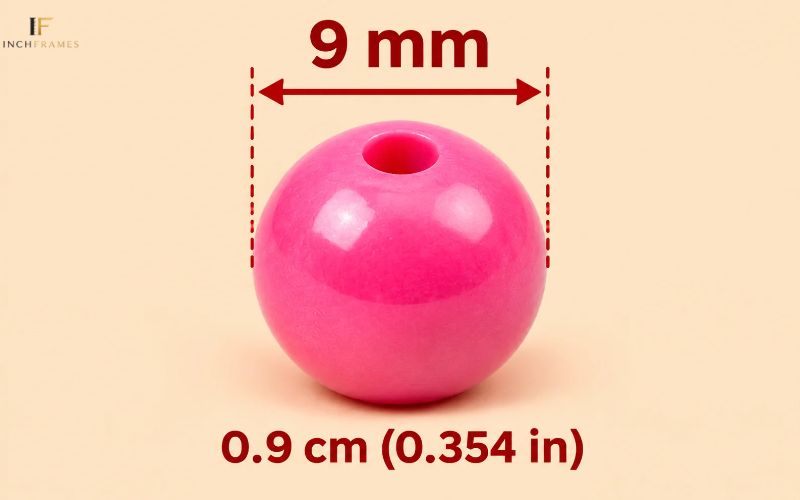
A 9 mm craft bead is one of the easiest ways to understand this measurement. These beads are used for jewellery, bracelets, necklaces, and different handmade decorations.
A bead with a 9 mm diameter measures 9 mm from one side to the other when measured through its centre. It is small enough to fit between your fingertips, but large enough to see clearly.
You can also find beads in different sizes, colours, and materials. Some are made from plastic, while others use glass or wood. When shopping for craft supplies, check the listed diameter because a 6 mm bead looks noticeably smaller than a 9 mm one.
A Small Shirt Button
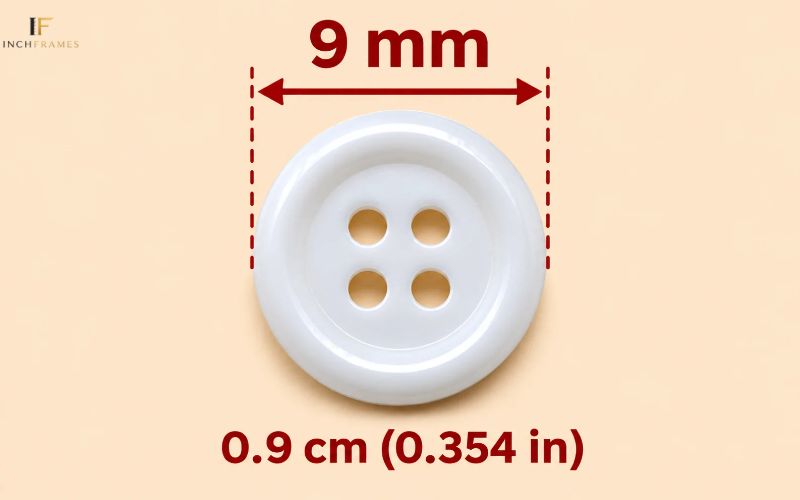
A small shirt button can also give you a useful idea of 9 mm. Some buttons used on shirts, children’s clothing, and lightweight garments measure around this size.
Place the button flat on a table and look at the distance across its widest part. A button with a 9 mm diameter is slightly smaller than a standard centimeter mark on a ruler.
Not every shirt button has the same size. Buttons near collars and cuffs may be smaller than those used on the front of a shirt. Still, a small button is a handy reference when you want to picture a measurement under one centimeter.
Related Post: How Big Is 8 mm? Compared to 11 Everyday Objects
A Drill Bit
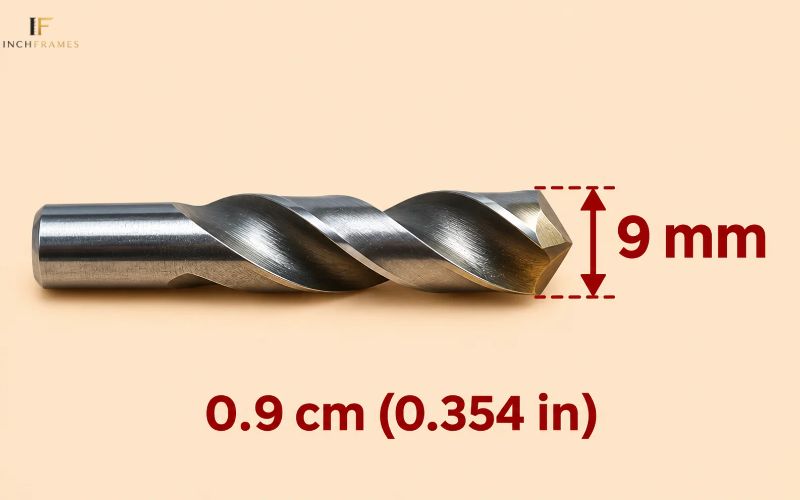
A 3/8-inch drill bit is a useful comparison because its diameter is very close to 9 mm. The exact conversion is 9.525 mm, which makes it just over half a millimeter wider than the measurement we are trying to picture.
Drill bits are commonly used for making holes in wood, metal, and other materials. Their sizes are often printed on the shank, so you can check the measurement before using one.
If you have a 3/8-inch drill bit in your toolbox, look at its cutting end. Its width gives you a practical reference for understanding something slightly larger than 9 mm.
A Sheet of Plywood
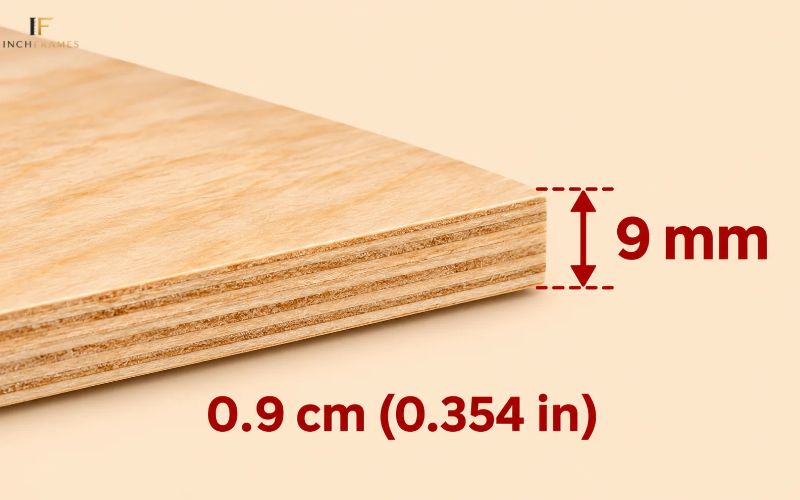
A sheet of plywood labelled 9 mm provides a direct comparison for this measurement. Unlike a round object, this example shows you what 9 mm looks like in terms of thickness.
Plywood is made by joining thin layers of wood together. It is used for furniture, cabinets, shelves, and many home improvement projects.
If you look at the edge of a 9 mm plywood sheet, you can see how thick the material is. This is a useful example because the measurement is printed in the product description when you shop for building supplies. Remember that the stated thickness may differ slightly from the actual measured thickness.
A Small Round Pea
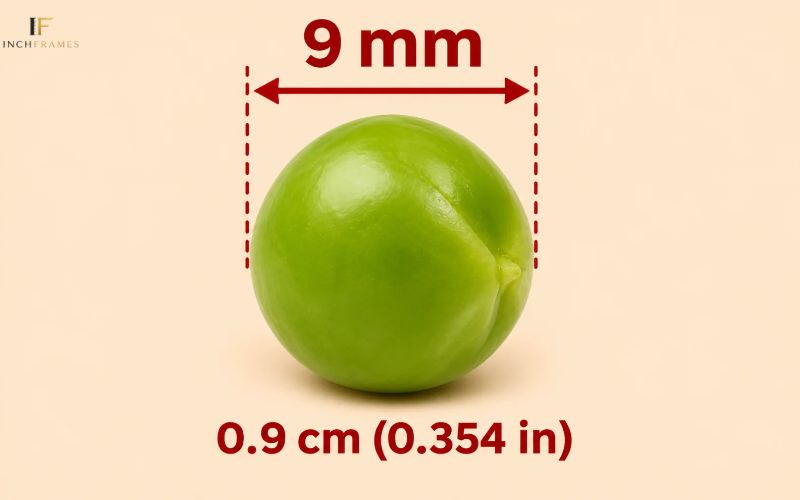
A small round pea can be close to 9 mm across, although peas come in many sizes. Some are smaller, while others grow larger depending on the variety and how mature they are.
To picture 9 mm, look at a small pea before it is cooked. Its round shape makes it easy to compare with other small objects.
A pea is also a familiar item found in kitchens, grocery shops, and gardens. You do not need special equipment to understand the comparison. Just remember that this is an estimate, not a fixed measurement. If you measure several peas, you will probably find that their sizes are not exactly the same.
Related Post: How Big Is 7 mm? Compared to 10 Everyday Objects
A Bolt
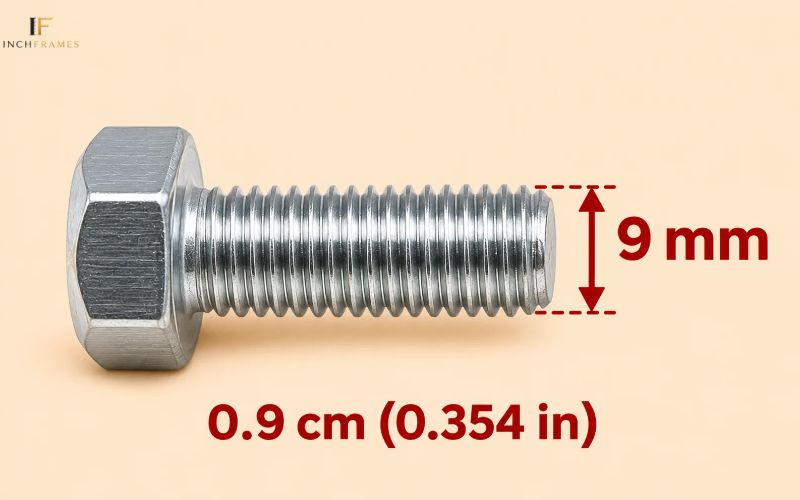
A bolt with a 3/8-inch shank has a diameter of approximately 9.525 mm. This makes it a close reference for 9 mm, although it is slightly wider.
Bolts are used to join pieces of wood, metal, and other materials. You may find them in furniture, outdoor equipment, machinery, and home repair kits.
The shank is the main body of the bolt, not the head or the threaded end’s outside width if the bolt has a different design. Looking at its diameter helps you understand how a measurement around 9 mm appears in everyday hardware. When buying bolts, always check the listed size rather than relying on appearance alone.
A Small Decorative Tile Spacer
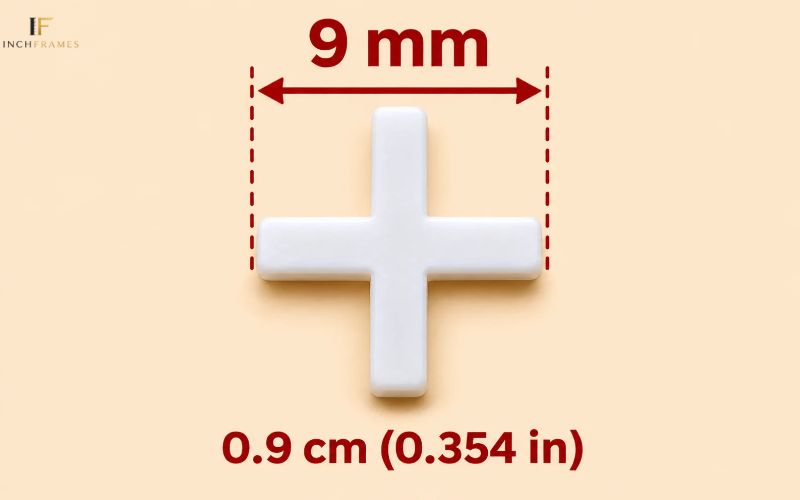
Tile spacers help keep gaps even when tiles are placed on a floor or wall. They come in different widths, and some specialised spacers are available in sizes around 9 mm.
The width of the spacer is the part that gives you the comparison. It helps show how much space can sit between two surfaces.
You might see tile spacers while visiting a hardware shop or watching someone fit new bathroom or kitchen tiles. They are usually made from plastic and are easy to handle. A 9 mm spacer is wider than the thin spacers commonly used for small tile gaps, so check the size before using one for a project.
A Small Wooden Dowel
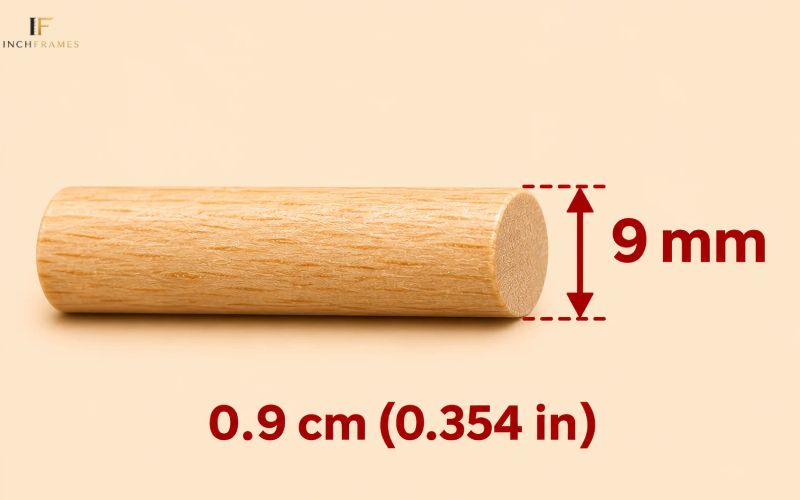
A wooden dowel with a diameter of 9 mm is another helpful example. Dowels are round wooden rods used in furniture making, crafts, and simple repair work.
For instance, a dowel can help join two pieces of wood or support a small handmade project. Its round shape makes the diameter easy to understand.
Imagine looking directly at the cut end of a 9 mm dowel. The circular face would measure 9 mm from one edge to the opposite edge through the centre. You can find wooden dowels in craft shops and hardware stores. They are sold in different thicknesses, so always check the product label before choosing one.
A Small Craft Pom-Pom
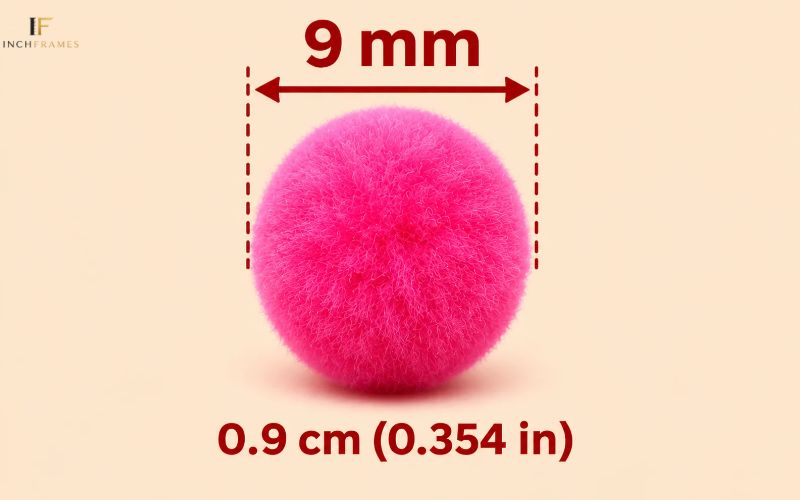
Small craft pom-poms are soft, round decorations used in school projects, greeting cards, toys, and handmade items. Some craft pom-poms measure around 9 mm across.
Their fluffy shape makes them look a little larger than a solid object of the same size. If you gently press one, you may notice that its width changes because the fibres move.
This makes a pom-pom a less exact reference than a wooden bead or metal fitting. However, it still helps you picture how small 9 mm is.
If you are buying pom-poms for a project, check whether the seller lists the diameter. A 9 mm pom-pom is a tiny decoration compared with the larger ones used for toys.
Related Post: How Big Is 3 mm? Compared to 12 Everyday Objects
A Small Rubber Grommet
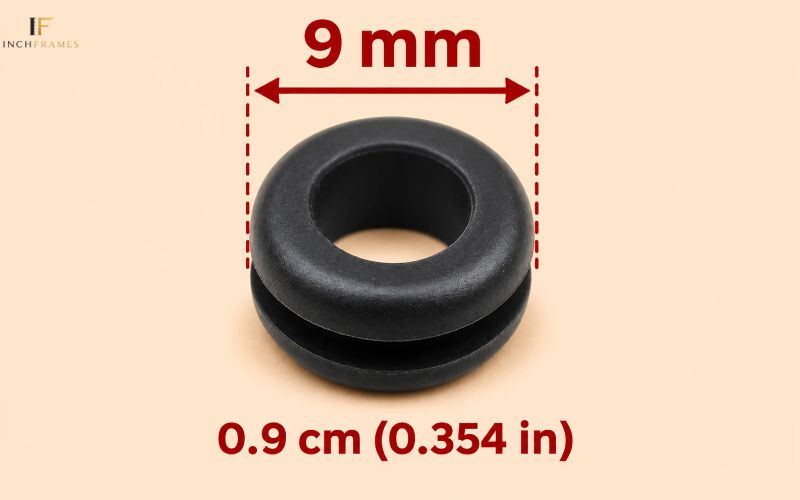
A rubber grommet is a small ring that helps protect a wire or cable when it passes through a hole. Some grommets have an opening close to 9 mm, depending on the product.
You may find them in electrical equipment, furniture, vehicle parts, and home repair supplies. Their main job is to protect wires from sharp edges and reduce rubbing.
For this comparison, focus on the opening or the outer diameter, depending on which part is listed as 9 mm. These are two different measurements. A grommet is a useful example because it shows how millimeters are used when small parts need to fit properly.
A Small Plastic Cap
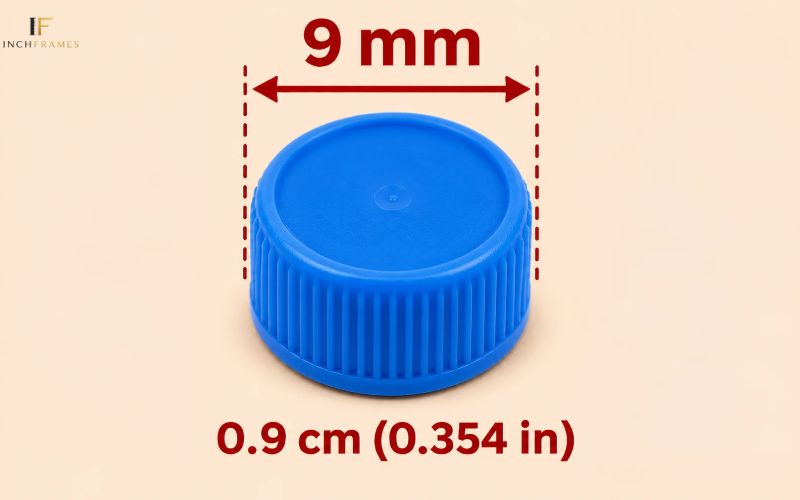
Small plastic caps are used to cover the ends of tubes, rods, bottles, and other items. Some have a diameter around 9 mm, making them another possible comparison.
You might see these caps on small containers, craft supplies, or protective covers for narrow pieces of equipment.
The size depends on the cap’s design. Some measurements describe the outside diameter, while others describe the opening inside. This difference matters when you need a cap to fit a particular object.
For a simple visual comparison, imagine a small round cap measuring 9 mm across its top. It is a compact object that can easily rest on your fingertip.
A Small Glass Bead
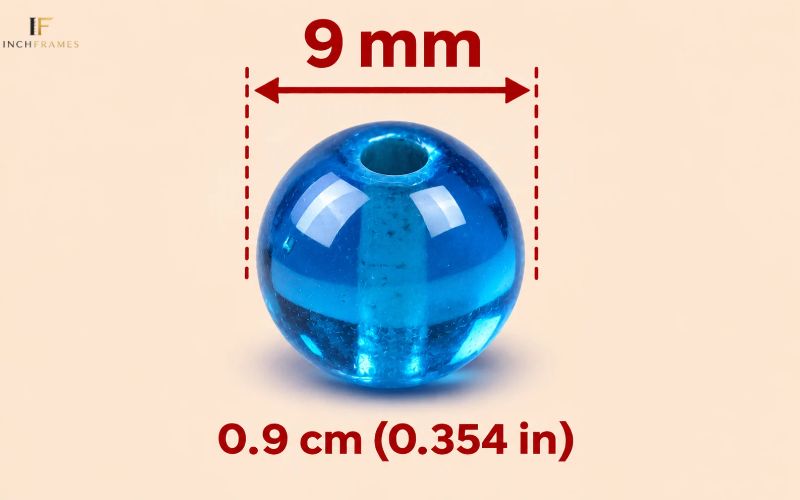
A small glass bead measuring 9 mm across is another way to picture this size. Glass beads are used in jewellery, home decorations, handmade ornaments, and craft projects.
Unlike a soft pom-pom, a glass bead keeps its shape. This makes it easier to compare with a ruler or another measuring tool.
A 9 mm bead is large enough to see clearly, but it is still small enough to fit comfortably between your fingers. Some beads are perfectly round, while others have flattened sides or unusual shapes.
If you have a collection of craft beads, check their sizes. You may be surprised by how much difference a few millimeters can make.
How to Measure 9 mm Without a Ruler
You can estimate 9 mm even if you do not have a ruler nearby. These simple methods can help:
- Use a centimeter mark: Nine millimeters is just 1 mm shorter than 1 cm. If you have a measuring tape with centimeter marks, use the space between zero and the first centimeter mark as your guide.
- Use a 3/8-inch reference: A 3/8-inch drill bit is 9.525 mm wide, making it slightly larger than 9 mm.
- Compare with your fingertip: Look at the width of a small area of your fingertip. It may help you picture the size, but finger widths vary from person to person.
- Use a phone measurement tool: Some phones support measuring apps or camera-based measuring tools. Their results are estimates, so check important measurements with a proper ruler or caliper.
Related Post: How Long Is 27 Inches? Compared to 14 Everyday Objects
Frequently Asked Questions
How big is 9 mm in inches?
Nine millimeters is approximately 0.354 inches. This is a little more than one-third of an inch but smaller than half an inch.
Is 9 mm the same as 1 cm?
No. One centimeter equals 10 mm, while 9 mm equals 0.9 cm. So, 9 mm is just 1 mm shorter than 1 cm.
Is 9 mm bigger than half an inch?
No. Half an inch equals 12.7 mm, which is around 4 mm more than 9 mm. Therefore, 9 mm is smaller than half an inch.
What everyday object is about 9 mm wide?
A small craft bead or button can measure around 9 mm across. A small pea may also be close, but natural objects vary in size.
How many millimeters are in 1 inch?
There are exactly 25.4 millimeters in 1 inch. This means 9 mm is slightly more than one-third of an inch.
How can I measure 9 mm at home?
Use a metric ruler or measuring tape with millimeter markings. Find the space between the zero mark and the 9 mm mark. A digital caliper is another good option when you need a more precise result.
Is 9 mm considered a small measurement?
Yes, 9 mm is a small measurement because it is less than 1 cm. It is commonly used to describe small objects, fittings, craft materials, and the thickness of certain products.
How many centimeters are in 9 mm?
Nine millimeters equals 0.9 centimeters. You can convert millimeters to centimeters by dividing the millimeter measurement by 10.
Final Remarks
Nine millimeters may be a small distance, but it is easier to picture when you compare it with familiar things. A small craft bead, shirt button, or 3/8-inch drill bit can help you understand how this measurement looks in real life.
Remember that 9 mm equals 0.9 cm and approximately 0.354 inches. It is just 1 mm shorter than a full centimeter.
If you are measuring something for a home repair, craft project, or online purchase, do not rely on a visual estimate alone. Use a ruler or caliper to check the exact size. A quick measurement can save you from choosing the wrong item.
