
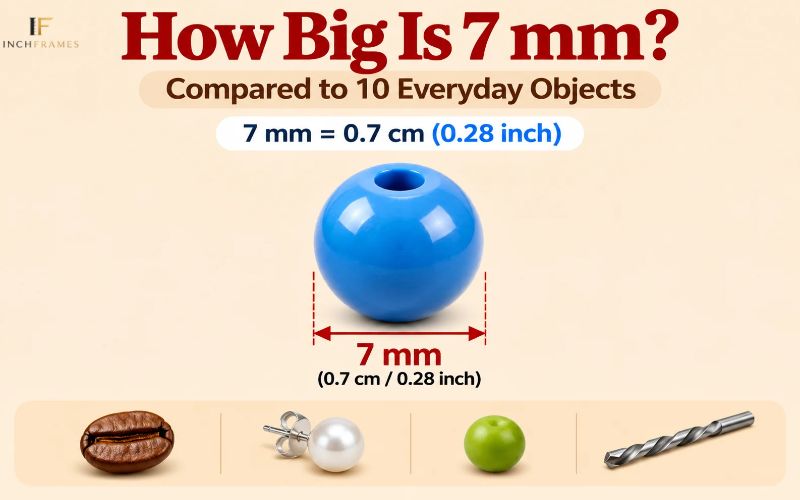
Seven millimeters is a very small measurement, but it is bigger than you might think. 7 mm equals 0.7 centimetres or approximately 0.28 inches. It is a little shorter than one-third of an inch, making it easy to overlook until you compare it with something familiar.
You might come across this measurement when checking a small screw, choosing a knitting needle, buying craft supplies, or looking at the thickness of a material. It can also help when you need to judge whether a small part will fit into a space.
The tricky part is imagining seven millimeters without a ruler. A number on paper does not always tell you much about real size.
That’s why this guide uses 10 everyday objects and practical examples to help you picture the measurement. By the end, you should have a much clearer idea of how big 7 mm really is and how to estimate it when you need to.
How Long Is 7 Millimeters, Really?
Seven millimeters measures 0.7 centimetres. If you prefer inches, it is approximately 0.276 inches, which is just under 0.28 inches. You can picture it as slightly less than three-tenths of an inch.
Although the measurement is small, it can make a noticeable difference when two parts need to fit together. For example, a gap of 7 mm between two surfaces is wide enough to see clearly, but it is still much narrower than a typical finger.
You may encounter this size when working with small hardware, craft materials, or household fittings. It is also useful to understand the difference between 7 mm and 1 cm. The gap between them is only 3 mm, but that difference can matter when measuring a tight space.
7 mm in Real-World Use
Seven millimeters appears in several small but useful products. In knitting, for example, a 7 mm needle has a shaft that measures exactly seven millimeters across. A similar measurement is used for crochet hooks, where the size affects how large the loops in your work will be.
You may also see 7 mm marked on a drill bit. This tells you the diameter of the hole the bit is designed to make, although the actual hole can vary slightly depending on the material and drilling method.
These examples show why a small measurement deserves attention. A difference of just 1 mm or 2 mm can affect how a part fits or how a craft project turns out.
10 Everyday Things That Are About 7 mm
The easiest way to understand a small measurement is to compare it with things you can hold or see. The following examples include objects with a width, thickness, or diameter close to 7 mm.
Some are exact measurements, while others are everyday estimates. Remember that natural objects and manufactured products can vary slightly.
| Everyday object | Approximate measurement |
|---|---|
| Wooden pencil width | 7 mm |
| Four stacked US quarters | 7 mm thick |
| Green pea diameter | Around 7 mm |
| Drill bit | 7 mm wide |
| Knitting needle | 7 mm diameter |
| Crochet hook | 7 mm diameter |
| Small pearl stud earring | 6–8 mm wide |
| Small craft bead | 7 mm wide |
| Roasted coffee bean | 7 mm long |
| Stack of 70 paper sheets | 7 mm thick |
Wooden Pencil Width
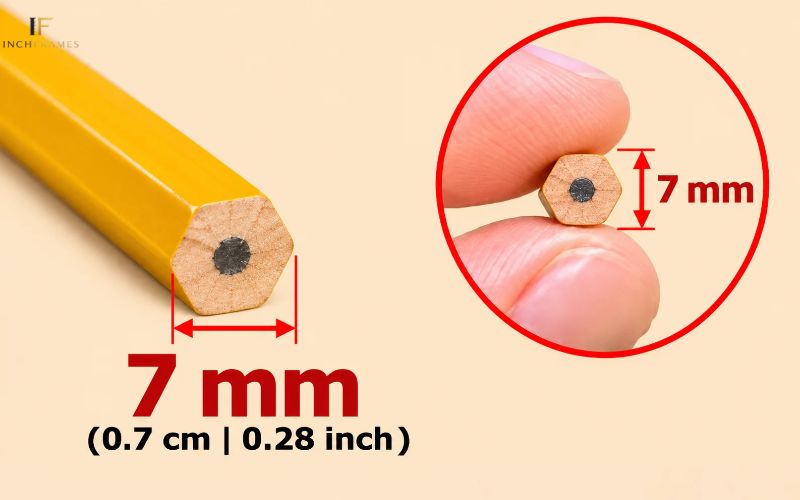
A standard wooden pencil is one of the easiest objects to use when imagining 7 mm. Many ordinary hexagonal pencils measure roughly 7 mm across their flat sides, although pencil sizes differ between brands and styles.
Pick up a regular writing pencil and look at its body rather than its sharpened tip. The width of the wooden barrel gives you a useful visual reference.
You probably use pencils at school, at home, or in an office. They are familiar enough that you can remember their size without needing to carry one around. Most people are surprised by how small seven millimeters looks when they first compare it with a pencil.
Four Stacked US Quarters
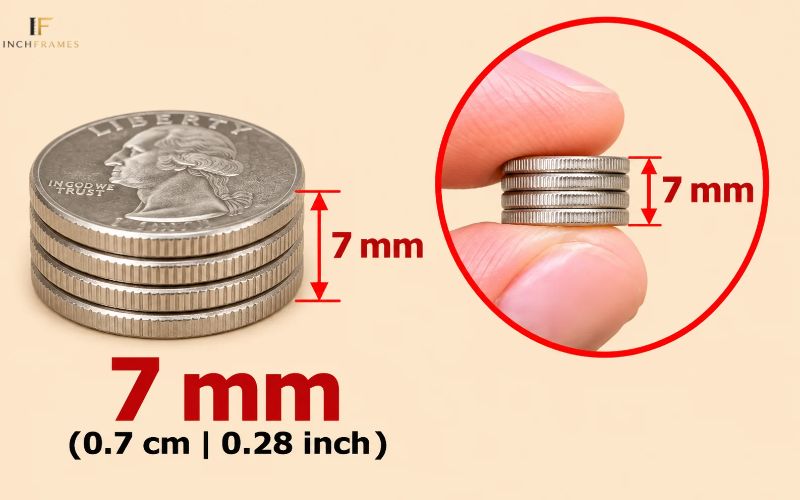
Here is a useful comparison if you have access to US coins. One US quarter is approximately 1.75 mm thick. When you stack four quarters directly on top of each other, their combined thickness is 7 mm.
This gives you a physical example that you can hold between your fingers. Look at the edge of the stack rather than the large circular faces. That narrow side represents the measurement.
You may not have US quarters at home, especially if you live outside the United States. However, the example is helpful because the coin thickness is a defined measurement, not just a guess based on appearance.
Related Post: How Big Is 6 mm? Compared to 12 Everyday Objects
A Green Pea
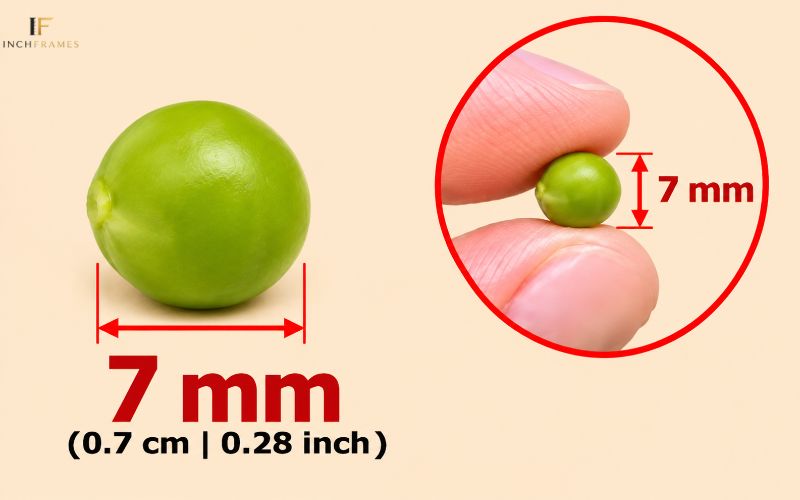
A small green pea can give you another simple idea of how big 7 mm is. Many peas measure around this size across, although their diameter changes depending on the variety and how mature they are.
Take one pea from a fresh pod and look at its round shape. Its width is a useful reminder of how much space seven millimeters takes up.
You can also place the pea beside a ruler to see how close it comes to the 7 mm mark. This is a handy example for children learning measurements because peas are easy to recognise and handle.
Just remember that not every pea will be exactly seven millimeters. Some will be smaller, while others will be noticeably larger.
Drill Bit
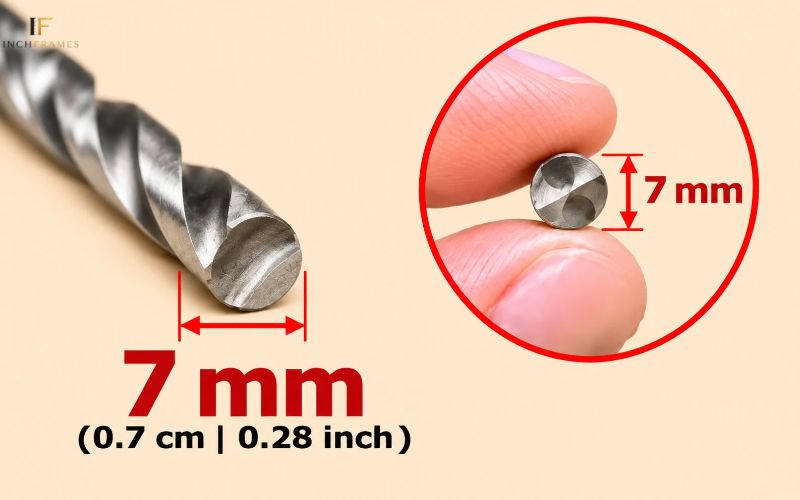
A drill bit marked 7 mm is an exact example of this measurement. Its cutting diameter is designed to be seven millimeters, making it a useful reference when you are looking at small hardware tools.
You can find drill bits in sets containing several different sizes. A 7 mm bit sits between smaller and larger options, so checking the printed size helps you choose the right one.
This measurement matters when making holes for fittings, screws, and other small parts. Choosing the wrong bit can leave a hole that is too tight or too loose.
Unlike a natural object, a properly made 7 mm drill bit is intended to follow a specific size. That makes it one of the better examples for understanding the exact measurement.
Knitting Needle
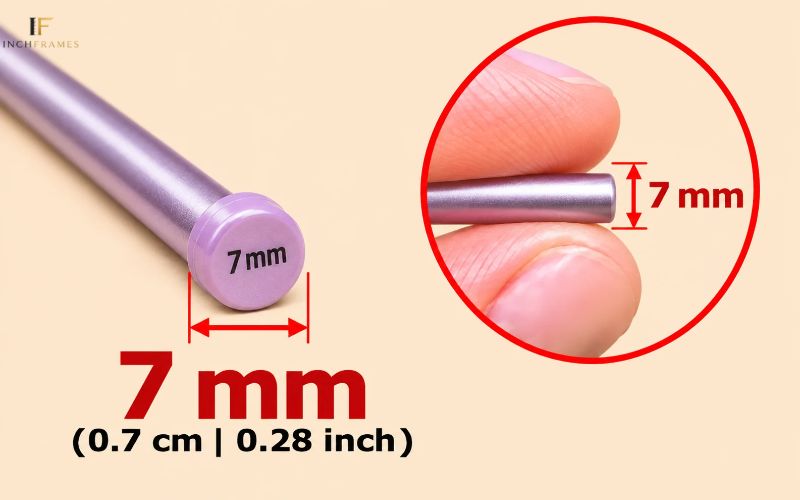
A 7 mm knitting needle has a shaft that measures seven millimeters in diameter. This means the width of the round needle is the same as the measurement you are trying to picture.
Knitting needles come in different thicknesses because the needle size affects the stitches and the finished fabric. A thicker needle generally creates larger loops than a thinner one when you use the same yarn and knitting method.
You may see metric measurements printed on knitting needle packaging. The Craft Yarn Council includes 7 mm in its standard knitting needle size chart. It also advises using the millimeter measurement because number and letter labels can differ between manufacturers. Welcome to the Craft Yarn Council
If you have a needle at home, its round shaft makes a useful example of seven millimeters.
Related Post: How Big Is 5 mm? Compared to 13 Everyday Objects
Crochet Hook
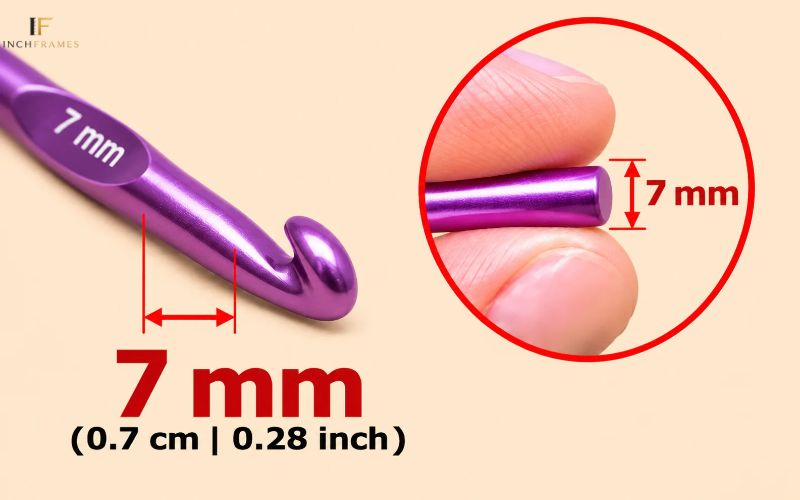
A crochet hook is another craft item that can help you picture this measurement. A hook labelled 7 mm has a shaft diameter of seven millimeters.
Unlike a knitting needle, a crochet hook has a curved end that catches and pulls yarn through loops. The thickness of its shaft helps determine the size of the stitches you make.
You might use this size when working with thicker yarn for blankets, scarves, or other handmade projects. Check the measurement printed on the handle or packaging before buying one, since hook numbers can be confusing.
The Craft Yarn Council lists 7 mm as a metric crochet hook size. This makes it a useful real-world example rather than an estimated comparison. Welcome to the Craft Yarn Council
A Small Pearl Stud Earring
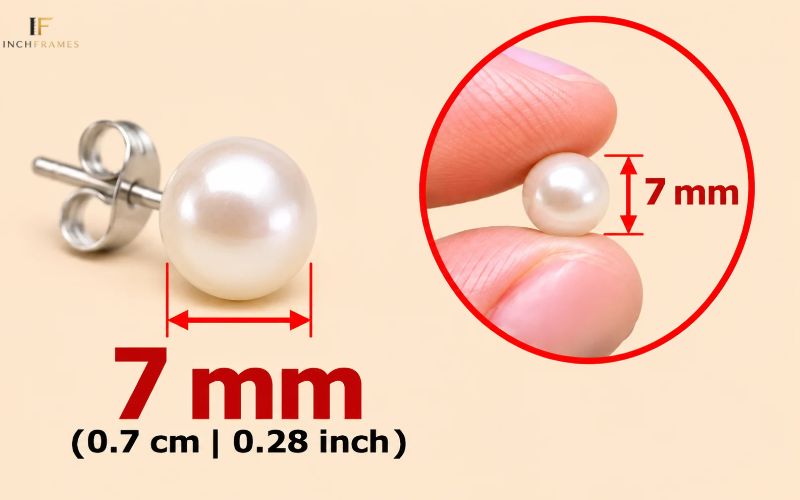
A small pearl stud earring can be close to seven millimeters across. Pearl studs are sold in different sizes, and 6 mm, 7 mm, and 8 mm are common options in jewellery shops.
Imagine a simple round pearl sitting on an earlobe. Its visible width can give you a good idea of how large seven millimeters looks.
This is a useful comparison when shopping online because jewellery listings often show pearl sizes in millimeters. A 7 mm pearl is small enough for a simple everyday look but large enough to be clearly visible.
Be aware that the size refers to the pearl itself, not the entire earring post or backing. Always check the product description when comparing different designs.
A Small Craft Bead
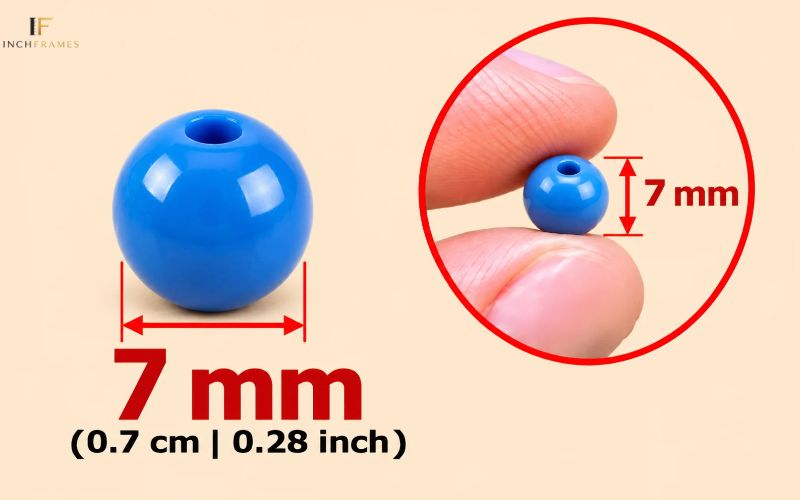
Small craft beads are another way to understand seven millimeters. Many bead designs are sold in a range of diameters, including 7 mm options.
A round bead measuring seven millimeters across is about the same width as the measurement in this guide. You can find beads like these in jewellery-making kits, children’s craft sets, and decorative projects.
Look at the hole running through the centre of the bead. The outside diameter is the measurement to compare, not the size of that tiny opening.
When shopping for beads, check whether the seller gives the diameter in millimeters. A bead that measures 6 mm may look almost the same in a photograph, but the difference becomes easier to see when you hold both sizes together.
A Roasted Coffee Bea
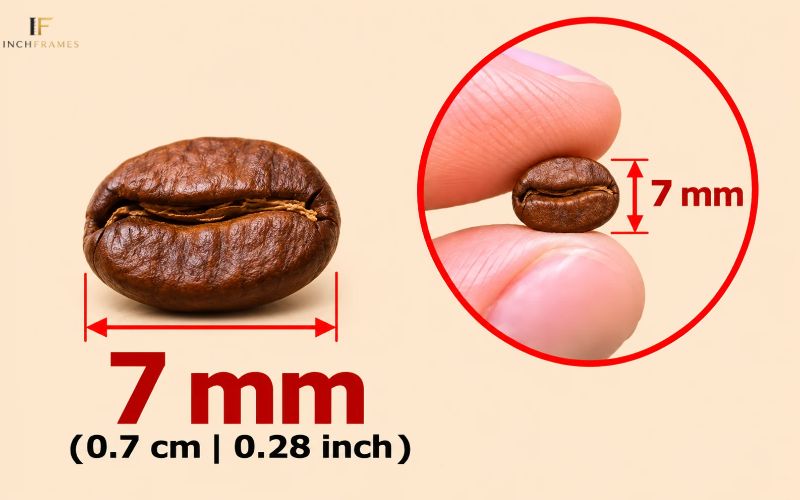
A roasted coffee bean can be a useful natural comparison for a measurement close to seven millimeters. Some smaller beans measure around 7–9 mm along their shorter dimension, although their length and width vary with the coffee variety and roasting process.
Take a single bean from your coffee jar and look at its shape. It is usually oval, with a small groove running down the middle. That groove makes it easy to recognise.
Coffee beans are not manufactured to a fixed size, so you should treat this as an approximate reference rather than an exact measuring tool.
You can find them in most kitchens where people make fresh coffee. Their familiar shape makes it easier to picture a small measurement without thinking about technical tools.
Related Post: How Long Is 12 cm? Compared to 12 Everyday Objects
A Stack of 70 Paper Sheets
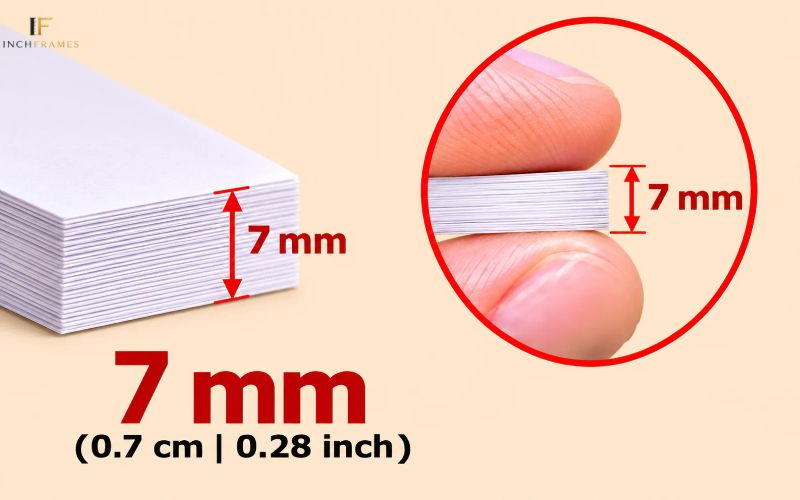
A stack of paper can help you understand seven millimeters from a different angle. If each sheet is approximately 0.1 mm thick, 70 sheets placed together would measure around 7 mm.
This is an estimate because paper thickness changes with its weight, finish, and manufacturer. Ordinary printer paper is often close to this thickness, but not every sheet measures exactly 0.1 mm.
You can try this comparison with paper from your home printer. Make a neat stack, press the sheets together gently, and look at the side edge.
It is a good way to understand thickness rather than width. You are seeing how several very thin layers combine to create a larger measurement.
How to Measure 7 mm Without a Ruler
You do not always need a ruler to get a rough idea of seven millimeters. A few simple tricks can help you estimate this small distance.
- Use a familiar pencil: Look at the width of a standard wooden pencil. Many are close to 7 mm across, giving you a handy visual reference.
- Use a coin stack: If you have US quarters, stack four together. Their combined thickness is approximately 7 mm.
- Use a marked knitting needle: A 7 mm knitting needle provides a direct example. You can compare its round shaft with another small object.
- Fold a piece of paper: Fold a sheet several times and compare the resulting layers with a measured 7 mm reference. This is only a rough method because folds and paper thickness vary.
These tricks are useful for everyday estimates, but use a proper measuring tool when accuracy matters.
Why Does a Difference of 1 mm Matter?
You might think that one millimeter is too small to make much difference. However, it can matter when you are working with objects that have to fit together.
For example, a 7 mm opening is not the same as an 8 mm opening. That extra millimeter can affect whether a small fitting passes through comfortably. The same applies when choosing craft supplies or checking the size of a replacement part.
Here is another useful comparison: 7 mm is 0.3 mm shorter than 7.3 mm, but it is 3 mm shorter than 1 cm. These differences are easy to overlook when shopping online.
If a product listing gives an exact measurement, check it before ordering. A photograph can make two different sizes look almost identical.
Related Post: How Long Is 2 Inches? Compared to 13 Everyday Objects
Frequently Asked Questions
How big is 7 mm in inches?
Seven millimeters is approximately 0.2756 inches, usually rounded to 0.28 inches. It is slightly longer than one-quarter of an inch, which measures 6.35 mm.
Is 7 mm the same as 1 cm?
No. One centimetre equals 10 millimeters, so 7 mm is 3 mm shorter than 1 cm. It measures 0.7 cm.
Is 7 mm bigger than 1/4 inch?
Yes. One-quarter of an inch equals 6.35 mm. Therefore, 7 mm is 0.65 mm longer than one-quarter of an inch.
What common object is about 7 mm wide?
The body of many standard wooden pencils is approximately 7 mm wide. A small green pea or a 7 mm pearl stud can also provide a useful comparison, although their sizes vary.
How many millimeters are in 7 centimetres?
Seven centimetres equals 70 millimeters. To convert centimetres into millimeters, multiply the centimetre measurement by 10.
Can I measure 7 mm with my fingers?
You can estimate it, but your fingers are not precise measuring tools. Finger sizes vary from person to person, so use a ruler or a known 7 mm object if you need a reliable measurement.
Is 7 mm considered a small measurement?
Yes. Seven millimeters is less than one centimetre and a little over one-quarter of an inch. It is commonly used to describe small parts, craft tools, jewellery, and narrow spaces.
How do I write seven millimeters correctly?
The standard short form is 7 mm. Leave a small space between the number and the unit, and use lowercase letters for mm.
Final Remarks
Seven millimeters may seem like a tiny distance, but it becomes much easier to understand when you compare it with familiar objects. Think about the width of a wooden pencil, a small pearl earring, or the thickness of four stacked US quarters.
Remember these basic conversions: 7 mm = 0.7 cm = approximately 0.28 inches.
If you regularly work with small measurements, keep a metric ruler nearby. It makes checking sizes much easier, especially when buying craft supplies, choosing hardware, or measuring something that needs to fit correctly. A quick comparison is helpful, but an actual measurement is always the better choice when precision counts.
