
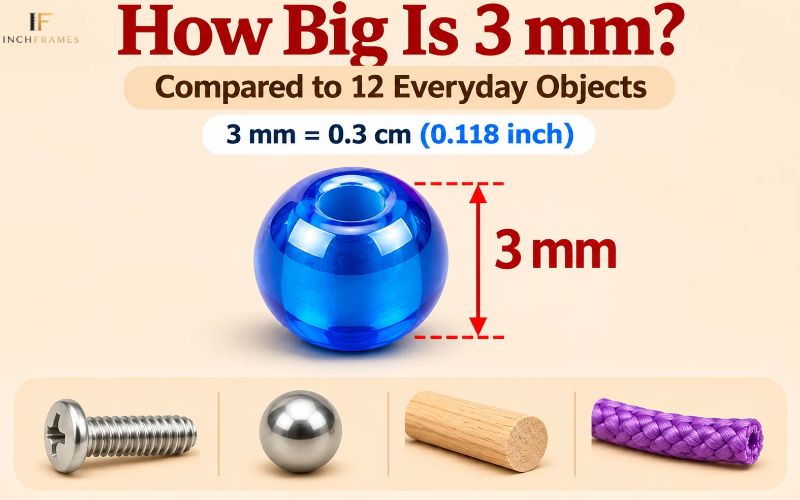
3 millimetres (mm) is a very small measurement. It is equal to 0.3 centimetres, 0.118 inches, or just under one-eighth of an inch. To picture it, imagine a tiny gap between two objects or a thin layer of material. That gives you a better idea of how little space 3 mm takes up.
Although it may not look like much on a ruler, 3 mm can make a real difference when you are choosing materials, working on a small craft project, or checking the size of a tiny part.
You can also understand this measurement by looking at familiar things around you. For example, two US pennies stacked together have a combined thickness of about 3 mm. That is a handy way to picture the size without carrying a ruler.
In this guide, we will compare 3 mm with 12 everyday items and materials. You will also learn how to estimate this small distance without a measuring tool.
How Big Is 3 Millimetres, Really?
Three millimetres is equal to three-tenths of a centimetre. If you look at a standard metric ruler, it is the distance covered by three small millimetre marks. It is also slightly less than one-eighth of an inch.
This measurement is small enough to fit into the thickness of many thin materials. For example, a 3 mm sheet of craft wood feels slim when you hold it, but it is still thick enough to handle without feeling like ordinary paper.
Think about the small spaces around a door hinge or the thickness of a thin piece of craft material. These examples help you understand why even a few millimetres can matter.
You might not notice a difference of 3 mm when looking at a large room, but when working with small parts, that little distance can affect whether something fits properly.
3 mm in Real-World Use
Three millimetres is a useful size in many small building, repair, and craft projects. You may come across it when buying thin plywood, selecting a drill bit, or choosing a small piece of rubber for a repair.
It also matters when fitting small parts together. For example, a hole that is 3 mm wide will not comfortably fit a part that is slightly wider. Even a small difference can affect how well the pieces work together.
In craft work, thin materials around this thickness are useful for making models, decorations, and small shapes. You may also see 3 mm measurements in jewellery supplies and small hardware.
The main thing to remember is that 3 mm can describe thickness, width, or diameter, depending on the object.
Everyday Things That Are 3 mm in Size
There are several ways to picture 3 mm using objects and materials you may see at home, in a workshop, or in a craft shop.
The examples below show different objects with a dimension close to or exactly 3 mm. Some are standard manufactured sizes, while others are useful physical comparisons.Table of 12 Everyday Objects That Are 3 mm
| Everyday Object | Measurement |
|---|---|
| Two US Pennies Stacked Together | 3 mm thick |
| Drill Bit | 3 mm diameter |
| Hex Key | 3 mm wide |
| Plywood Sheet | 3 mm thick |
| Acrylic Sheet | 3 mm thick |
| M3 Machine Screw | 3 mm diameter |
| Small Ball Bearing | 3 mm diameter |
| Wooden Dowel | 3 mm diameter |
| Glass Seed Bead | 3 mm diameter |
| Knitting Needle | 3 mm diameter |
| Picture-Frame Glass Pane | 3 mm thick |
| Craft Cord | 3 mm diameter |
Two US Pennies Stacked Together
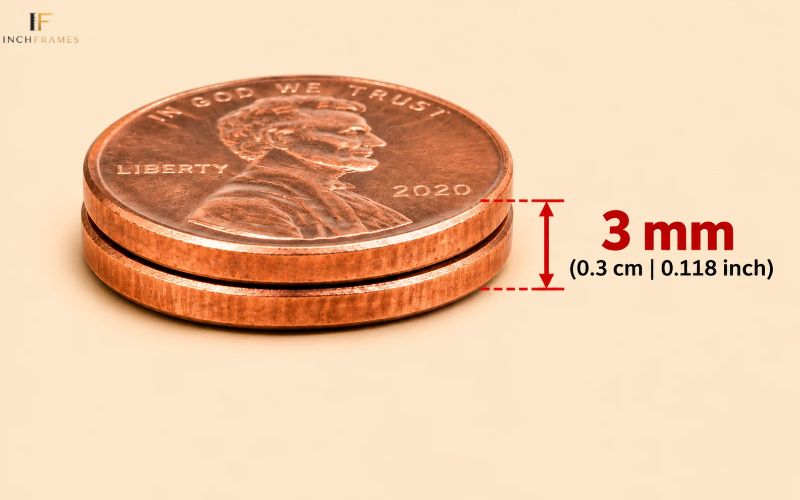
Two US pennies stacked on top of each other are one of the easiest ways to picture 3 mm. A standard US penny is about 1.52 mm thick. When you place two pennies together, their combined thickness is approximately 3.04 mm. That is almost exactly the measurement we are trying to understand.
You can try this comparison at home if you have two pennies. Place them flat on a table and stack one directly on top of the other. Look at the side of the stack rather than the face of the coins. The height gives you a useful visual reference.
Most people find this comparison easier than trying to imagine three tiny millimetre spaces on a ruler. It also gives you a physical object you can hold and compare with other small items.
A Drill Bit
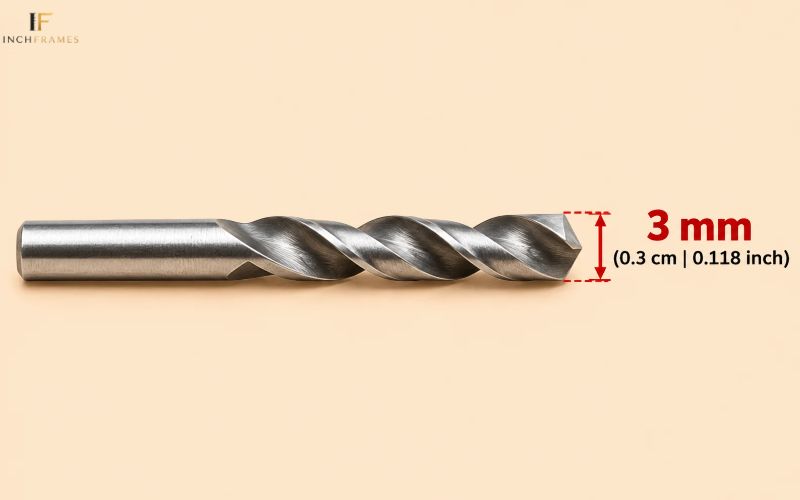
A 3 mm drill bit is another practical example. Its cutting end has a diameter of 3 mm, which means the width across its round tip matches the measurement.
You may find this size in a household drill-bit set. It is used for making small holes in suitable materials, such as wood, plastic, and some metals, depending on the bit type.
To picture its size, look at the round cutting end rather than the full length of the drill bit. The length of the tool can vary, but the cutting diameter remains 3 mm.
If you have a set of drill bits, place the 3 mm bit beside a ruler. You will see how narrow its tip is. It is a good example of how a small measurement can have a specific purpose in everyday repair work.
Related Post: How Big Is 2 mm? Compared to 13 Everyday Objects
A Hex Key
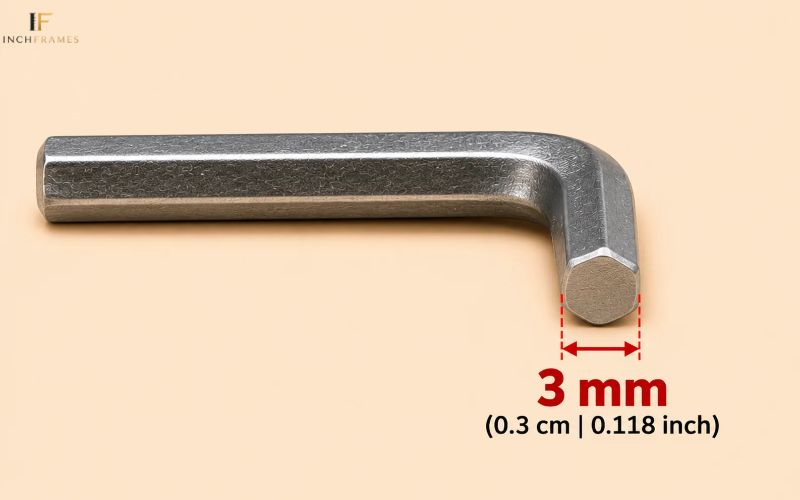
A 3 mm hex key, often called an Allen key, gives you another useful comparison. It is a small L-shaped metal tool used to tighten or loosen screws with hexagonal sockets.
The 3 mm measurement refers to the distance across the flat sides of its hexagonal shape. It does not describe the full length of the tool.
You may come across this type of key when assembling furniture, adjusting small fittings, or repairing household items. Many furniture kits include different hex keys because screws come in different sizes.
Look closely at the short end of a 3 mm hex key. Its width is surprisingly small. This makes it a helpful reference when you want to understand what 3 mm looks like on a real tool rather than on a ruler.
A Plywood Sheet
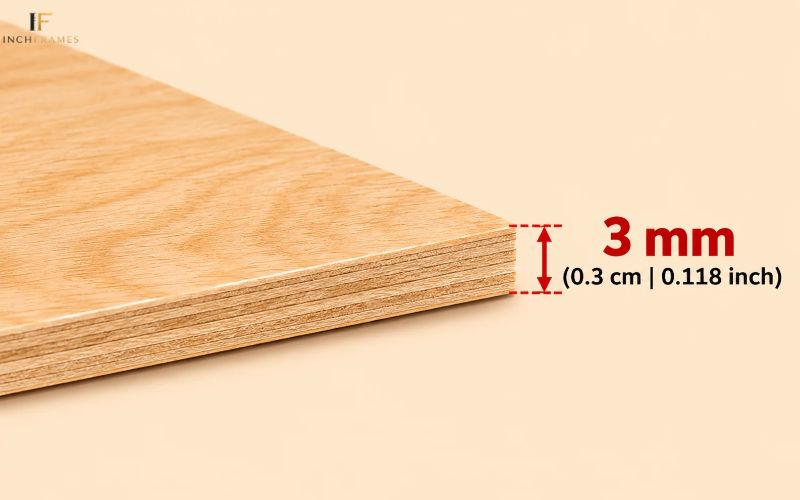
Thin plywood is often available in a 3 mm thickness. It is made by joining thin layers of wood together, which gives the sheet more strength than a single thin piece of wood might have.
You may see 3 mm plywood in craft shops, model-making supplies, and DIY stores. People use it to make small decorations, miniature buildings, craft shapes, and lightweight panels.
When you hold a piece of this plywood by its edge, you can see how little thickness 3 mm really represents. It is much thicker than ordinary paper but still thin enough to cut with suitable craft tools.
This is a helpful comparison because it shows that 3 mm is not just a tiny mark on a measuring scale. It can also be the actual thickness of a useful building material.
Acrylic Sheet
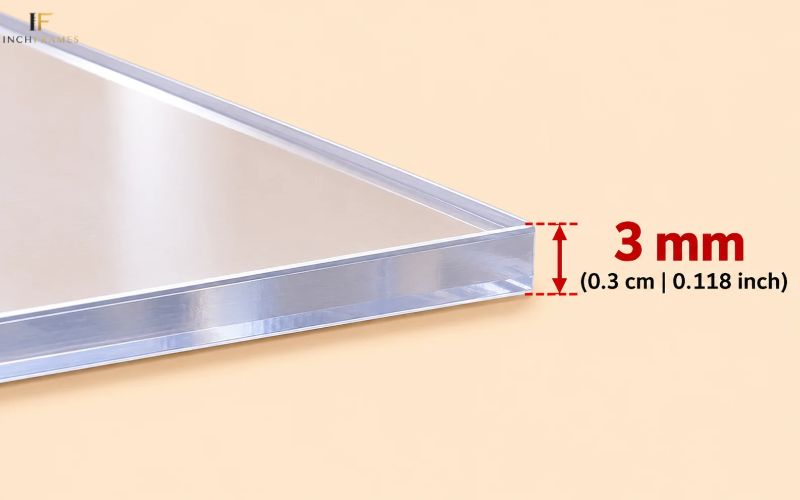
Acrylic sheets are clear or coloured plastic panels that can look similar to glass. One commonly available option is 3 mm acrylic.
You might find this material in display stands, craft projects, small signs, protective covers, and decorative items. It is popular because it is lighter than glass and can be shaped using suitable tools.
The easiest way to understand its size is to look at the edge of the sheet. From the front, the panel may look wide and large. However, when you turn it sideways, you can see how thin a 3 mm edge really is.
If you have ever handled a small acrylic display panel, you may have noticed that it feels firm without being especially thick. That makes it a useful real-world example of this measurement.
Related Post: How Long Is 15 cm? Compared to 12 Everyday Objects
Machine Screw
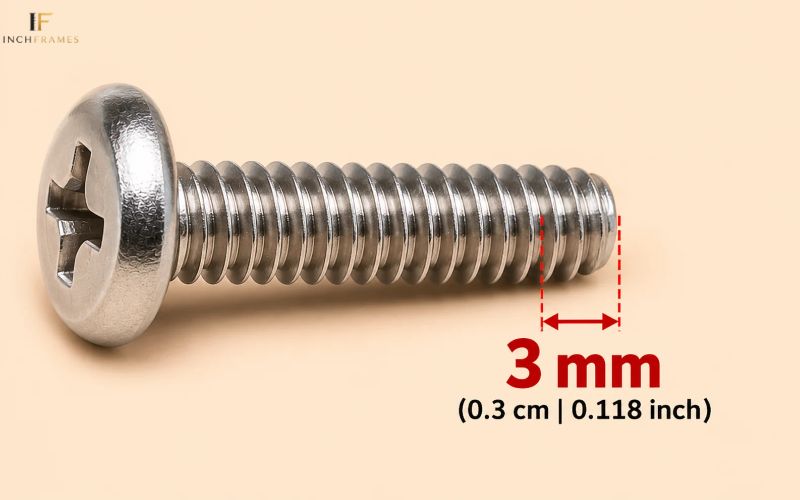
An M3 machine screw is a small metal fastener with a thread diameter of approximately 3 mm. The letter M stands for metric, while the number 3 refers to its nominal outside thread diameter. You may find these screws in small electronics, furniture fittings, appliances, and model-making projects.
To understand how big 3 mm is, look at the threaded part of an M3 screw from the front. The distance across the widest points of its threads is about 3 mm. The screw itself can be much longer, but its width stays close to this measurement. If you have ever handled a small machine screw while repairing an electronic item, you may remember how narrow it looks. It is a useful example of 3 mm in everyday hardware.
Ball Bearing
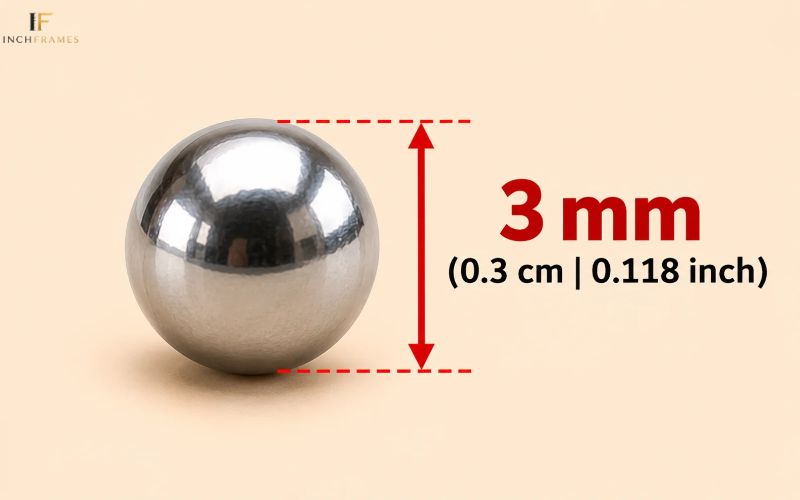
A 3 mm ball bearing is a tiny, round metal ball measuring 3 mm across its widest point. These small balls are used in different mechanical parts, miniature models, small moving assemblies, and precision equipment.
Unlike a flat material, a ball bearing gives you a way to picture 3 mm as a complete round shape. Imagine a tiny steel sphere resting on your fingertip. Its full width from one side to the other is just 3 mm. You may find small ball bearings inside certain miniature mechanisms or hobby equipment. Their smooth, rounded surface makes them easy to recognise. If you place one beside a metric ruler, you can see how little space it takes up.
Wooden Dowel
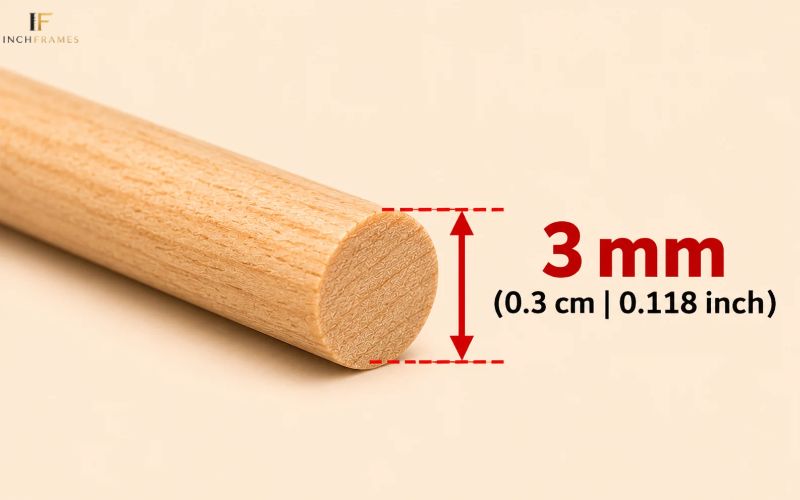
A 3 mm wooden dowel is a thin, round wooden rod with a diameter of 3 mm. It is commonly used in miniature woodworking, model-making, small craft projects, and decorative work.
You can picture its size by looking at the circular end of the dowel. The distance from one side of the circle to the other measures approximately 3 mm. Although the rod may be several centimetres long, its thickness remains the same along its length.
Small wooden dowels are useful when joining miniature wooden parts or creating tiny handmade structures. They are much narrower than the wooden sticks used in most home projects. Looking at the end of one gives you a simple way to understand just how small 3 mm really is.
Related Post: How Long Is 26 Inches? Compared to 13 Everyday Objects
Seed Bead
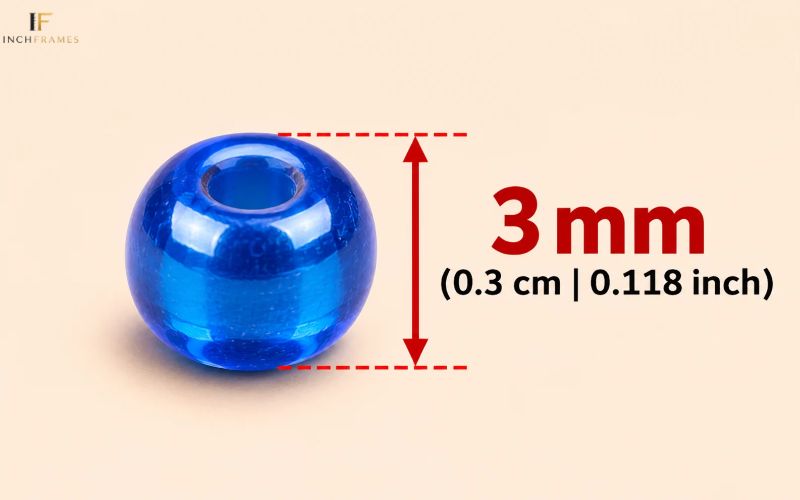
A 3 mm seed bead is a tiny decorative bead used in jewellery-making, embroidery, and handmade accessories. These beads are usually made from glass and come in many colours, including blue, red, green, gold, and clear.
The 3 mm measurement refers to the bead’s outside diameter. Imagine a small round bead sitting on the tip of your finger. Its width is only about 3 mm, making it a good example of a very small everyday measurement.
You may see these beads used in bracelets, necklaces, clothing decorations, and detailed sewing projects. Several can fit closely together in a short space, which is why they are popular for delicate designs. Keep in mind that bead sizes can vary slightly between brands, so check the listed diameter when you need an exact 3 mm example.
Knitting Needle
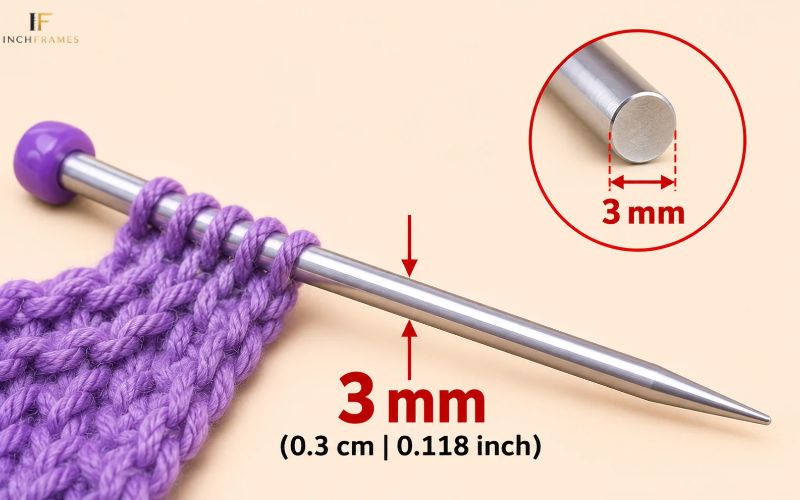
A 3 mm knitting needle is a slim tool used for making knitted clothing, scarves, small accessories, and other fabric projects. The 3 mm measurement describes the diameter of the needle’s shaft, not its length.
If you look at the needle from its circular end, you will see a small round shape measuring approximately 3 mm across. The long, narrow design makes this measurement easier to understand because you can follow the same thickness along the tool.
You may find 3 mm knitting needles in craft shops or knitting supply sets. They are used with suitable yarn to create fine stitches. Compared with thicker knitting needles, a 3 mm version looks quite slim. It is a practical example of how a small measurement can describe the width of a useful household craft tool.
Picture-Frame Glass Pane
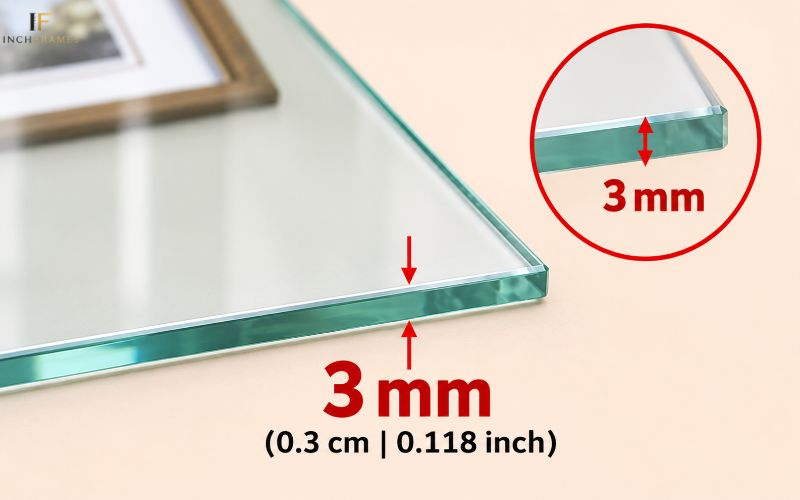
Some picture frames use glass panes that are around 3 mm thick. The exact thickness depends on the frame and the type of glass used.
You may see this type of glass in larger or more traditional picture frames. Its job is to protect the photograph or artwork while allowing you to see the image clearly.
If you look at the glass from its side, the narrow edge gives you a good reference for 3 mm. The front surface may look almost flat and seem to have no thickness at all.
Never handle a loose glass pane just to check its size. The edges can be sharp, and the glass can break. If you already have a safely fitted frame, its visible edge is enough to help you picture the measurement.
Related Post: How Long Is 5 Meters? Compared to 12 Everyday Objects
Craft Cord
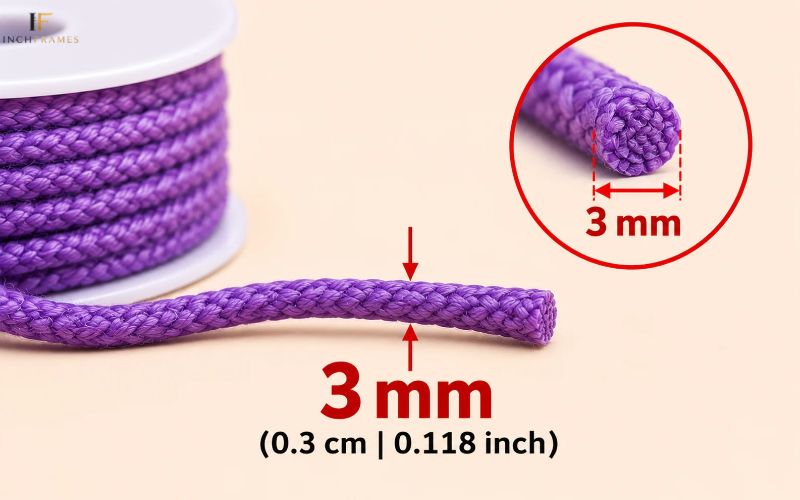
Small craft cords are available in different diameters, including 3 mm options. These cords may be made from cotton, nylon, polyester, or other fibres.
You might see them in jewellery-making supplies, decorative crafts, gift wrapping, and small hanging projects. Their round shape makes them useful for understanding diameter rather than thickness.
Imagine looking directly at the cut end of a 3 mm cord. The circular cross-section measures about 3 mm from one side to the other.
This is a useful comparison because many everyday measurements describe how wide something is rather than how thick a flat sheet is. Just remember that soft cord can flatten when squeezed, so it is best measured without pressure.
How to Measure 3 mm Without a Ruler
You do not always need a ruler to get a rough idea of 3 mm. Here are a few simple methods you can try:
- Stack two US pennies: Their combined thickness is about 3.04 mm, making them a close physical comparison.
- Use a metric measuring tape: If you have one, look at the first three small millimetre divisions between the zero and one-centimetre marks.
- Compare with a known 3 mm tool: A 3 mm hex key or drill bit can help you judge the width of another small item.
- Use a magnified phone camera: Take a close-up photo beside a known measurement reference. This can help you see a small gap more clearly, although the camera alone cannot confirm its exact size.
For accurate work, always use a proper measuring tool.
Why Does a Difference of 1 mm Matter?
When you are dealing with small measurements, even 1 mm can make a noticeable difference. For example, 2 mm is thinner than 3 mm, while 4 mm is thicker. That may sound like a tiny change, but it can affect how two parts fit together.
Imagine buying a small screw, choosing a drill bit, or cutting a piece of material for a craft project. If the size is slightly wrong, the finished piece may not fit as planned.
The same idea applies to small gaps and spaces. A 3 mm opening is not the same as a 5 mm opening, even if both look narrow at first glance.
That is why it helps to check measurements carefully before buying materials or starting a project.
Related Post: How Big Is 7 Centimeters? Compared to 10 Everyday Objects
Frequently Asked Questions
How big is 3 mm in inches?
3 mm is approximately 0.118 inches. It is slightly smaller than one-eighth of an inch, which equals 0.125 inches.
Is 3 mm bigger than 1 cm?
No. One centimetre equals 10 mm, so 3 mm is much smaller. It is only 0.3 cm.
What does 3 mm look like?
Three millimetres is a very small distance. Two stacked US pennies have a combined thickness of approximately 3.04 mm, making them a useful visual comparison.
How many millimetres are in half a centimetre?
Half a centimetre equals 5 mm. This means 3 mm is 2 mm shorter than half a centimetre.
Is 3 mm thick for a sheet of material?
It depends on the material. A 3 mm sheet is considered thin for many types of wood and plastic boards, but it can feel quite substantial compared with paper or thin fabric.
How can I measure 3 mm at home?
You can use a metric ruler, a 3 mm drill bit, or two stacked US pennies as a close reference. A digital calliper is another good choice when you need a more accurate measurement.
Is 3 mm the same as 0.3 cm?
Yes. Both measurements describe exactly the same length. Three millimetres equals 0.3 centimetres.
How many millimetres are in an inch?
One inch equals 25.4 mm. This means 3 mm is less than one-eighth of an inch.
Final Remarks
Three millimetres may seem like an almost invisible measurement, but it becomes much easier to understand when you compare it with real objects. Two stacked US pennies, a small drill bit, and thin craft materials all help show just how little space 3 mm takes up.
Remember that this measurement can describe the thickness of a sheet, the diameter of a cord, or the width of a small tool. The type of measurement depends on the object you are looking at.
If you need a quick way to picture 3 mm, keep the two-penny comparison in mind. It is simple, easy to remember, and surprisingly close to the exact measurement.
