
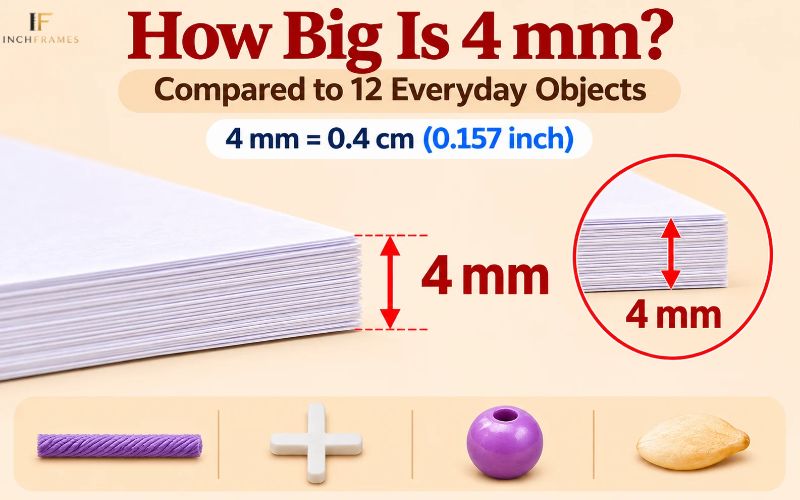
4 millimetres (mm) is a very small measurement. It is equal to 0.4 centimetres, 0.157 inches, or just over 1/8 of an inch. You can picture it as a little less than the width of a standard pencil eraser or roughly the thickness of two US nickels stacked together.
Although 4 mm may not sound like much, this tiny measurement appears in many everyday things. You can find similar sizes in small screws, craft materials, coins, and household items.
The tricky part is that most people do not carry a ruler around to check such a small distance. That’s why comparing 4 mm with familiar objects can help. Once you have a few good examples in mind, it becomes much easier to judge this measurement when shopping, working on a small project, or checking the size of something at home.
Let’s look at 12 everyday comparisons that make 4 mm easier to understand.
How Big Is 4 mm, Really?
Four millimetres is a short distance that you can cover with a very small movement of your finger. To understand its size better, remember that 10 mm makes 1 centimetre. So, 4 mm is less than half a centimetre. It is also twice as large as 2 mm and just 1 mm smaller than 5 mm.
It is also much smaller than 1 inch, which measures 25.4 mm. If you look at a small gap between two parts of a household object, 4 mm can be about the kind of space you are trying to picture. Comparing it with 3 mm or 6 mm can also help you notice how even a tiny change affects the overall size.
You might come across this measurement when fitting a small part into a hole, checking a craft project, or choosing a thin piece of material. It is also useful when looking at small product measurements online. A difference of just a few millimetres can affect whether two parts fit together properly.
4 mm in Real-World Use
A 4 mm measurement is useful in small home repairs, crafts, and DIY projects. For example, a 4 mm drill bit makes a hole with a nominal diameter of 4 mm. This can matter when you need to match a hole to a particular screw or fitting.
You may also see 4 mm used to describe the diameter of a knitting needle, the size of a small craft component, or the thickness of a material. These details are worth checking before buying supplies.
When working with such small measurements, even a 1 mm difference can be noticeable. A hole that is too narrow may not accept the part, while one that is too wide may leave it loose.
Everyday Things That Are About 4 mm Big
Some everyday objects are naturally close to 4 mm, while others can be arranged or measured to show the same size. The following examples use common items from different parts of daily life. Remember that natural objects and manufactured products can vary slightly.
| Everyday object | Approximate size |
|---|---|
| Two US nickels stacked together | 4 mm thick |
| Five standard bank cards stacked together | 4 mm thick |
| Drill bit | 4 mm diameter |
| Knitting needle | 4 mm diameter |
| Crochet hook | 4 mm shaft diameter |
| An M4 screw | 4 mm thread diameter |
| Tile spacer | 4 mm width |
| Craft foam sheet | 4 mm thick |
| Plywood sheet | 4 mm thick |
| Craft bead | 4 mm diameter |
| A sesame seed | Around 4 mm long |
| A stack of 40 sheets of paper | Around 4 mm thick |
Two US Nickels Stacked Together
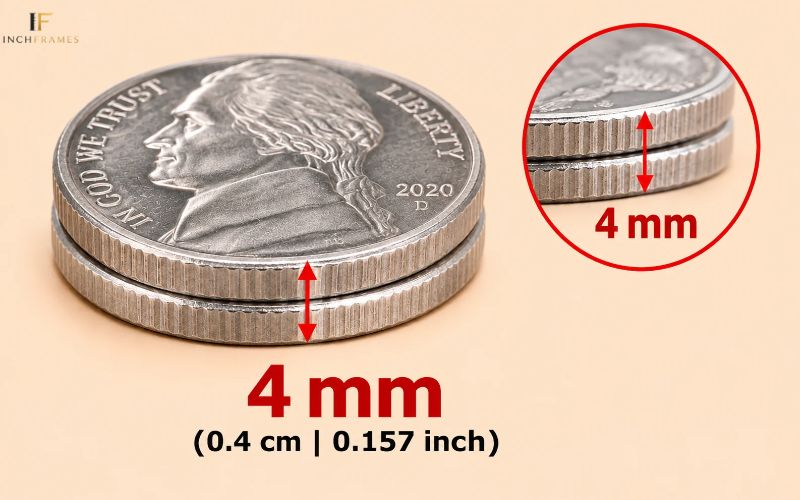
A US nickel is about 1.95 mm thick. When you place two nickels directly on top of each other, their combined thickness is approximately 3.9 mm. That is almost exactly 4 mm.
This is one of the easiest ways to picture the measurement if you have US coins at home. You do not need to look at the design or read the numbers on the coins. Simply focus on the small amount of space they take up when stacked.
Most people are surprised by how thin two coins look from the side. Yet their combined thickness comes very close to 4 mm. It is a handy comparison when you want a quick visual reference.
Five Standard Bank Cards Stacked Together
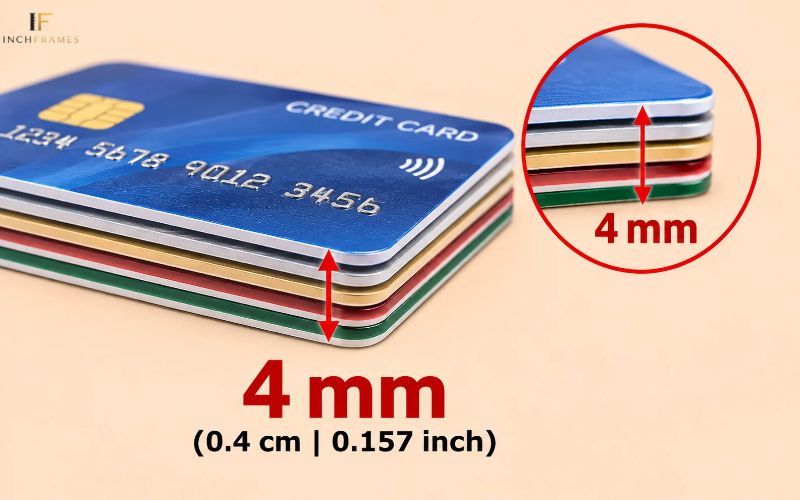
A typical bank card, such as a credit or debit card, is about 0.76 mm thick. Stack five standard cards together, and you get a combined thickness of approximately 3.8 mm.
That is only 0.2 mm less than 4 mm. It gives you a familiar household comparison without needing a special measuring tool.
You probably have a few plastic cards in your wallet. Place five of them together and look at their edge rather than their broad surface. The narrow stack is a good way to understand how small 4 mm really is.
Keep in mind that not every plastic card has the same thickness. Membership cards, gift cards, and other plastic cards may be slightly different.
Drill Bit
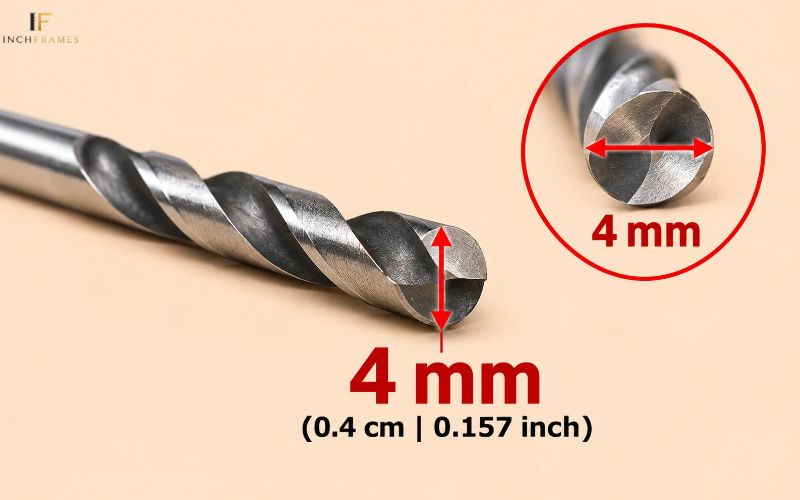
A 4 mm drill bit is a direct example because its stated size is the same as the measurement you are trying to understand. The 4 mm figure refers to the diameter of the bit, which is the distance across its round cutting end.
You may find this drill bit in a household toolbox or a hardware store. It is useful for making small holes in suitable materials such as wood or metal, depending on the drill bit type.
Look at the round end of the bit rather than its length. That small circular width is what measures 4 mm.
This is a particularly useful reference if you enjoy DIY projects. Just remember that drill bits come in many sizes, so check the printed size before using one.
Related Post: How Long Is 2 Centimeters? Compared to 12 Everyday Objects
Knitting Needle
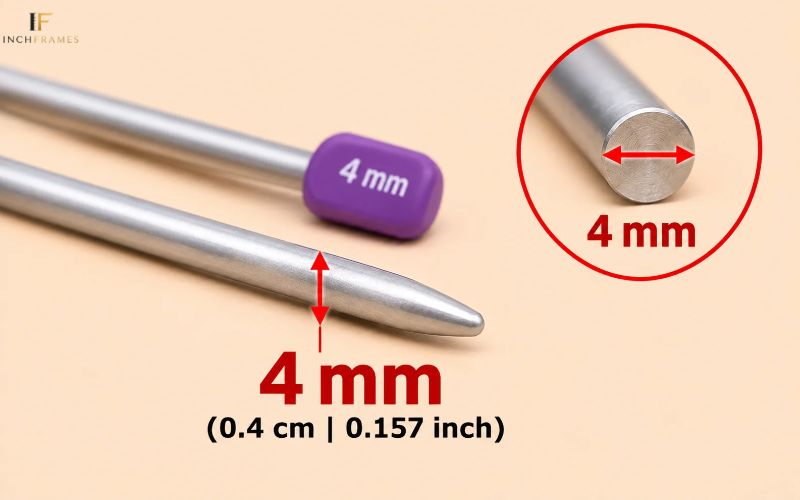
Knitting needles are available in several thicknesses, including 4 mm. This measurement describes the diameter of the needle’s shaft, not its full length.
If you have a 4 mm knitting needle, you can use it as a simple physical reference. Hold it between your fingers and look at the thickness from the end. You will see that the round shaft is quite narrow.
This size is used for many knitting projects, although the best needle size depends on the yarn and the pattern. A thicker needle usually creates larger stitches than a thinner one when other conditions are similar.
It is a useful example because the measurement is marked clearly on many knitting needle sets. You can check the label instead of guessing.
Crochet Hook
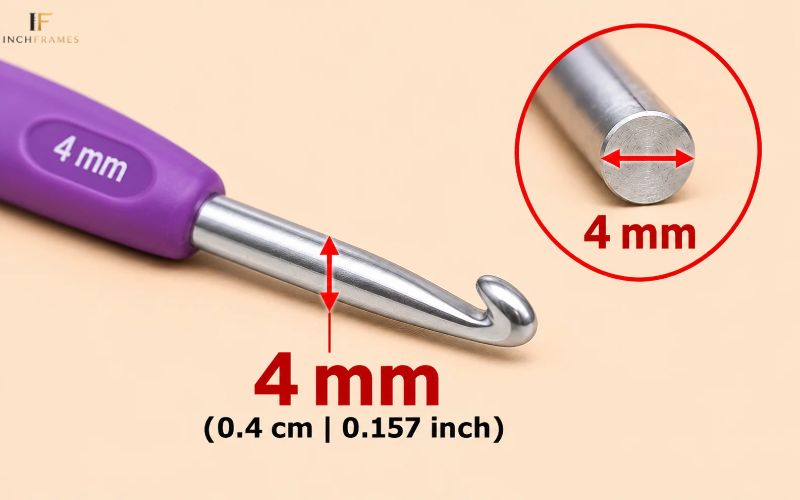
A 4 mm crochet hook is another familiar example for people who enjoy making things with yarn. Its shaft has a diameter of 4 mm, although the hook’s shape at the tip is slightly different.
You can find crochet hooks made from aluminium, plastic, bamboo, and other materials. Their handles may be much wider, but the working part near the hook is the measurement to focus on.
Imagine holding the narrow shaft between your fingers. It is much thinner than the handle of the tool and only a little wider than some very fine craft tools.
If you have a crochet kit, check the size printed on the hook. It may give you a better understanding of 4 mm than looking at a number on a ruler.
An M4 Screw
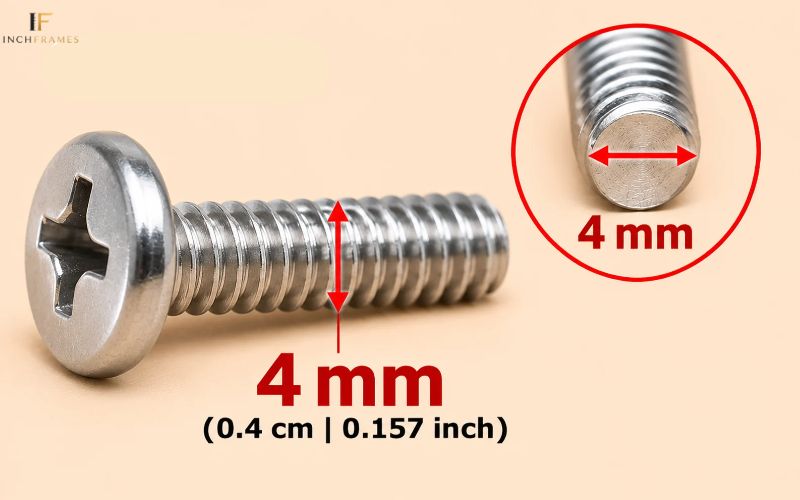
An M4 screw is designed around a nominal thread diameter of 4 mm. The letter M indicates a metric screw thread, while the number 4 refers to its nominal diameter in millimetres.
You might see these screws in furniture fittings, small machines, electronics enclosures, and repair kits. They are much smaller than the large screws used for heavy building work.
The easiest way to picture the measurement is to look across the threaded part of the screw. The distance from one outer thread edge to the opposite outer edge is close to 4 mm.
Be careful when buying replacement screws. The length, thread pitch, and head shape also matter. Two screws with the same diameter are not always suitable replacements for each other.
Related Post: How Big Is 5 Centimeters? Compared to 14 Everyday Objects
Tile Spacer
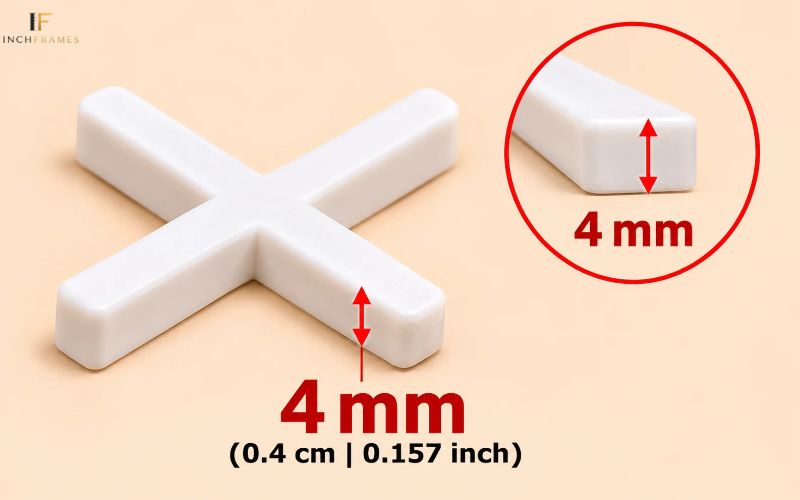
Tile spacers help keep gaps even when someone is fitting tiles to a wall or floor. They are sold in different widths, and a 4 mm spacer is made to leave a gap of approximately 4 mm between neighbouring tiles.
You may notice these little plastic pieces during a bathroom renovation or kitchen tiling project. They are small, but they play an important role in keeping the finished rows neat.
A 4 mm spacer gives you a direct example of the measurement. Look at the width of one arm or the part that sits between two tiles.
It is also a good reminder that small measurements can make a visible difference. Uneven gaps can affect the look of an entire tiled surface.
Craft Foam Sheet
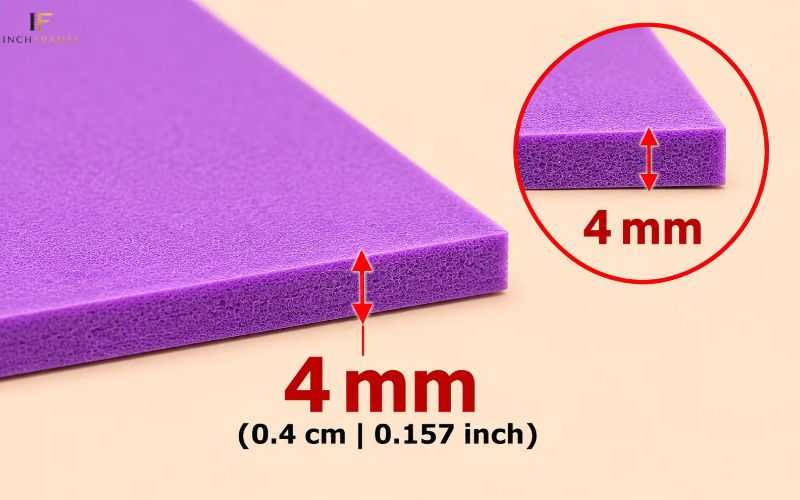
Craft foam is used for school projects, decorations, costume pieces, and handmade models. It comes in different thicknesses, and some foam sheets are sold in a 4 mm option.
Unlike ordinary paper, this material has a soft, slightly spongy feel. You can press it gently with your finger and notice that it may compress a little before returning to its shape.
The edge of a 4 mm foam sheet is a useful reference. It gives you a clear view of how much space 4 mm takes up without needing to measure a long object.
If you are buying foam for a project, check the listed thickness. Thin sheets can look similar in product photos, even when their actual measurements are different.
Plywood Sheet
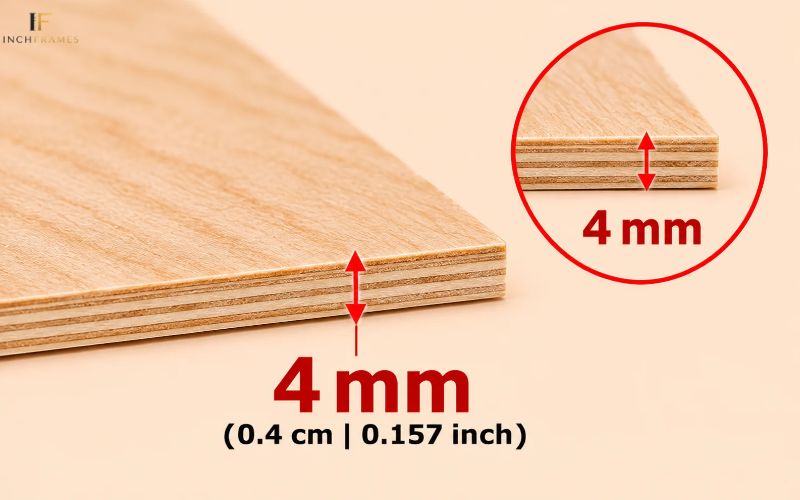
Thin plywood is often used for small craft projects, model-making, decorative panels, and other light jobs. Some sheets are available in a thickness of around 4 mm.
The best way to picture this measurement is to look at the narrow edge of the board. The large flat surface may look substantial, but the edge shows just how thin the material is.
You might find this type of plywood at a craft shop or a timber supplier. It is useful for projects where a thick, heavy board is not needed.
One thing to remember is that plywood thickness can vary between products. Always check the product label or measure the actual sheet before designing a project around a 4 mm thickness.
Related Post: How Long Is 3 Inches? Compared to 14 Everyday Objects
Craft Bead
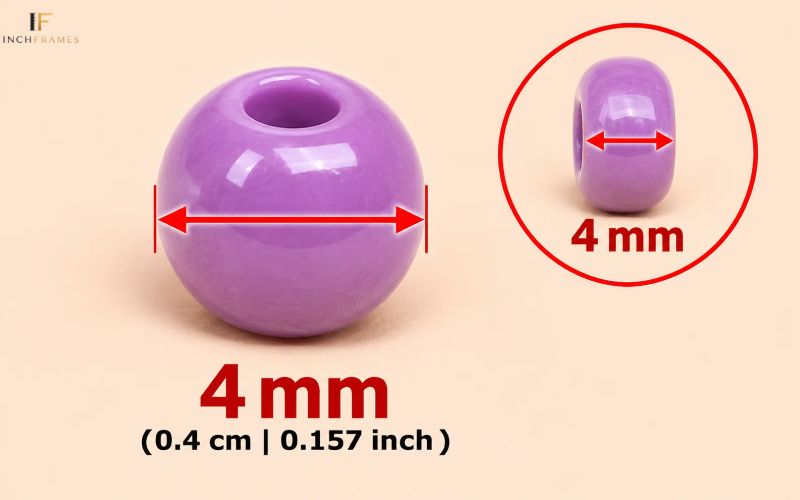
Small round beads are used to make bracelets, necklaces, decorations, and other handmade items. Many craft suppliers sell beads in a 4 mm diameter.
These beads are tiny compared with the larger decorative beads you may see on jewellery. You can hold several between your fingertips, and they are small enough to create detailed patterns.
Look at one bead from directly across its widest part. That distance is approximately 4 mm. Its round shape makes it a helpful example because you can compare its diameter with other small objects.
Bead sizes are usually listed in millimetres when shopping online. This makes it easier to choose the right size for your project, especially when you want several beads to look consistent.
A Sesame Seed
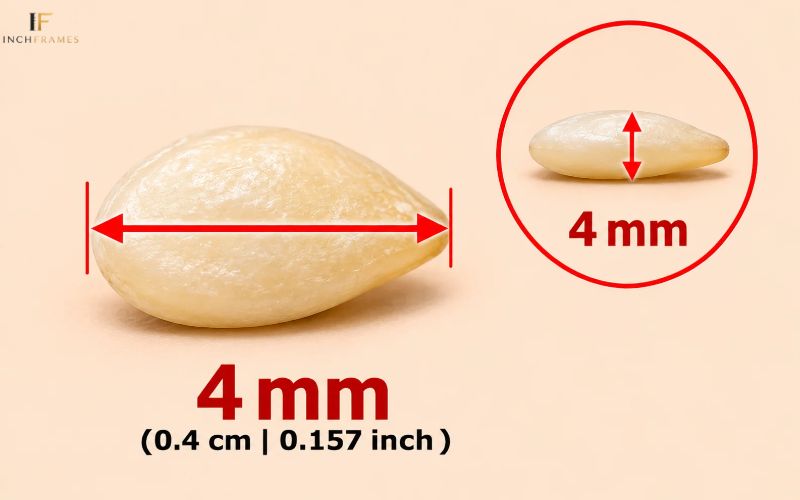
A sesame seed is a familiar food item that can help you imagine a measurement of around 4 mm. Many sesame seeds are only a few millimetres long, although their exact size depends on the variety.
You can spot them on burger buns, bread rolls, crackers, and other baked foods. Pick up one seed and look at its longest side. It is surprisingly small, especially when compared with the food it covers.
This is not an exact measuring reference because natural seeds do not all grow to the same size. Some are shorter, while others are a little longer.
Still, a sesame seed gives you a useful idea of the scale. It shows how a distance of 4 mm can be smaller than something you regularly see at mealtimes.
A Stack of 40 Sheets of Paper
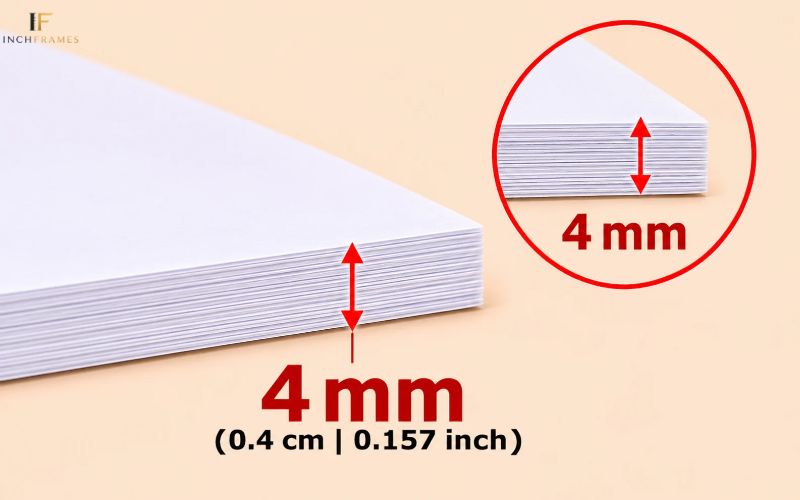
A standard sheet of printer paper is roughly 0.1 mm thick, although the exact thickness depends on the paper type and weight. If you stack 40 sheets, their combined thickness can be around 4 mm.
This is an easy comparison to try at home or in a classroom. Take a small stack of printer paper and look at its edge. The height of the stack gives you an idea of how much space 4 mm takes up.
You may use this comparison when organising documents, preparing school materials, or working on a paper craft project.
The result is approximate because not all paper has the same thickness. Heavier paper and card will make a thicker stack, even if you use the same number of sheets.
How to Measure 4 mm Without a Ruler
You can estimate 4 mm even when you do not have a ruler nearby. Try these simple methods:
- Use two US nickels: If you have them, stack two nickels together. Their combined thickness is about 3.9 mm, which is almost exactly 4 mm.
- Use five bank cards: Stack five standard plastic bank cards. Their combined thickness is close to 4 mm.
- Use a marked craft tool: A 4 mm knitting needle or crochet hook gives you a direct reference. Check the size printed on it.
- Compare a small bead: A craft bead labelled 4 mm can help you picture the distance across a small round object.
These methods are useful for rough comparisons, but use a proper measuring tool when accuracy matters.
Related Post: How Long Is 1 Foot? (Compared to 12 Everyday Objects)
Frequently Asked Questions
How big is 4 mm compared to an inch?
Four millimetres is approximately 0.157 inches. It is slightly larger than 1/8 inch, which measures 3.175 mm.
Is 4 mm bigger than half a centimetre?
No. Half a centimetre is 5 mm, so 4 mm is 1 mm smaller. The difference is small, but it can matter when measuring small parts.
How many centimetres is 4 mm?
Four millimetres equals 0.4 centimetres. You can convert millimetres to centimetres by dividing the measurement by 10.
Can I measure 4 mm with my fingers?
You can try to estimate it, but your fingers are not accurate measuring tools. A small craft bead or two stacked US nickels will give you a more useful comparison.
Is 4 mm considered thick?
It depends on what you are measuring. A 4 mm sheet of craft foam is relatively thin, while a 4 mm screw or needle is a small but noticeable size.
How many millimetres are in half a centimetre?
There are 5 mm in half a centimetre. This means 4 mm is slightly less than half a centimetre.
What household object is closest to 4 mm?
Two US nickels stacked together are approximately 3.9 mm thick. Five standard bank cards stacked together are also close, at around 3.8 mm.
Final Remarks
Four millimetres may seem like a tiny distance, but it becomes easier to understand when you compare it with familiar objects. Two US nickels, five bank cards, a small craft bead, and a 4 mm drill bit all provide useful ways to picture this size.
Remember that 4 mm equals 0.4 cm and approximately 0.157 inches. You can use these conversions when shopping for small parts, working on crafts, or handling home repairs.
My favourite quick comparison is the two-nickel method because it is simple and very close to the actual measurement. When you need an exact result, though, a millimetre ruler or digital calliper is always the better choice.
