
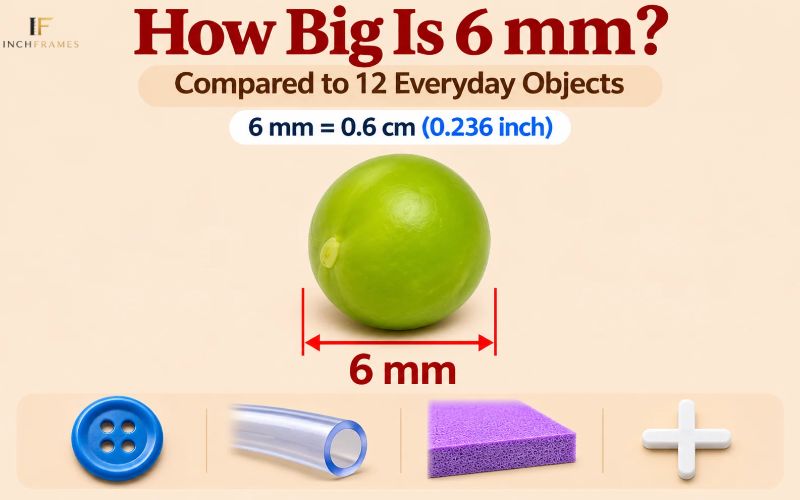
Six millimeters (6 mm) is a very small measurement, but it is bigger than you might think when you see it next to familiar objects. It equals 0.6 centimeters, 0.236 inches, or about 1/4 inch. You can cover this distance with a small part of your fingertip, and it is roughly the width of a tiny craft bead.
Although 6 mm may seem difficult to picture, you probably come across objects of this size more often than you realize. Small buttons, beads, screws, craft supplies, and tools can all provide useful reference points.
The easiest way to understand this measurement is to compare it with things you can hold in your hand. Some objects are made in an exact 6 mm size, while others come very close depending on their design.
Let’s look at 12 everyday examples that will help you picture how big 6 mm really is.
How Big Is 6 mm, Really?
Six millimeters is a short distance that measures just over half a centimeter. If you place a ruler on a flat surface and look at the small lines between the centimeter marks, 6 mm reaches six of those tiny spaces.
It is also a little shorter than 1/4 inch. The difference is small, but it matters when you are choosing parts for a home project or checking whether something will fit. For comparison, 10 mm makes 1 centimeter, so 6 mm is 4 mm shorter than a full centimeter
Think about the edge of a thin plastic card or the space between two small parts of a household item. A 6 mm measurement is much smaller than the width of your thumb, yet it is large enough to see clearly without a magnifying glass.
You may encounter this size when working with small fittings, craft materials, jewelry supplies, or household repairs. It is a useful measurement to recognize, especially when a product description gives its size in millimeters rather than inches.
Where Is 6 mm Used in Real Life?
A 6 mm measurement appears in many small products and repair materials. For example, you might see it when buying a drill bit, selecting a wooden dowel for a craft project, or choosing a screw for a piece of furniture.
It also comes up in sewing, jewelry making, and other hobbies. A small bead measuring 6 mm can be used in bracelets, necklaces, and decorative work. In home improvement, a 6 mm spacer can help maintain an even gap while fitting tiles.
You will also find metric measurements like this on packaging for tools and hardware. Knowing what 6 mm looks like makes shopping easier because you can judge whether a small part is likely to suit your project.
12 Everyday Things That Are 6 mm Big
Some everyday objects have a standard or commonly sold 6 mm size. Others are close to this measurement but can vary between brands and designs.
The following examples include household hardware, craft supplies, and familiar small items. They offer practical ways to picture this tiny length.
| Everyday object | Approximate or specified measurement |
|---|---|
| Small glass craft bead | 6 mm diameter |
| Wooden craft dowel | 6 mm diameter |
| Metric drill bit | 6 mm diameter |
| M6 machine screw | 6 mm diameter |
| Hex key | 6 mm across flats |
| Metric crochet hook | 6 mm hook size |
| Knitting needle | 6 mm diameter |
| Tile spacer | 6 mm gap width |
| Aquarium air tubing | 6 mm diameter |
| EVA craft foam | 6 mm thickness |
| Small round button | 6 mm diameter |
| Small pea | 6 mm across when very small |
Small Glass Craft Bead
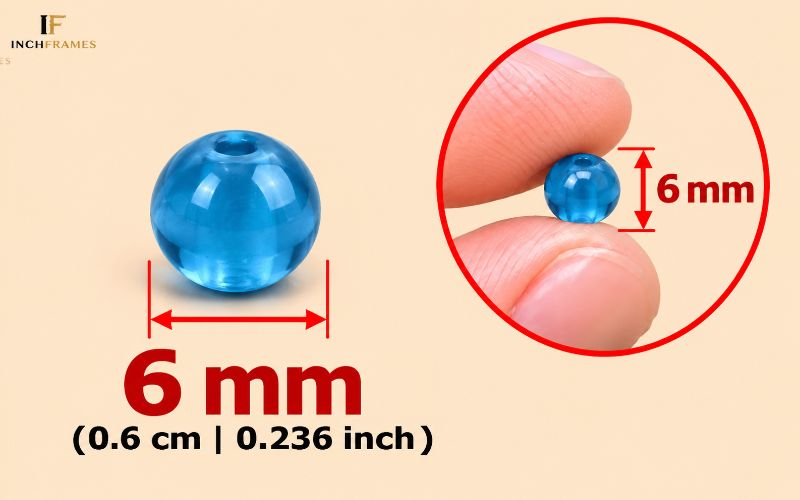
A small glass craft bead measuring 6 mm across is one of the easiest ways to picture this measurement. These beads are commonly used for bracelets, necklaces, and other handmade decorations.
Place one on your fingertip, and you will see that it takes up only a little space. It is round, compact, and easy to handle with your fingers.
The bead’s diameter gives you a direct example of 6 mm. If you have a collection of craft beads at home, check their packaging. You may find several marked with a 6 mm size.
Keep in mind that bead measurements refer to the distance across the widest part of the bead, not the size of its small threading hole. This makes it a useful reference when you want to understand a measurement from one side to the other.
Wooden Craft Dowel
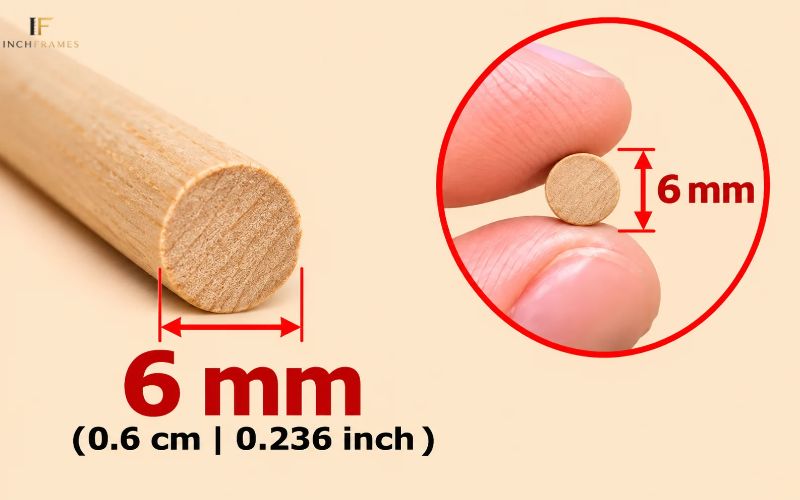
A 6 mm wooden dowel is a thin, round piece of wood often used in small furniture repairs, school projects, and handmade decorations.
Imagine holding a short wooden stick between your thumb and index finger. Its thickness is similar to a small pencil-like rod, but much slimmer than a normal writing pencil.
The 6 mm measurement refers to the dowel’s diameter. In other words, it is the distance from one side of the round stick to the opposite side, passing through its center.
You can find wooden dowels in craft stores and home improvement shops. They are useful for joining wooden pieces, making small models, and creating simple DIY projects. If you are buying one, check the package carefully. Wooden dowels are sold in several thicknesses, and a 6 mm option gives you a clear example of this size.
Related Post: How Big Is 5 mm? Compared to 13 Everyday Objects
Metric Drill Bit
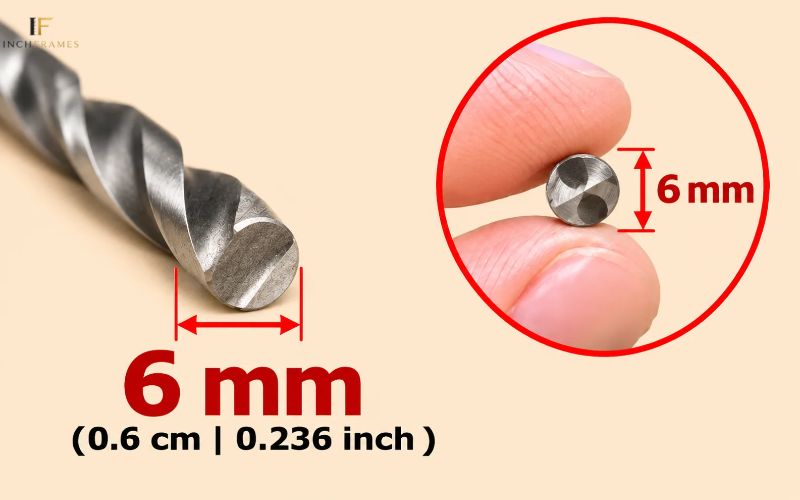
A 6 mm drill bit is a practical example because the size is clearly printed on many drill bit packages.
It measures 6 mm across its cutting diameter. This means that, when used correctly, it is designed to make a hole approximately 6 mm wide in a suitable material.
You might see this type of drill bit in a household toolbox. It can be used for certain jobs involving wood, plastic, or other materials, depending on the bit’s design.
Look closely at the end of a drill bit. It may appear extremely narrow, especially when placed next to a larger drill bit used for heavy work.
The best part about this example is that you do not have to estimate its size. A metric drill bit marked 6 mm provides a direct manufactured reference for understanding the measurement.
M6 Machine Screw
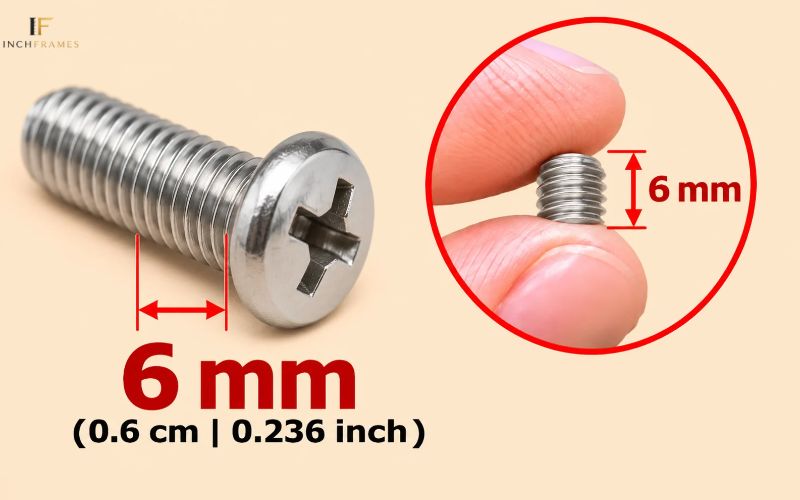
An M6 machine screw has a nominal thread diameter of 6 mm. It is a common type of metric fastener used in furniture, equipment, brackets, and other household or workshop projects.
When you look at the screw, focus on the threaded part rather than the head. The distance across the outside of the threads is designed around the 6 mm measurement.
You may find M6 screws when assembling a desk, fixing a metal bracket, or repairing a piece of equipment. They are often sold in different lengths, so the 6 mm figure does not describe how long the screw is.
This is a useful example because it shows that one measurement can describe an object’s width rather than its length. If you compare an M6 screw with a larger fastener, the difference becomes easier to see.
Hex Key
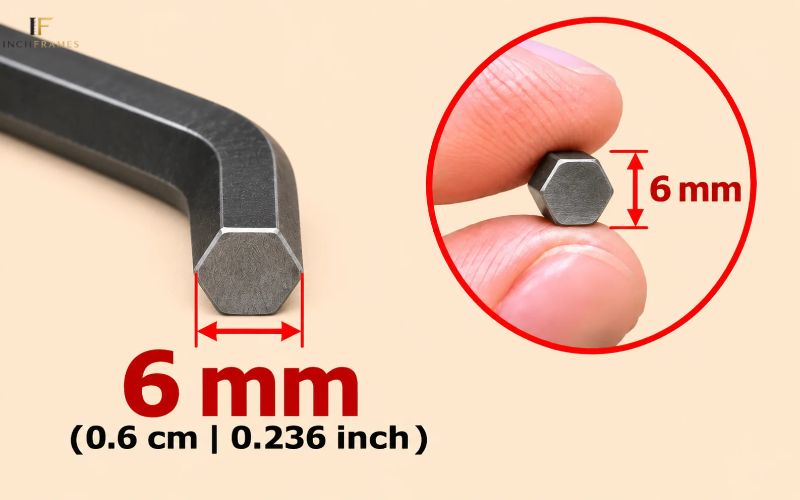
A 6 mm hex key, sometimes called an Allen key, is another useful reference. It has a six-sided shape and is used to tighten or loosen matching hex socket screws.
The 6 mm measurement describes the distance across two opposite flat sides of its working end. It does not describe the total length of the tool. You may have seen hex keys included with flat-pack furniture. They are often supplied in a small set containing several different sizes.
A 6 mm version is noticeably thicker than the tiny keys used for small electronic parts, but it is still compact enough to hold comfortably between your fingers.
If you have a set at home, compare the 6 mm key with its smaller companions. Seeing the different widths side by side can help you understand just how much space 6 mm takes up.
Metric Crochet Hook
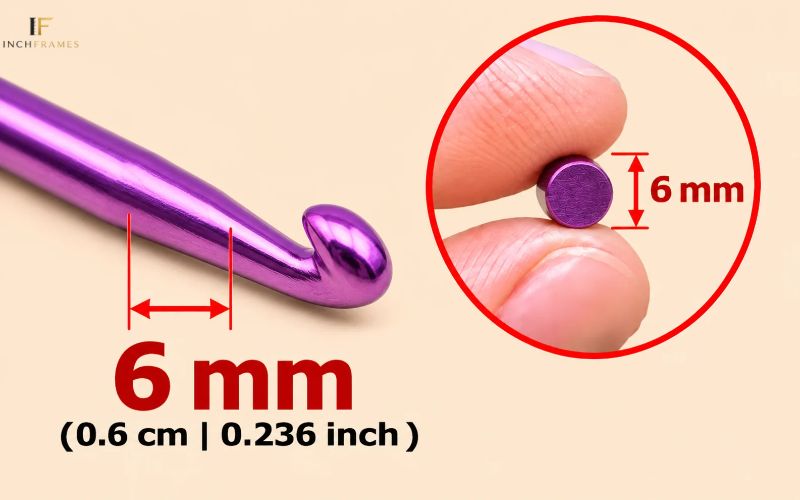
A 6 mm crochet hook is a common size used for making blankets, scarves, bags, and other yarn projects. The measurement refers to the diameter of the hook’s shaft. This is the part that determines how much space the yarn has when you make stitches.
Pick up a 6 mm crochet hook and look at its main shaft. It is thicker than the fine hooks used for delicate thread work, but it is still small enough to fit comfortably in your hand.
Crochet hooks are available in many metric sizes. A 6 mm option is useful for projects that call for a medium-to-thicker yarn, although the best hook depends on the yarn and the result you want.
This example is particularly helpful if you enjoy crafts. It gives you a real object that you can hold and compare directly with a ruler.
Related Post: How Big Is 3 mm? Compared to 12 Everyday Objects
Knitting Needle
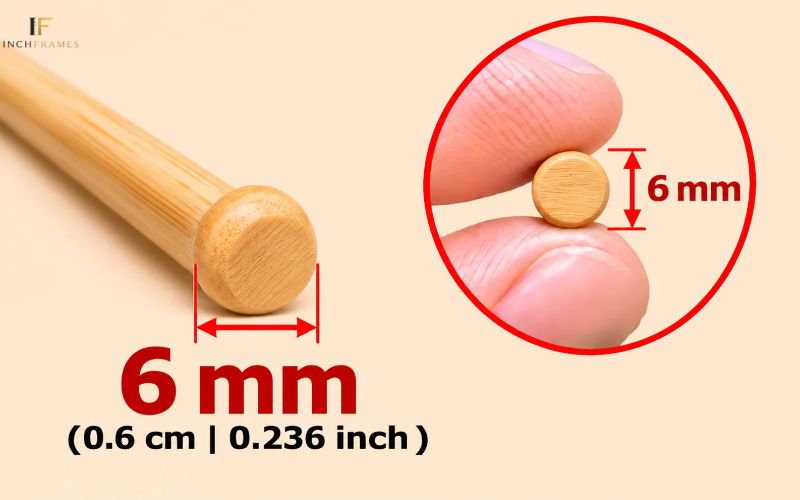
A 6 mm knitting needle offers another way to understand the size. It is a fairly common needle diameter used for knitting projects that call for thicker yarn.
The measurement refers to the width of the needle, not its overall length. A knitting needle can be much longer than 6 mm, but its round body measures 6 mm across.
You might see this size used when making warm scarves, sweaters, and soft blankets. The thicker needle helps create larger stitches than a very fine needle would.
Place the needle beside a standard ruler and compare its thickness with the small spaces between the centimeter marks. You will notice that it is just over half a centimeter wide. Knitting needles are often sold in sets, which makes it easy to compare different sizes. A 6 mm needle is a handy reference when you want to picture a small but clearly visible measurement.
Tile Spacer
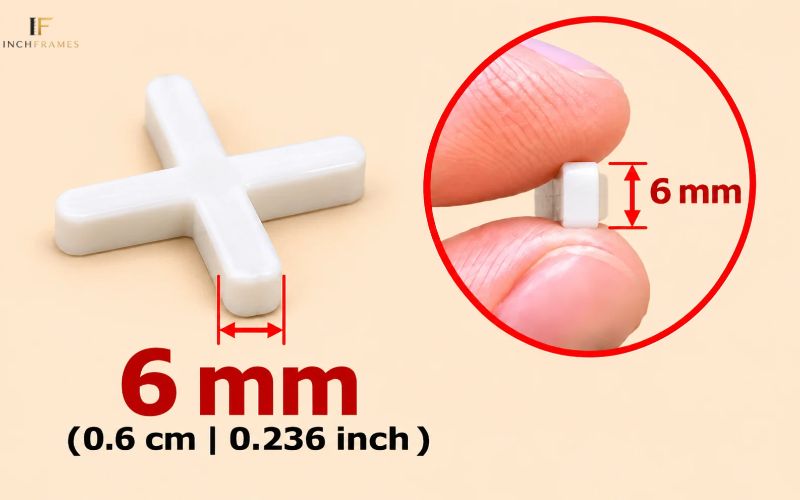
A 6 mm tile spacer is a small fitting used to maintain an even gap between tiles during installation. When tiles are placed next to each other, the spaces between them need to remain consistent. Spacers help keep these gaps even while the tiles are being arranged.
A spacer designed for a 6 mm gap gives you a practical example of this measurement. It may be made from plastic and have a cross-shaped or other simple design.
You might come across these little pieces during a bathroom, kitchen, or floor renovation. They are small enough to fit between tiles, but their job is important because uneven spacing can affect the final appearance.
The spacer itself may have a shape that is larger than 6 mm in some directions. The useful measurement is the gap width it is designed to maintain.
Aquarium Air Tubing
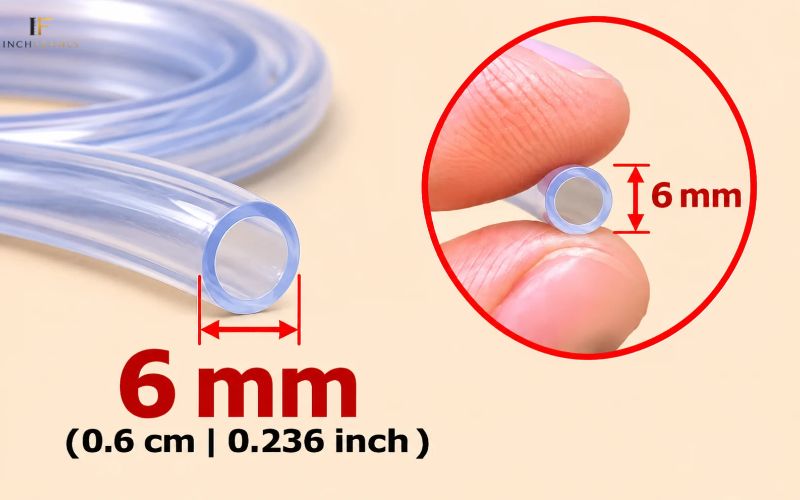
Small aquarium air tubing is another useful reference. Some common aquarium tubing is sold with an outer diameter of approximately 6 mm, although sizes differ between manufacturers.
This flexible tube carries air from an aquarium pump to an air stone or another suitable aquarium fitting. You may see it running along the back or side of a fish tank. Imagine looking at the round end of the tube. Its outside width can give you a helpful picture of a 6 mm measurement.
Be careful when checking tubing sizes because the inside diameter and outside diameter are not the same. The inside diameter describes the open space where air passes, while the outside diameter includes the tube’s walls.
For this comparison, we are talking about the outside diameter. Always check the product label before purchasing tubing for your aquarium.
EVA Craft Foam
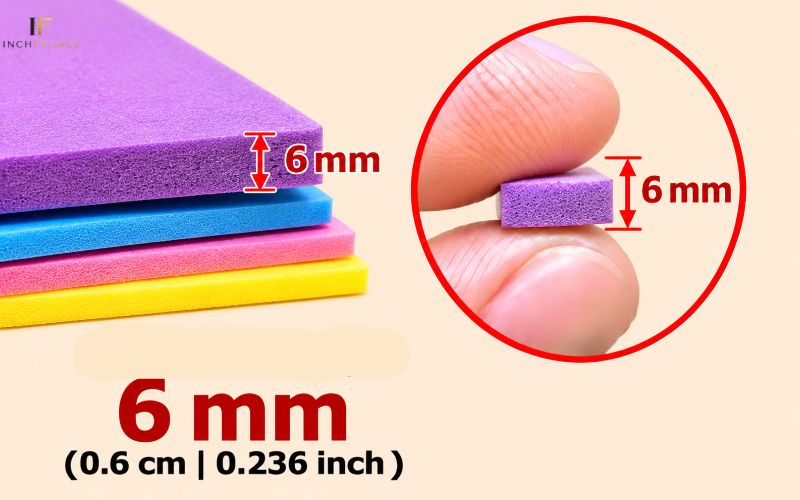
EVA craft foam is a soft, flexible material used for school activities, costumes, decorations, and handmade projects.
It comes in different thicknesses, including 6 mm sheets. This thickness makes the material more substantial than the very thin foam sheets often used for simple classroom crafts.
Hold a 6 mm piece between your fingers. You can feel that it has some depth without being particularly thick. It is also flexible enough to bend slightly, depending on its firmness. You may find this foam in craft shops or online stores. People use it to make costume details, protective padding, decorative shapes, and children’s craft projects.
The important thing to remember is that 6 mm describes the sheet’s thickness. Its length and width can be much larger, depending on the size of the sheet you purchase.
Small Round Button
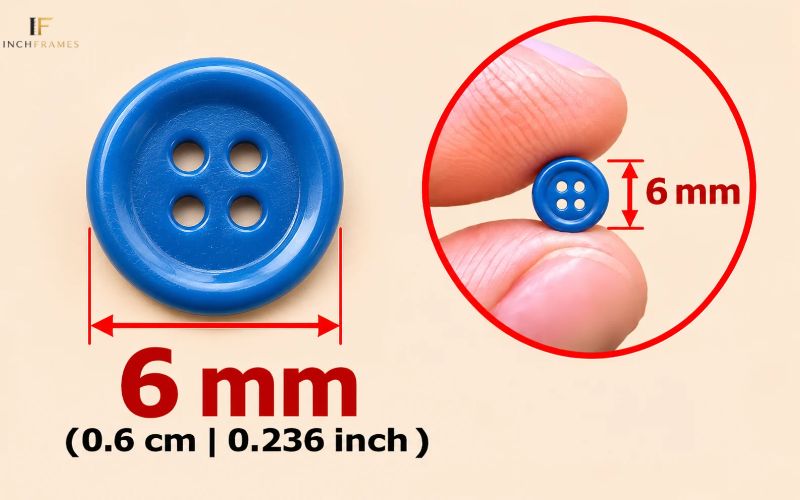
A small round button measuring around 6 mm across is another way to picture this size. Buttons come in many shapes and sizes. Some are large enough to stand out on a coat, while others are tiny and used on shirts, baby clothes, and decorative garments.
A button with a 6 mm diameter is quite small. You can usually hold it between two fingertips, and its round shape makes it easy to compare with a ruler.
Check the button’s widest point to understand the measurement. The distance from one outer edge to the opposite edge is its diameter.
Not every small clothing button measures exactly 6 mm. Some may be slightly smaller or larger. Still, a button around this size gives you a familiar reference for understanding how much space 6 mm covers.
Small Pea
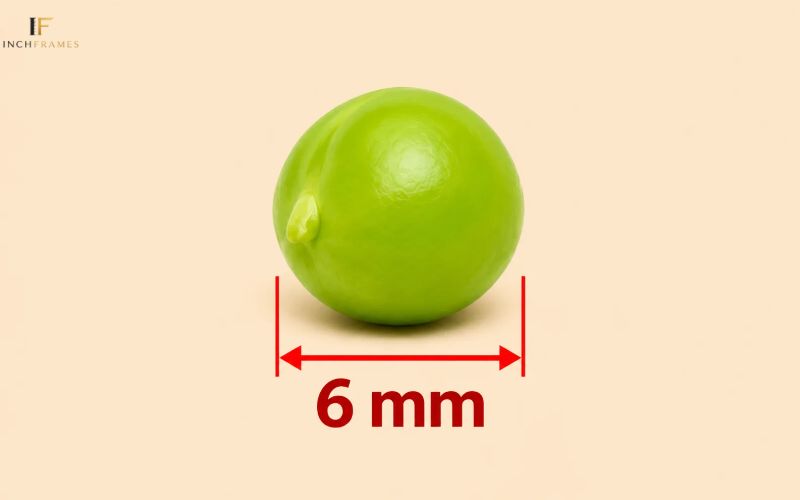
A very small pea can also help you picture a measurement close to 6 mm across. Peas grow in different sizes, so this is an approximate comparison rather than an exact measurement.
If you have ever opened a fresh pea pod, you may have noticed that some peas are much smaller than others. A young or particularly small pea can measure around this size.
Place it on a flat surface and look at its widest part. It gives you a rounded reference that is easy to compare with a ruler.
Most mature peas are larger than 6 mm, so do not assume every pea will match this measurement. The comparison works best when you choose a very small one. It is a simple example from nature that helps make a tiny metric measurement feel less abstract.
How to Measure 6 mm Without a Ruler
You do not always need a measuring tool to get a rough idea of 6 mm. Here are four simple methods you can try.
- Use your fingertip: Look at the width of your fingernail. Six millimeters is only a small portion of the width of most adult fingernails.
- Compare it with a quarter inch: A quarter inch equals 6.35 mm, so it is slightly longer than 6 mm.
- Use a known craft bead: If you own a bead marked as 6 mm, keep it as a reference for future comparisons.
- Check six small ruler divisions: If you have a centimeter scale, count six millimeter spaces from the zero mark.
These methods are useful for rough estimates. For drilling, repairs, or fitting parts, always use a proper measuring tool.
Is 6 mm Considered Small?
Yes, 6 mm is generally considered a small measurement. It is less than one centimeter, which makes it useful for describing small parts, thin materials, and compact household items.
However, whether it feels small depends on what you are measuring. A 6 mm gap between tiles may be easy to notice, while a 6 mm screw diameter can look quite narrow when placed next to larger hardware.
The type of measurement also matters. Six millimeters of thickness is different from 6 mm of length or diameter, even though the number is the same.
If you are shopping online, look carefully at the product’s dimensions. A listing may give the length, width, diameter, or thickness in millimeters. Knowing which part measures 6 mm can prevent mistakes when ordering small items.
Related Post: How Long Is 11 cm? Compared to 12 Everyday Objects
Frequently Asked Questions
How big is 6 mm in inches?
Six millimeters equals approximately 0.236 inches. It is slightly shorter than 1/4 inch, which measures 6.35 mm.
Is 6 mm the same as 0.6 cm?
Yes. Six millimeters equals 0.6 centimeters because there are 10 millimeters in every centimeter.
How big is 6 mm compared to a finger?
Six millimeters is much smaller than the width of most fingers. It covers only a small part of your fingertip, so it is best to use your finger as a rough reference rather than an exact measuring tool.
Is 6 mm bigger than 1/4 inch?
No. One-quarter inch is 6.35 mm, which makes it slightly bigger than 6 mm. The difference is only 0.35 mm.
5. How many millimeters make 1 centimeter?
There are 10 millimeters in 1 centimeter. This means 6 mm is six-tenths of a centimeter, or 0.6 cm.
What common object is about 6 mm wide?
A small craft bead, a 6 mm wooden dowel, and the shaft of a 6 mm crochet hook are useful examples. A very small pea may also be close, although natural sizes vary.
Can I measure 6 mm with my phone?
You can use a measurement app if your phone supports one, but its accuracy may vary. For small repairs or projects that need an exact fit, use a ruler with millimeter markings or a digital caliper.
Final Remarks
Six millimeters may be a tiny measurement, but it is easier to understand when you compare it with objects you can see and touch. It equals 0.6 cm or about 0.236 inches, making it just a little shorter than 1/4 inch.
A small craft bead, wooden dowel, drill bit, or crochet hook can all help you picture this size. Just remember that some examples are exact manufactured measurements, while natural objects and clothing items can vary.
Here is a simple tip: keep a ruler with millimeter markings nearby when shopping for small parts or working on DIY projects. Once you become familiar with 6 mm, judging small measurements becomes much easier.
