
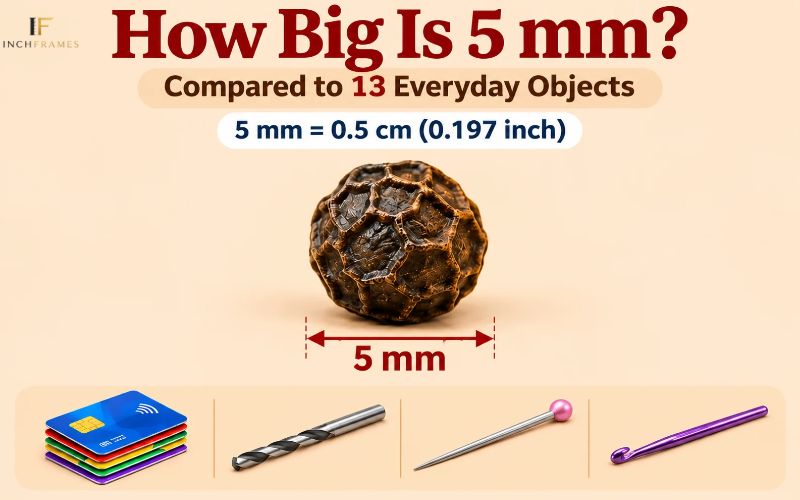
5 millimeters (mm) is a very small length, measuring just half a centimeter or about 0.2 inches. It is roughly the thickness of a few stacked coins or the width of a small household item. Although 5 mm may not sound like much, you can find measurements close to this size in many things you use every day.
If you do not have a ruler nearby, comparing 5 mm with familiar objects can make it much easier to picture. For example, a small peppercorn, a tiny craft bead, and a standard 5 mm drill bit can all help you understand this measurement.
The tricky part is that small measurements can be difficult to judge by eye. A difference of just 1 or 2 mm can make an object look quite different. That is why real-life comparisons are useful.
In this guide, you will discover 13 everyday objects that are close to 5 mm, learn where this measurement is used, and find simple ways to estimate it without a ruler.
How Big Is 5 Millimeters, Really?
Five millimeters is equal to 0.5 centimeters, 0.197 inches, or 0.005 meters. It is just under one-fifth of an inch, which means it takes about five 5 mm lengths to make an inch. To picture a slightly larger measurement, 2 cm is four times as long as 5 mm, while 1 inch measures 25.4 mm.
Think about a small gap between two parts of a household item. A space measuring 5 mm is narrow enough to look almost like a thin line from a distance, but it is still easy to notice when you look closely.
You may also come across this measurement when buying small craft supplies, choosing a drill bit, or checking the size of a screw. These are situations where even a small difference matters. For example, 10 mm is twice as long as 5 mm, while 1 cm gives you exactly the same length as two 5 mm sections.
5 mm in Real-World Use
Five millimeters is a useful measurement in several everyday activities. In home repairs, a 5 mm drill bit may be used when making a hole for a suitable wall plug or fixing. The correct size depends on the material and the fitting, so it is always worth checking the instructions before drilling.
You may also see 5 mm measurements in crafts, jewellery making, and small repair jobs. Beads, hooks, and other small supplies are often sold using millimeter measurements because inches can be less convenient for such tiny items.
For DIY projects, this measurement can help you judge narrow spaces, small parts, and fitting sizes. It may seem tiny, but getting it right can make a real difference.
Everyday Things That Are About 5 mm Big
Looking at familiar objects is one of the easiest ways to understand a small measurement. The following 13 examples will help you picture what 5 mm looks like.
Some are close to this size, while others are useful visual references rather than exact measuring tools. Their dimensions can vary by brand, design, and type.
| Everyday Object | Approximate Size |
|---|---|
| Small peppercorn | 5 mm |
| Small craft bead | 5 mm |
| Drill bit | 5 mm |
| Knitting needle | 5 mm |
| Crochet hook | 5 mm |
| M5 screw diameter | 5 mm |
| Small lentil | 5 mm |
| Small decorative sequin | 5 mm |
| Tiny jewellery spacer bead | 5 mm |
| Small round seed | 5 mm |
| USB-A plug shell height | 5 mm |
| Six stacked credit cards | 5 mm |
| Stack of 50 sheets of paper | 5 mm |
Small Peppercorn
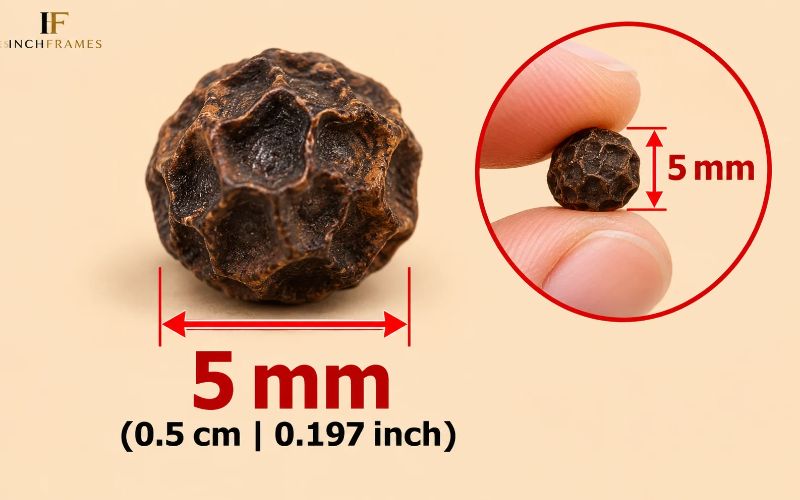
A small peppercorn is a handy way to picture a measurement close to 5 mm. Peppercorns are the dried berries used as a common kitchen spice. You may already have a small container of them in your kitchen.
Many whole peppercorns measure around 4–5 mm across, although their size changes depending on the variety and the individual berry. Some are slightly larger or smaller.
Take one peppercorn and look at it closely. Its round shape makes it easier to imagine a 5 mm distance from one side to the other. You can also place it beside a ruler to see how close it comes to the 5 mm mark.
Most people are surprised by how small this measurement looks when they see it beside an ordinary kitchen object. A peppercorn is a simple reference that you can find without buying anything special.
Small Craft Bead
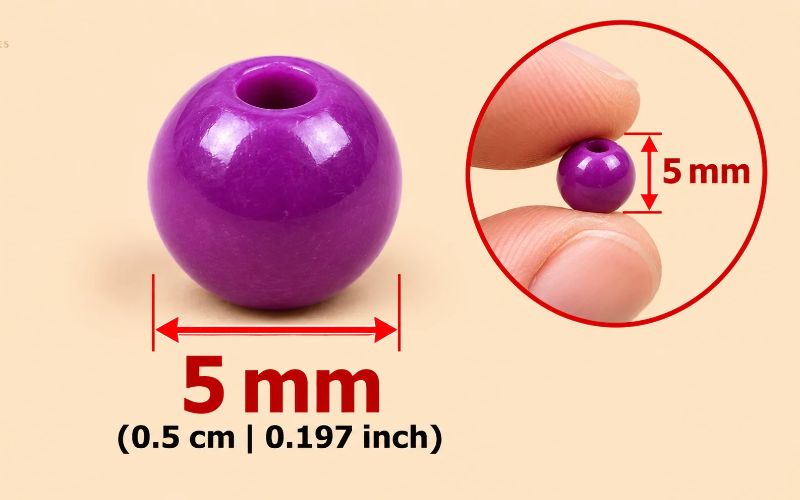
A small 5 mm craft bead is another useful example. These beads are commonly used for making bracelets, necklaces, decorations, and other handmade projects.
Unlike larger decorative beads, a 5 mm bead looks quite tiny when you hold it between your fingers. It is usually small enough to fit comfortably on a thin jewellery cord or suitable craft wire.
You can find beads in different materials, including plastic, glass, and wood. Their appearance may change, but the measurement stays the same when the bead is sold as a 5 mm size.
If you enjoy making jewellery, you may already have some in your craft box. Place one beside a ruler and look at the distance across its widest part. It gives you a direct example of how small 5 mm really is.
Related Post: How Big Is 4 mm? Compared to 12 Everyday Objects
Drill Bit
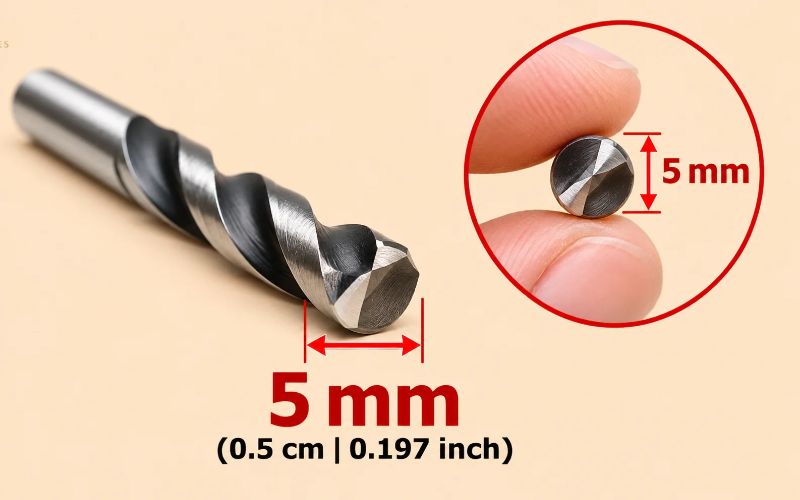
A 5 mm drill bit is one of the most accurate examples on this list because its cutting diameter is designed to be 5 mm.
You may find this size in a household drill-bit set. It is used for making holes in suitable materials such as wood, metal, or masonry, depending on the drill bit type.
Look at the width of the cutting end rather than the full length of the drill bit. That is the part that represents the 5 mm measurement.
This example is particularly helpful if you do DIY work at home. A drill bit is a practical tool, and its size is often printed or marked on the packaging. Just remember that the correct drill bit depends on the screw, wall plug, and material you are working with.
Knitting Needle
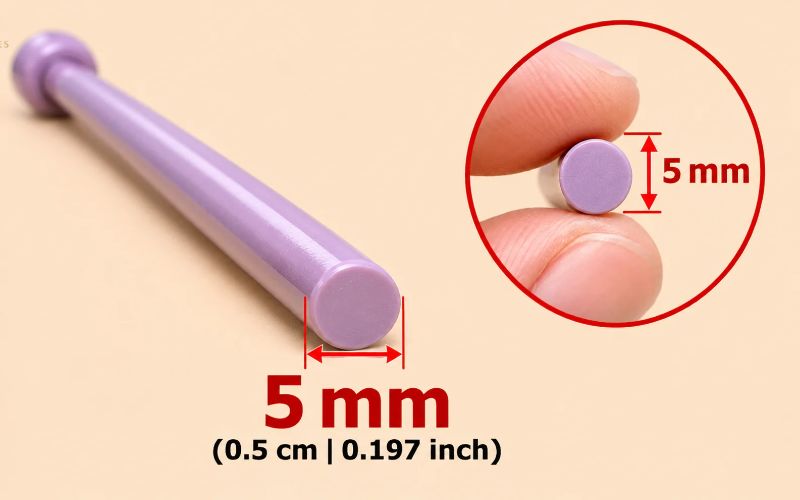
A 5 mm knitting needle gives you another clear reference for this measurement. Knitting needles are available in many thicknesses, and the size is usually printed on the packaging or marked on the needle itself.
The measurement refers to the needle’s diameter, not its length. This means the round body of the needle measures 5 mm from one side to the other.
You may see this size used for knitting sweaters, scarves, blankets, and other soft items. The right needle size depends on the yarn and the pattern you are following.
Hold a 5 mm needle between your fingers and look at its thickness. It is much slimmer than a pencil but thicker than many sewing needles. This makes it a useful everyday comparison when you want to understand a small measurement.
Crochet Hook
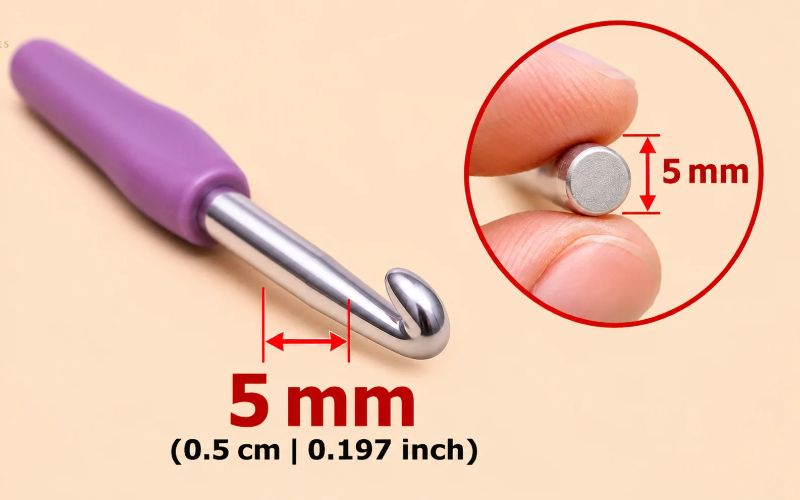
If you enjoy crocheting, a 5 mm crochet hook is another object that can help you understand this size.
Crochet hooks are made in different thicknesses to work with different yarn types. A hook marked 5 mm has a shaft diameter of approximately 5 mm. The hooked end is shaped differently, but the main shaft gives you a useful reference.
You can use this size for different projects, such as blankets, bags, scarves, and decorative pieces. The recommended hook size will depend on the yarn and the pattern.
Pick up a 5 mm crochet hook and compare its shaft with a ruler. You will see that it reaches only half a centimeter across. It is a practical example because the measurement is part of the tool’s normal size label, rather than an estimate based on its appearance.
Related Post: How Big Is 3 mm? Compared to 12 Everyday Objects
M5 Screw Diameter
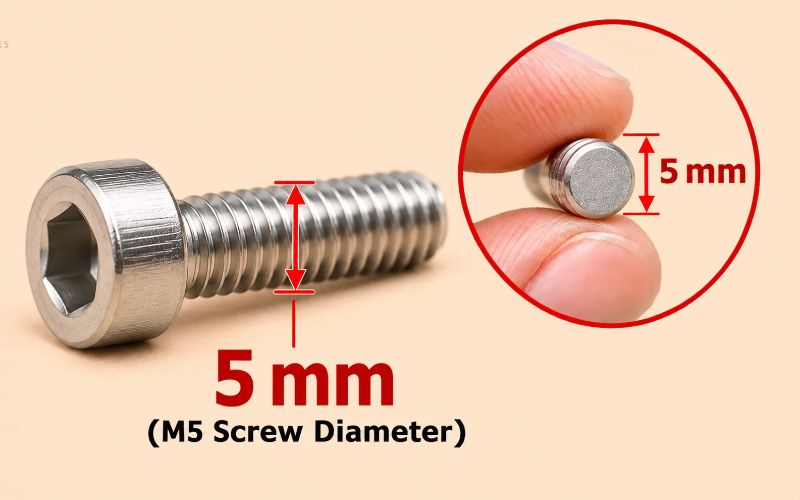
An M5 screw is a useful example of a 5 mm measurement. The letter M stands for metric, while the number 5 refers to the screw’s nominal thread diameter.
This means the outside diameter of its threaded section is designed around 5 mm. It does not mean that the screw is 5 mm long. M5 screws are available in many different lengths.
You might find these screws in furniture fittings, machinery, brackets, and home repair kits. They are especially useful when you need a particular fitting size for a project.
Look at the threaded part of an M5 screw rather than its head. That is where you will find the measurement you are trying to picture. It is a good example of how a small difference in size can matter when choosing hardware.
Small Lentil
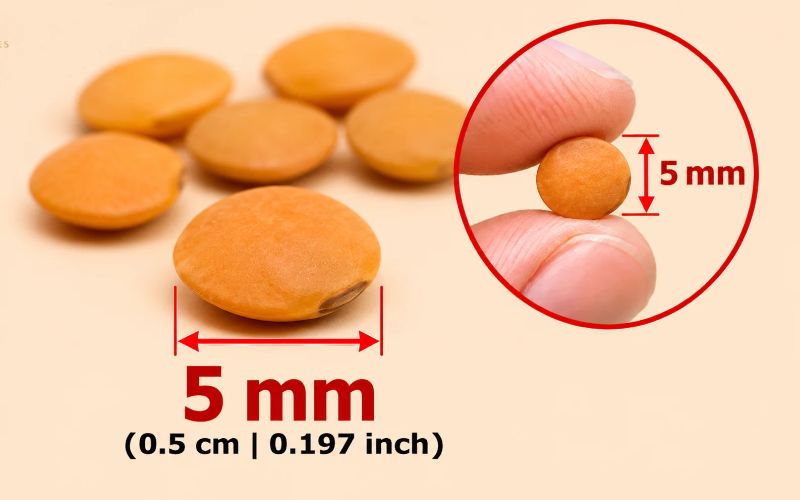
A small lentil can help you picture a measurement close to 5 mm. Lentils are common food items used in soups, curries, salads, and many other meals.
Their size depends on the type. Some varieties are quite small, while others are larger and flatter. A small lentil may measure around 4–5 mm across its widest part.
Take a dry lentil from your kitchen and look at it on a flat surface. Its size is easy to compare with a ruler because it does not move around as much as a round peppercorn.
A lentil is not an exact measuring tool, but it gives you a familiar food-based comparison. If you regularly cook with lentils, you probably already have this example available at home.
Small Decorative Sequin
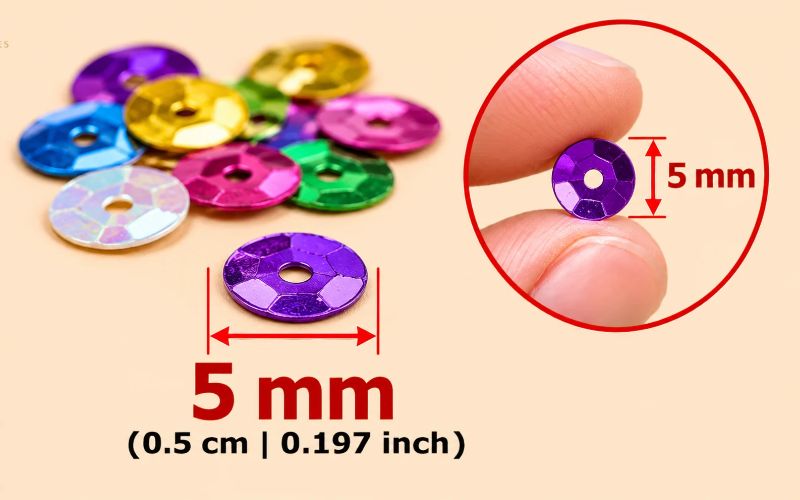
Small decorative sequins can also be close to 5 mm across. These shiny pieces are often used to decorate clothing, greeting cards, bags, and handmade accessories.
You can find them in different colours, shapes, and finishes. Round sequins measuring 5 mm are commonly sold for sewing and craft projects.
Place one on your fingertip. You will notice that it takes up only a small area. Its thin, flat shape also gives you a different way to understand the measurement compared with a round bead or peppercorn.
The important measurement here is the distance across the sequin, not its thickness. Some sequins have small holes in the centre, but those holes do not change their overall width. If you have a sewing or craft box, this is another easy object to use for a quick comparison.
Tiny Jewellery Spacer Bead
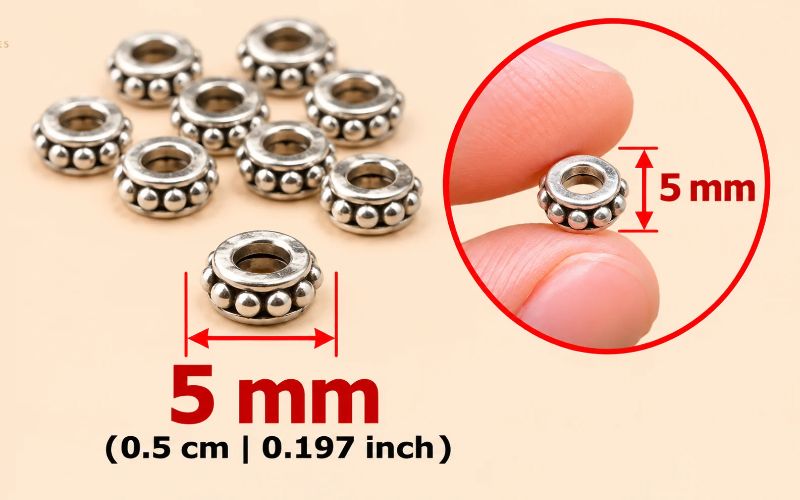
Jewellery spacer beads are small pieces used to separate larger beads in necklaces and bracelets. Some are sold in a 5 mm size, making them a useful reference for this measurement.
They can be made from metal, glass, wood, or plastic. Their main purpose is to add spacing and improve the look of a jewellery design.
A 5 mm spacer bead may look quite small when placed beside a larger decorative bead. However, it can make a noticeable difference to the finished bracelet or necklace.
You can find these beads in craft shops and online jewellery supply stores. If you have a bracelet with small metal or coloured separators, take a closer look at them. Some may be close to 5 mm across, although their size depends on the design.
Related Post: How Big Is 2 mm? Compared to 13 Everyday Objects
Small Round Seed
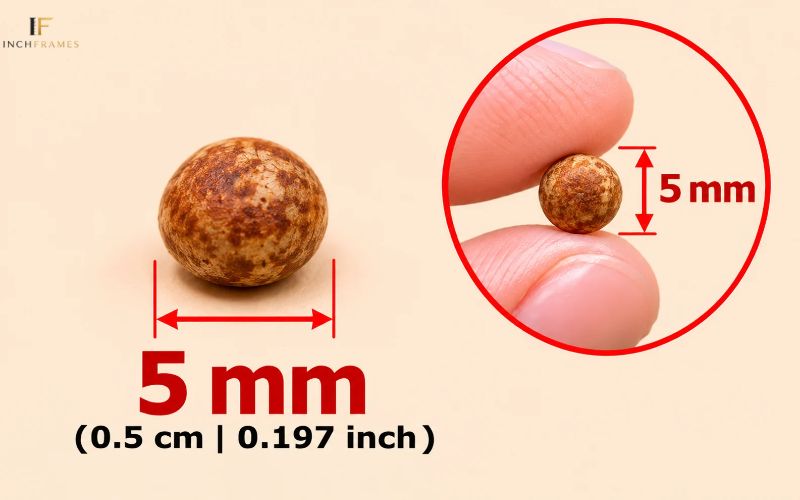
Some small round seeds measure close to 5 mm, although seed sizes vary greatly between plants. Certain varieties of garden and vegetable seeds can give you a useful visual reference.
For example, a relatively small round seed can look similar in width to a tiny bead. Its size will depend on the plant species, so you should not treat every seed as a 5 mm example.
If you have a packet of garden seeds, check whether the packaging provides dimensions. You can also place an individual seed beside a metric ruler to compare it with the 5 mm mark.
This example is useful because seeds are familiar to gardeners and people who grow plants at home. It also shows why checking the actual size is better than assuming every small object has the same dimensions.
USB-A Plug Shell Height
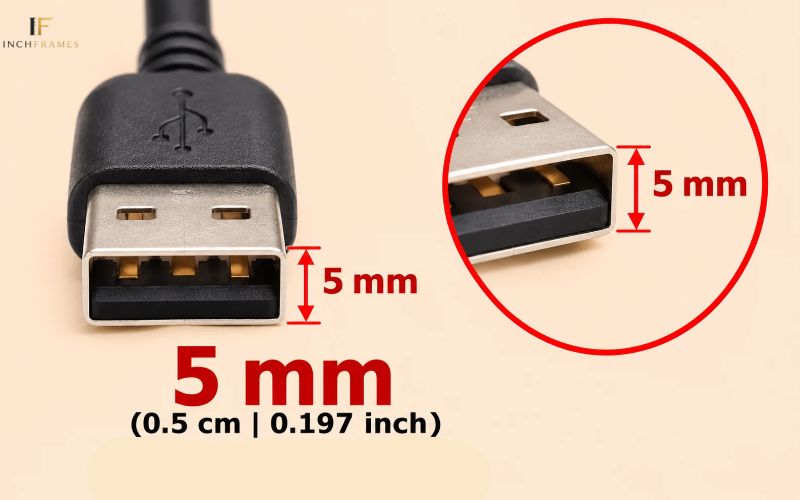
A standard USB-A plug provides a surprisingly useful comparison. The metal shell of a typical USB-A connector is approximately 4.5 mm high, which is very close to 5 mm.
You have probably seen this type of connector on older computer accessories, keyboards, flash drives, and charging cables. It is the familiar rectangular plug that fits into a matching USB-A port.
Look at the metal part of the connector from the front. Its height is just under half a centimeter, giving you a good idea of how small 5 mm is.
The exact dimensions can vary slightly between connector designs. Still, this is a useful household reference because many people have a USB-A cable or device nearby.
Six Stacked Credit Cards
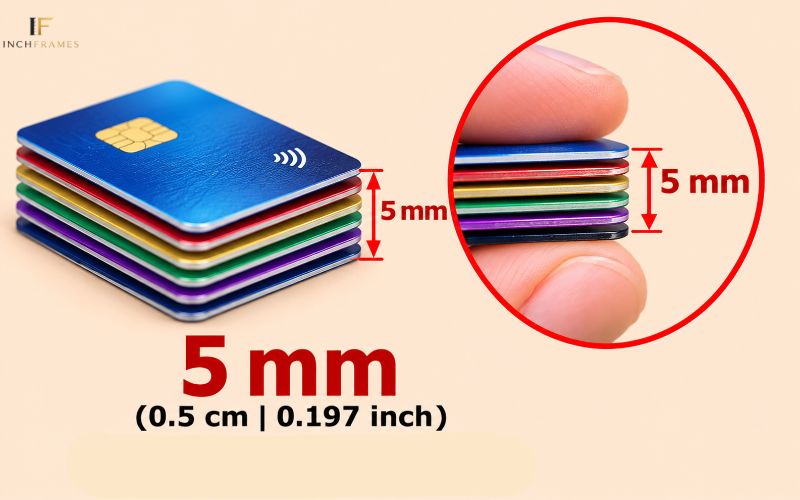
A credit card is much thinner than 5 mm, but stacking several cards together gives you a useful comparison.
A standard plastic payment card is usually around 0.76 mm thick. When you stack six cards, their combined thickness is approximately 4.56 mm.
That is quite close to 5 mm. You can try this with old membership cards, gift cards, or unused payment cards. Make sure they are placed directly on top of each other without gaps.
This example is helpful because most people know what a credit card feels like. One card is very thin, but six together create a noticeably thicker stack. It also gives you a practical way to understand how several small measurements can add up to a larger one.
Stack of 50 Sheets of Paper
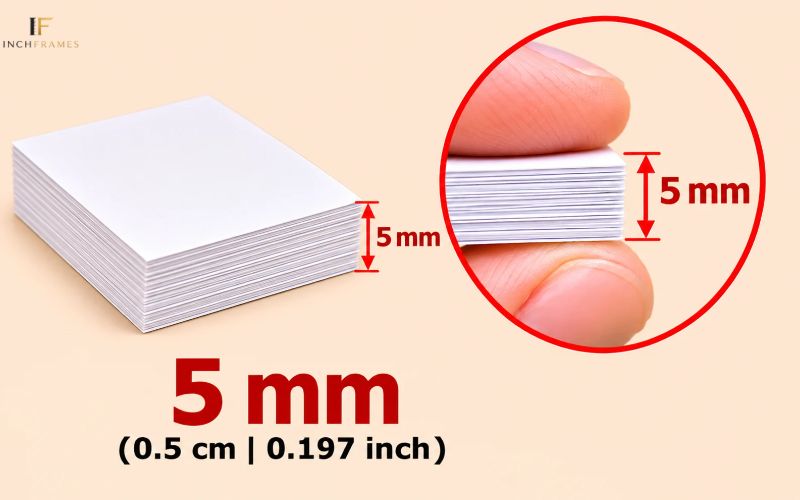
A stack of 50 ordinary sheets of printer paper can be close to 5 mm thick. Standard office paper is often around 0.1 mm thick, although the exact thickness depends on its weight and type.
When you place 50 sheets together, the total thickness is roughly 5 mm if each sheet measures about 0.1 mm. You can try this with a regular stack of A4 paper. Press the sheets together gently and look at the side edge. It gives you a simple view of what half a centimeter looks like.
This is especially useful for students, teachers, and office workers because paper is easy to find. Keep in mind that thicker paper or card will produce a different result.
How to Measure 5 mm Without a Ruler
You do not always need a measuring tool to get a rough idea of 5 mm. Here are four simple methods you can try.
1. Use a metric measuring tape: If you have a measuring tape with millimeter markings, find the 0 and 5 marks. The space between them shows exactly 5 mm.
2. Use a 5 mm drill bit: If you have a labelled drill-bit set, the cutting width of the 5 mm bit gives you a ready-made reference.
3. Compare with a credit card stack: Six standard credit cards placed together are about 4.6 mm thick. This is close enough for a rough visual estimate.
4. Use a marked ruler: Find the 1 cm mark and divide that distance in half. Since 1 cm equals 10 mm, half of it is 5 mm.
Remember that visual estimates are useful for simple comparisons, but precise work needs a proper measuring tool.
Is 5 mm Considered a Small Measurement?
Yes, 5 mm is considered a small measurement, especially when compared with everyday lengths such as centimeters, inches, and feet. However, it is large enough to make a visible difference in small objects.
For example, when buying a screw, choosing a drill bit, or selecting a jewellery bead, a difference of just 1 mm can affect how well the parts fit together.
It is also useful to understand the relationship between millimeters and centimeters. Ten millimeters make 1 centimeter, so 5 mm is exactly half of that distance. If you want to picture a larger length, 2 cm equals 20 mm, which is four times as long as 5 mm.
Related Post: How Long Is 15 cm? Compared to 12 Everyday Objects
Frequently Asked Questions
How big is 5 mm in inches?
Five millimeters is approximately 0.197 inches. It is just under one-fifth of an inch, making it a very small length.
Is 5 mm the same as half a centimeter?
Yes. Five millimeters is exactly equal to 0.5 centimeters. Since 10 mm make 1 cm, 5 mm is half that distance.
How big is 5 mm compared to a finger?
Five millimeters is much smaller than the width of an adult finger. It is roughly the size of a small peppercorn or a tiny craft bead, rather than the full width of your fingertip.
What everyday object is 5 mm wide?
A 5 mm drill bit, 5 mm knitting needle, and 5 mm crochet hook are examples of objects designed around this measurement. A small peppercorn may also be close to 5 mm across.
Is 5 mm bigger than 1/4 inch?
No. A quarter of an inch is approximately 6.35 mm, so it is larger than 5 mm. The difference is about 1.35 mm.
How many millimeters are in half an inch?
Half an inch equals 12.7 mm. This means half an inch is more than twice as long as 5 mm.
Can I measure 5 mm with my fingers?
You can try to estimate it, but your fingers are not accurate measuring tools for such a small distance. A metric ruler, measuring tape, or labelled 5 mm tool will give you a better result.
What is 5 mm in centimeters and meters?
Five millimeters equals 0.5 centimeters and 0.005 meters. These conversions are useful when comparing measurements written in different units.
Final Remarks
Five millimeters may be a tiny distance, but it appears in more everyday objects than you might expect. From a small peppercorn and craft bead to a drill bit and jewellery fitting, there are plenty of familiar ways to picture this measurement.
The easiest fact to remember is that 5 mm equals half a centimeter or about 0.2 inches. Once you understand that simple conversion, it becomes much easier to compare small objects without getting confused.
My tip is to keep a metric ruler somewhere handy at home. The next time you see a small screw, bead, or narrow gap, compare it with the 5 mm mark. A quick look can help you judge small measurements much better.
