
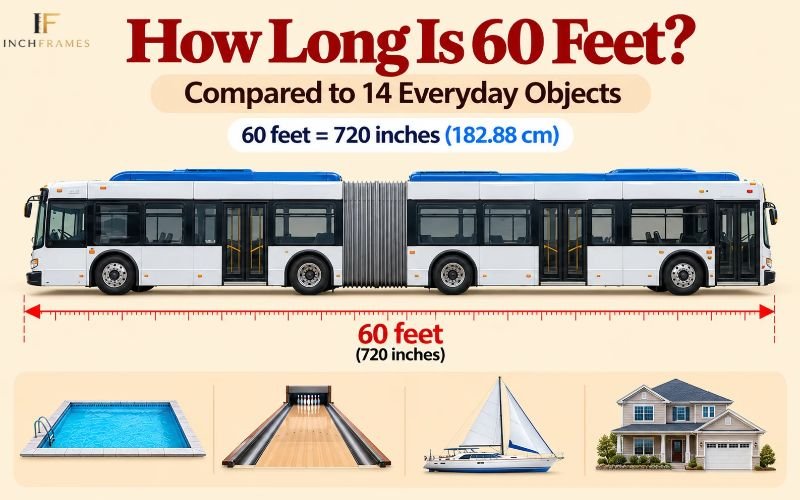
How Long Is 60 Feet? 60 feet is equal to 720 inches, 20 yards, or about 18.29 meters. It is a long distance, but it becomes much easier to picture when you compare it with familiar objects and spaces. Imagine a straight line stretching across a large backyard or down a long outdoor area.
If you are trying to understand how long 60 feet really is, looking at the number alone may not help much. A real-world reference gives your eyes something useful to work with. You can picture a long swimming pool, a large bus, a driveway, or even a long boat and get a much better sense of the distance.
Whether you are planning a home project, checking the size of an outdoor space, shopping for equipment, or simply curious about measurements, knowing what 60 feet looks like can make the number much easier to understand.
How Long Is 60 Feet, Really?
60 feet measures 720 inches or 18.288 meters. You can also think of it as 20 yards, which makes the measurement easier to picture if you are familiar with sports fields.
A 60-foot distance is long enough to cross a large open area but not so long that you cannot walk it in a short time. For another simple reference, it is five times the length of a 12-foot section. You could also think of it as three sections of 20 feet placed end to end.
You may encounter a 60-foot distance when looking at a large outdoor property, a long driveway, or a work area. Most people are surprised by how much space 60 feet covers when they actually walk it. Seeing the distance in person can make the number feel much more real.
60 Feet in Real-World Use
A 60-foot distance can matter when planning outdoor spaces, construction areas, and property layouts. For example, someone measuring a large driveway or planning where equipment should sit may need to know whether there is enough room for a 60-foot stretch.
The measurement also appears in sports and recreation. A baseball base path, for example, uses a 60-foot distance between bases, giving you a familiar sports-related reference for this number. In construction, landscaping, or home improvement, knowing the available distance before buying materials can prevent costly mistakes.
If you are estimating 60 feet for a project, use everyday comparisons to get started, then switch to a measuring wheel or tape when the exact distance matters.
Everyday Objects That Are 60 Feet Long
The examples below come from different parts of everyday life. Some have standard or well-known dimensions close to 60 feet, while others can commonly be built, arranged, or purchased at about this length.
| Object | Approx. Size | Everyday Context |
|---|---|---|
| Bowling lane | 60 feet | Sports |
| Large swimming pool | 60 feet | Recreation |
| Articulated city bus | 60 feet | Transportation |
| Large rowing shell | 60 feet | Sports / Recreation |
| Large residential driveway | 60 feet | Home |
| Garden or planting row | 60 feet | Gardening |
| Small event stage | 60 feet | Events |
| Large outdoor banner | 60 feet | Parties / Events |
| Long playground area | 60 feet | Recreation |
| Large sailboat | 60 feet | Boating |
| Two-story home frontage | 60 feet | Housing |
| Long retail storefront | 60 feet | Shopping |
| Large backyard | 60 feet | Home / Outdoor |
| Large inflatable water slide | 60 feet | Recreation |
Bowling Lane
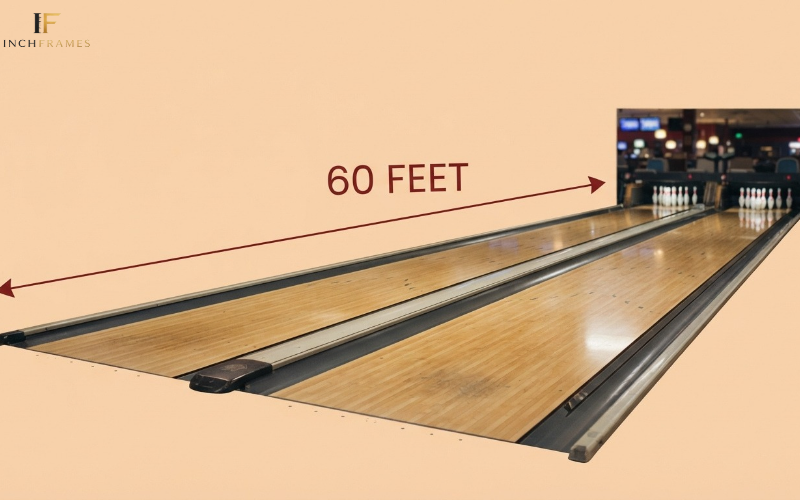
A regulation bowling lane is one of the best real-world references for 60 feet. The lane surface from the foul line to the center of the head pin is approximately 60 feet long. USBC specifications place the lane length between about 59 feet 11½ inches and 60 feet ½ inch.
If you have ever bowled, you have probably looked down a 60-foot distance without realizing it. The lane may look shorter because it is narrow and surrounded by walls, seating, and other lanes. But if you could pick it up and lay it across an open field, you would see just how far 60 feet really reaches.
This is probably the most precise everyday reference on this list. When someone asks, “How long is 60 feet?” you can simply picture the playing surface of a bowling lane.
Large Swimming Pool
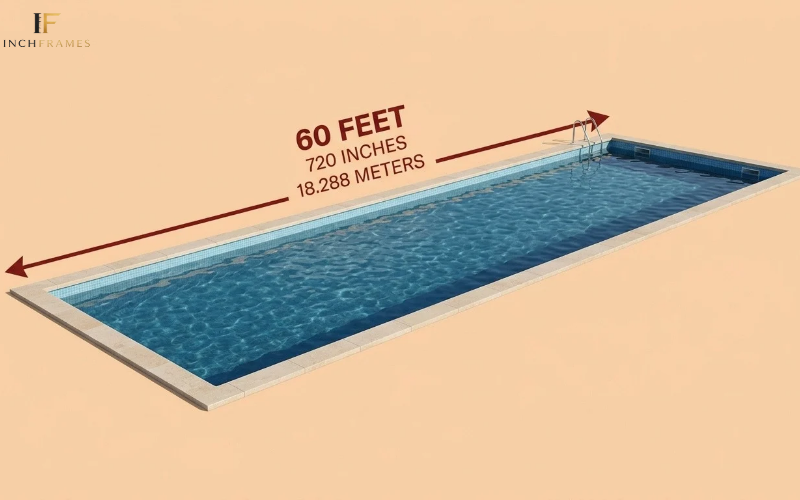
A swimming pool can also provide a useful picture of 60 feet. Not every home pool is this long, but larger residential, community, and training pools can reach or pass this size.
Imagine standing at one end of a long pool and looking toward the opposite end. A 60-foot pool would give you a substantial stretch of water. It would feel much longer than a typical backyard pool designed mainly for cooling off.
The comparison is especially useful because you can picture yourself walking beside the pool. If you divided the pool into six equal 10-foot sections, you would have 60 feet. A pool is also a better mental reference than an abstract line because its length is easy to see from end to end.
Articulated City Bus
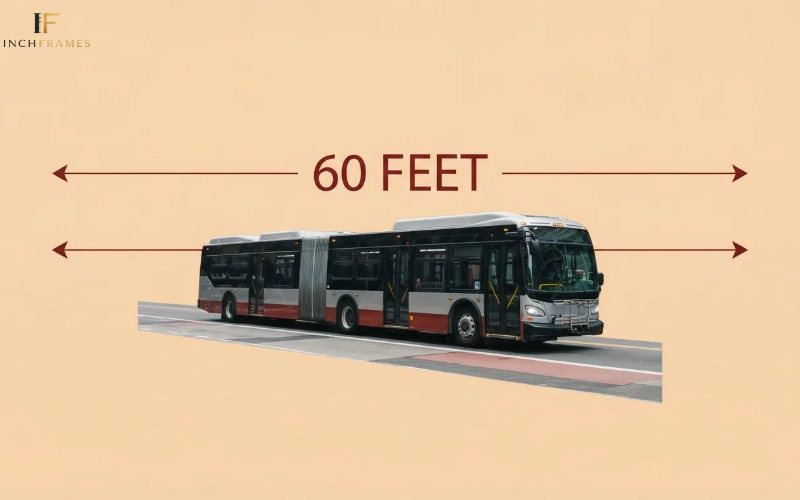
An articulated city bus is another interesting reference because some long models reach close to 60 feet. These buses have a flexible joint in the middle, allowing them to bend while turning.
When you see one on a street, it may not seem extremely long because it is surrounded by buildings, cars, and other large objects. Park one beside a normal car, however, and its size becomes much easier to understand.
A 60-foot articulated bus would be about ten times the length of a 6-foot person. It also gives you a useful transportation comparison. If you are trying to picture 60 feet while standing on a street, imagine the length of a very long city bus from its front bumper to its rear end.
Related Post: How Long Is 50 Feet? Compared to 15 Everyday Objects
Large Rowing Shell
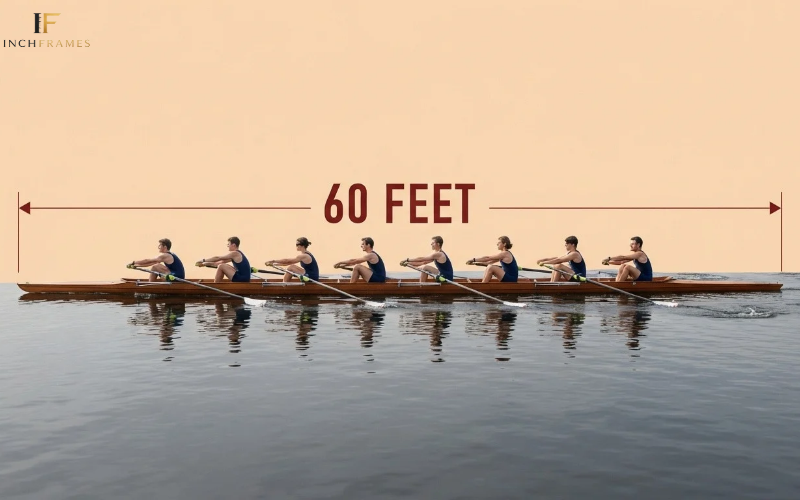
A large rowing shell can be about 60 feet long. This is a particularly useful example because long racing shells are built to carry several rowers in a narrow boat.
Boeing has even described historic eight-oared rowing shells as being 60 feet long.
Picture a long, narrow boat sitting on a trailer or floating on calm water. Its length would stretch about the same distance as a regulation bowling lane. Unlike a wide boat, a rowing shell can look surprisingly small from a distance because it is so narrow.
This example shows that 60 feet does not always mean something looks huge in every direction. An object can be very long while remaining narrow.
Large Residential Driveway
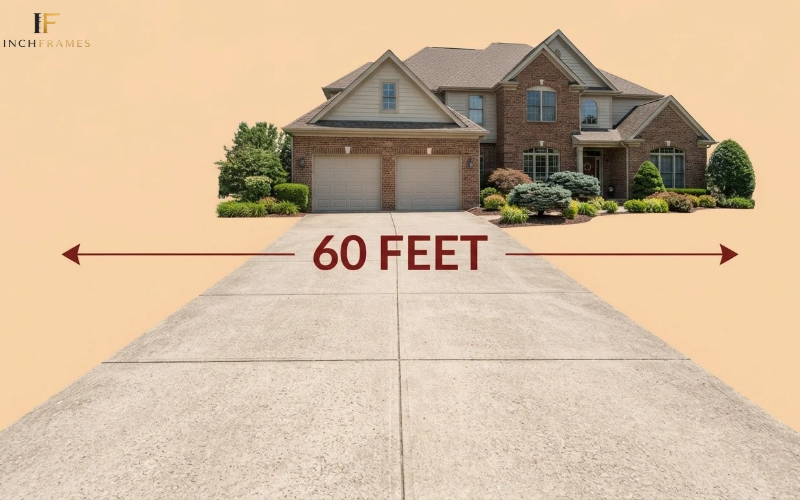
A driveway can be around 60 feet long, especially on a larger property where the house sits farther back from the road. Driveways vary greatly, so this is an approximate comparison rather than a fixed standard size.
Picture a driveway beginning at the street and running toward a garage or house. If it is 60 feet long, you would have a significant walking distance from one end to the other. Six 10-foot sections would cover the full length.
This comparison is useful because you can often look at your own property and make a quick estimate. If your driveway appears to be about twice the length of a 30-foot space, it may be close to 60 feet. For an exact measurement, though, a tape measure or measuring wheel is still the better choice.
Garden or Planting Row
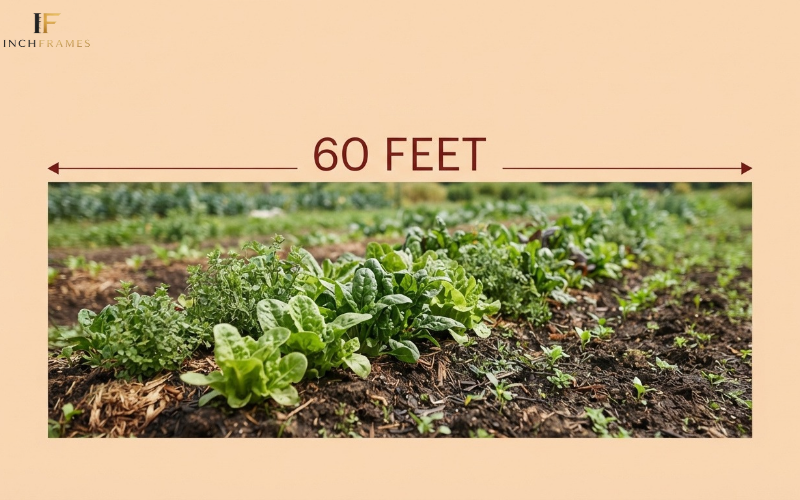
A long garden row can easily be planned around 60 feet. This might be a row of vegetables, flowers, shrubs, or other plants running along a backyard or larger garden.
Imagine standing at one end of the row and looking toward the other. Sixty feet would give you a long planting area. You could divide it into smaller sections for different plants, making the measurement easier to manage.
This is a helpful example for gardeners because they often think in terms of rows and sections rather than one large measurement. If you mark every 10 feet, six marks will give you a 60-foot row. The actual plants may curve or spread out, but the planned row length can still be about 60 feet.
Small Event Stage
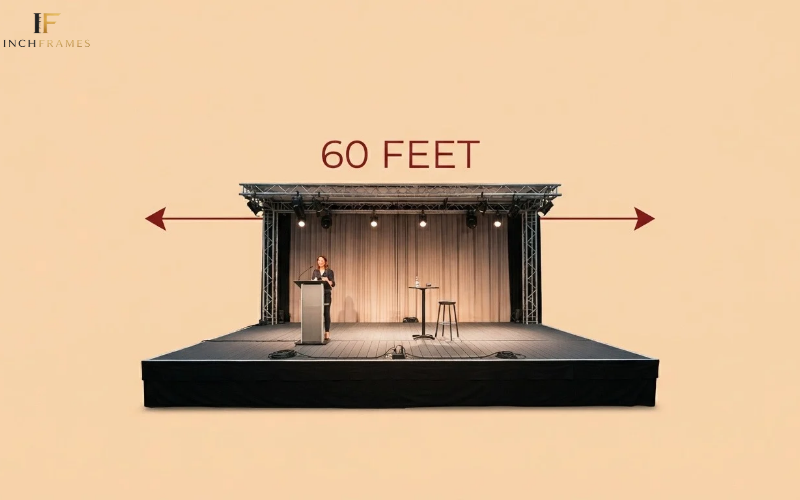
Large outdoor events sometimes use stages that are several dozen feet wide. A stage setup around 60 feet wide gives you another way to understand the measurement.
Imagine standing at one end of the stage and looking all the way across to the other side. A 60-foot width is broad enough to hold several performers, equipment areas, speakers, and other event equipment.
This comparison is different from a bowling lane because the stage is wide rather than narrow. That helps show how the same 60-foot measurement can feel different depending on what you are measuring. A 60-foot stage is a broad horizontal span, while a 60-foot bowling lane is a long, narrow path.
Related Post: How Long Is 40 Feet? Compared to 15 Everyday Objects
Large Outdoor Banner
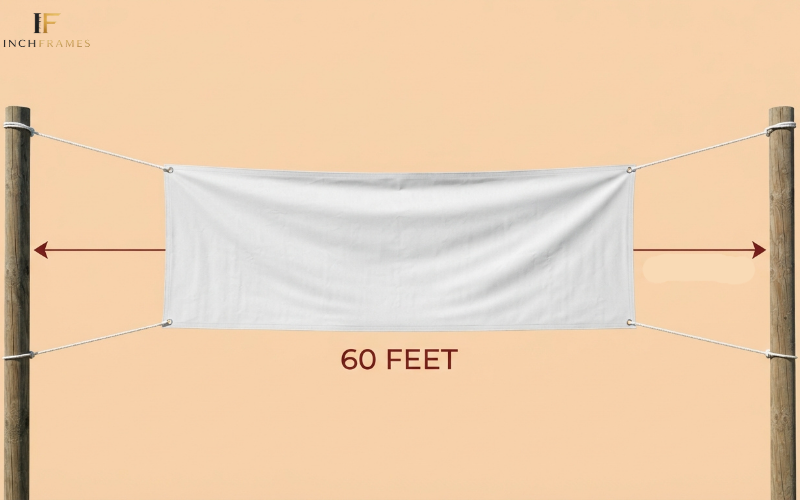
A large outdoor banner can be made or installed at a length of about 60 feet for festivals, sporting events, businesses, school functions, and other large gatherings.
Imagine a banner stretched straight along a fence. It would cover a sizeable section. Six 10-foot sections placed together would produce a 60-foot banner.
The flexible nature of a banner is worth remembering. If it hangs loosely, waves in the wind, or curves around a corner, it may not appear to span 60 feet in a straight line. The material itself can still measure 60 feet when laid flat.
This makes a banner a good example of how total length and visible straight-line distance can be different things.
Long Playground Area
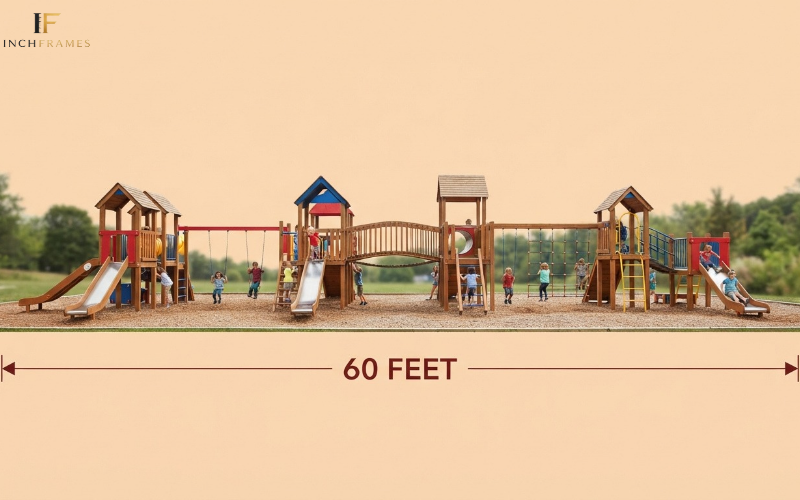
A large playground can stretch around 60 feet from one end to the other. This does not mean every playground is 60 feet long. Playgrounds come in many shapes and sizes, but larger installations can occupy a space around this scale.
Think about a playground with swings, slides, climbing equipment, benches, and open space. Walking from one end to the other could give you a good physical sense of 60 feet.
This comparison works well because most people understand the size of playground equipment. A 60-foot playground is much bigger than a small play area beside a house, but it is still a manageable neighborhood-sized space. It also helps you picture 60 feet horizontally instead of only thinking about it as the length of a single object.
Large Sailboat
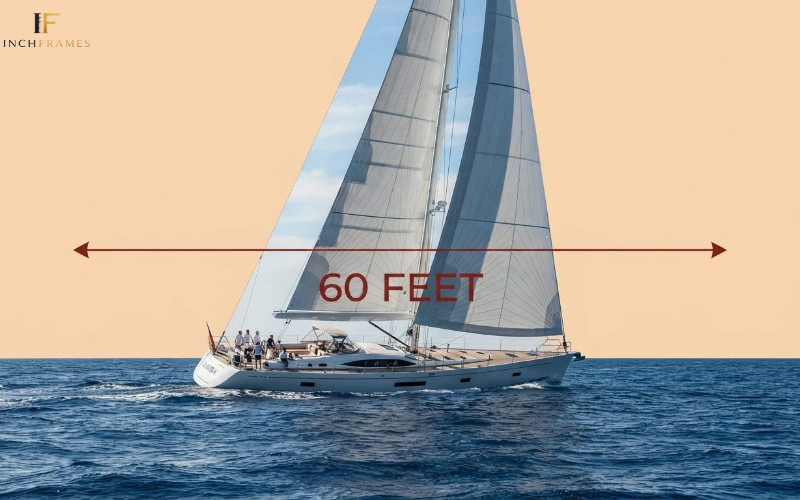
Some larger sailboats are close to 60 feet long. These are much bigger than the small recreational boats commonly used on lakes, but they are still a recognizable type of boat.
Imagine a 60-foot sailboat sitting at a marina. Its bow-to-stern length would stretch about 60 feet. If you stood beside it, the boat would be far longer than most cars and noticeably longer than many small boats.
A sailboat is also a good comparison because its length is easy to visualize when it is sitting on land. On the water, reflections, distance, and the wide surroundings can make it look smaller. On a dock or trailer, you can better appreciate how much space 60 feet occupies.
Two-Story Home Frontage
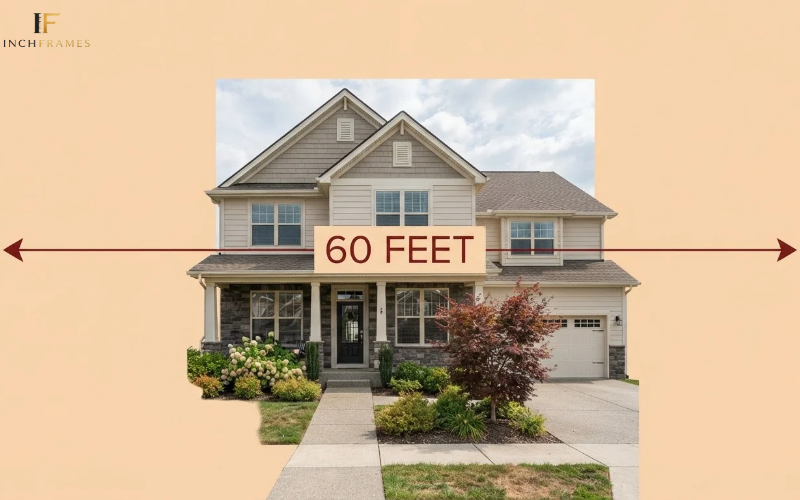
A large home can have a frontage close to 60 feet, meaning the visible front width of the house measures about 60 feet from one side to the other. This is not a standard size for houses, so think of it as an approximate reference.
Imagine standing across the street and looking at a wide two-story home. If its front spans 60 feet, the house would occupy a broad section of the property.
This is useful because you probably have a better sense of house width than you do of an empty 60-foot line. Compare the house with a smaller home or apartment building, and the difference becomes easier to see. Just remember that house sizes vary widely, so this is a visual comparison rather than a standard measurement.
Related Post: How Long Is 70 Feet? Compared to 15 Everyday Objects
Long Retail Storefront
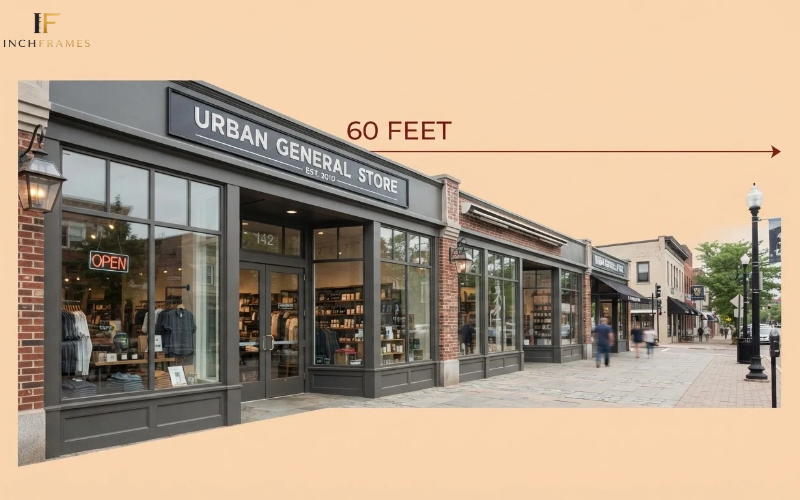
A long retail storefront can also span about 60 feet. Think of a neighborhood shop, supermarket section, clothing store, or other commercial space with a wide front facing a street or shopping center.
If the storefront were 60 feet across, you would need to walk quite a few steps to get from one end of the building’s front to the other. It could contain several doors, display windows, or signs.
This example is useful when you are walking through a shopping area. Instead of imagining a 60-foot ruler, look at the width of a large store. A storefront that feels unusually wide may give you a better sense of how much space 60 feet covers.
Large Backyard
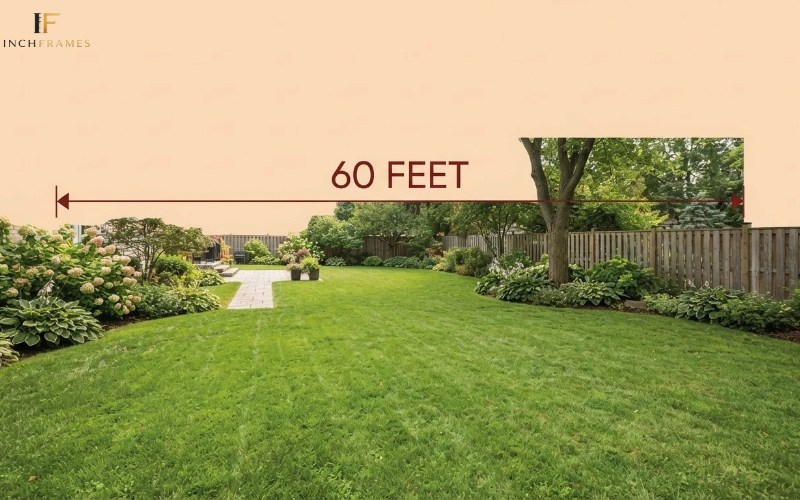
A large backyard can be about 60 feet across in one direction. This does not mean the entire yard has to be 60 feet by 60 feet. It simply means one side or span can measure around 60 feet.
Imagine standing at the back door and looking toward the far end of a long yard. If the distance is 60 feet, you would have a substantial open space between you and the boundary.
This is one of the easiest comparisons for homeowners. Marking a 60-foot line across a yard can immediately make the number feel real. You could also divide the space into six 10-foot sections. That makes planning for a garden, play area, seating space, or landscaping project much easier.
Large Inflatable Water Slide
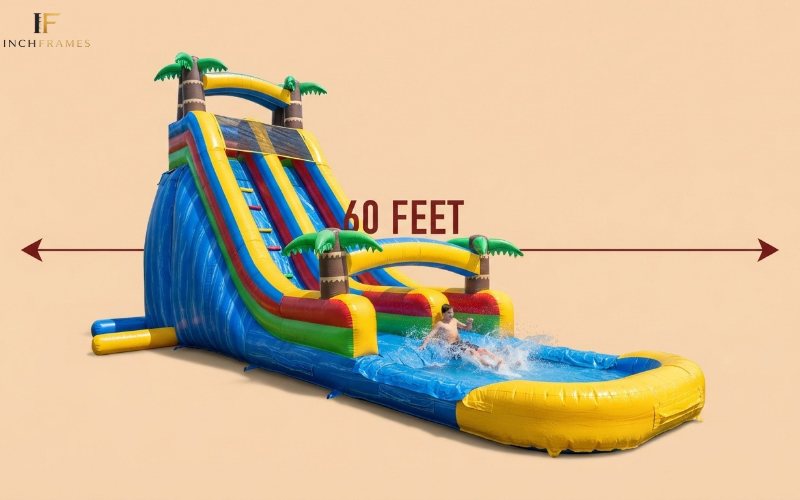
Large inflatable water slides used at outdoor parties, fairs, camps, and events can reach lengths around 60 feet. Smaller backyard versions are much shorter, so the size depends heavily on the model.
Picture a long inflatable slide stretched across a grassy field. Walking from the entrance to the end of the slide would give you a direct sense of the distance.
This is a fun comparison because the object is familiar but the scale is easy to underestimate. A 60-foot slide would be much longer than the small inflatable play equipment often used in a backyard. It also shows why measurements matter when planning an event: the available space needs to be large enough for the full structure, plus room around it for safe use.
How to Measure 60 Feet Without a Ruler
You can estimate 60 feet without carrying a long tape measure. These methods are useful for quick checks, but use a measuring wheel or tape when you need a precise result.
Count Your Steps
A typical adult step is roughly 2.5 to 3 feet. Around 20–24 normal steps can get you close to 60 feet, depending on your stride.
Use a 10-Foot Section
If you can identify a distance of 10 feet, repeat it six times. Six sections of 10 feet equal exactly 60 feet.
Use Your Arm Span
If your arm span is close to 5 feet, about 12 arm spans would equal 60 feet. This is only a rough estimate because body proportions differ.
Use a Known Distance
A measured 20-foot section can be repeated three times to reach 60 feet. This is handy when marking out a yard, driveway, garden, or work area.
Related Post: 12 Everyday Things That Are 20 Inches Long
Frequently Asked Questions
How long is 60 feet in inches?
60 feet is 720 inches. You get this by multiplying 60 by 12, since there are 12 inches in one foot.
How long is 60 feet in meters?
60 feet equals 18.288 meters. For everyday use, you can round this to about 18.3 meters.
How many yards is 60 feet?
60 feet equals 20 yards. There are 3 feet in every yard, so 60 divided by 3 gives 20.
Is 60 feet a long distance?
Yes, 60 feet is a fairly long distance for most everyday spaces. It is about ten times the height of a 6-foot person and is long enough to span a large outdoor area.
What is something that is 60 feet long?
A regulation bowling lane is one of the clearest examples. Its lane surface measures about 60 feet from the foul line to the center of the head pin.
How many steps is 60 feet?
The answer depends on your stride length. If you take steps averaging about 2.5 feet, 60 feet would be around 24 steps. A person’s actual step length can vary, so this is only an estimate.
How big is 60 feet compared with a house?
A 60-foot span is wide enough to cover the front of some large homes. However, houses vary greatly in width, so a 60-foot house frontage should be treated as an example rather than a standard size.
Is 60 feet the same as 20 yards?
Yes. 60 feet and 20 yards are exactly the same length. Three feet make one yard, so 20 yards equals 60 feet.
Final Remarks
60 feet equals 720 inches, 20 yards, or about 18.29 meters. It is a sizeable distance, but everyday references can make it much easier to picture. A bowling lane, large pool, long driveway, or articulated bus can give you a useful sense of how far 60 feet stretches.
For a quick estimate, remember that 60 feet is six sections of 10 feet or three sections of 20 feet. You can also count your steps to get a rough idea when you are outside.
Everyday comparisons are great for understanding size, but they should not replace a proper measurement when accuracy matters. If you are planning a construction, landscaping, or home project, use a measuring wheel or tape before making final decisions.
