
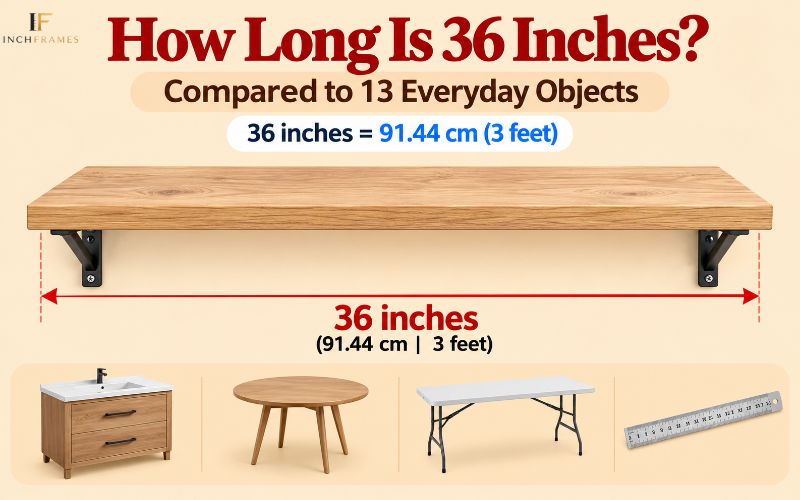
36 inches is exactly 3 feet, or 91.44 centimetres (cm). That is about the length of a standard yardstick, and it is a size you may come across in your home, garden, school, or workshop. If you are trying to picture 36 inches without a tape measure, comparing it with familiar objects can make the measurement much easier to understand.
Think of a space that is 3 feet long. It could be part of a kitchen worktop, a short section of a garden path, or a place where you plan to put a small piece of furniture. Knowing this length helps when you are shopping for household items, planning a DIY project, or checking whether something will fit.
In this guide, you will learn how long 36 inches is, how it compares with everyday objects, and how to estimate the distance without a ruler. You will also find useful conversions and practical tips for measuring more accurately.
How Long Is 36 Inches, Really?
36 inches measures 3 feet, which is also equal to 1 yard. In metric units, that works out to 91.44 cm or 914.4 millimetres (mm). These conversions are useful when you are reading product details that use different measurement systems.
Imagine marking a line on the floor that is just over 90 cm long. That gives you a useful sense of the distance, even if you do not have a measuring tool nearby. It is longer than a typical school ruler and shorter than the height of many kitchen worktops measured from the floor.
You might come across this length when planning a short section of shelving, measuring a gap beside a cupboard, or choosing a piece of timber for a home project. The exact size matters when two pieces need to fit together. A quick estimate can help you plan, but a tape measure is the better choice when the fit needs to be precise.
36 Inches in Real-World Use
A 36-inch measurement is useful in home improvement because many building materials and furniture parts are sold in feet and inches. For example, you may need a 3-foot length when planning a small repair, cutting a piece of wood, or working out how much space a project needs.
This measurement can also help when planning a walking route or arranging a room. If you mark a 3-foot section on the floor, you can check whether a small area feels wide enough for your intended use. Keep in mind that the space you need depends on what you are doing. A gap that works for storing an item may not be wide enough for comfortable movement.
When measuring for a real project, check the full dimensions of the space and allow for any extra room needed for fitting, opening, or movement.
Everyday Things That Are 36 Inches Long
The easiest way to picture 36 inches is to compare it with objects that have a side, width, or length close to 3 feet. The examples below include common household items, tools, and other familiar things. Exact sizes can vary by brand and model, so check the listed dimensions if you need a precise match.
| Everyday object | Typical measurement to compare |
|---|---|
| Yardstick | 36 inches long |
| Spirit level | 36 inches long |
| curtain rod | 36 inches long |
| Standard door | 36 inches wide |
| Bathroom vanity | 36 inches wide |
| Round dining table | 36 inches across |
| Folding table | 36 inches across |
| Garden edging section | 36 inches long |
| Shelving board | 36 inches long |
| Metal ruler or measuring stick | 36 inches long |
| Wall-mounted grab bar | 36 inches long |
| Drawer slide | 36 inches long |
| Wide workbench top | 36 inches across |
Yardstick
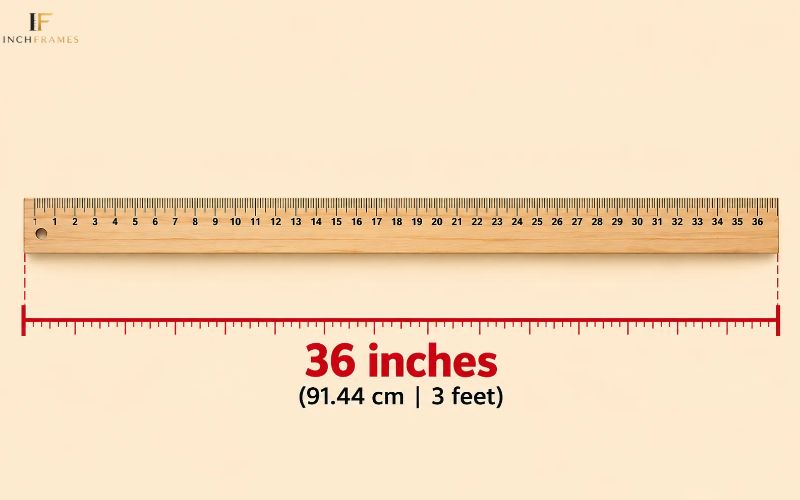
A yardstick is one of the simplest ways to understand 36 inches because it measures exactly one yard. That means the full stick is 3 feet long, with each inch marked along its length. You may have seen one in a school classroom, sewing room, craft area, or workshop.
Place a yardstick on a table and look at the distance from one end to the other. That is your full 36-inch reference. Unlike guessing from the size of a hand or a step, this gives you a fixed measurement.
A yardstick is also useful for checking smaller lengths. You can use its markings to see where 12 inches or 24 inches fall along the stick. Once you understand those points, picturing the full 36 inches becomes easier.
Spirit Level
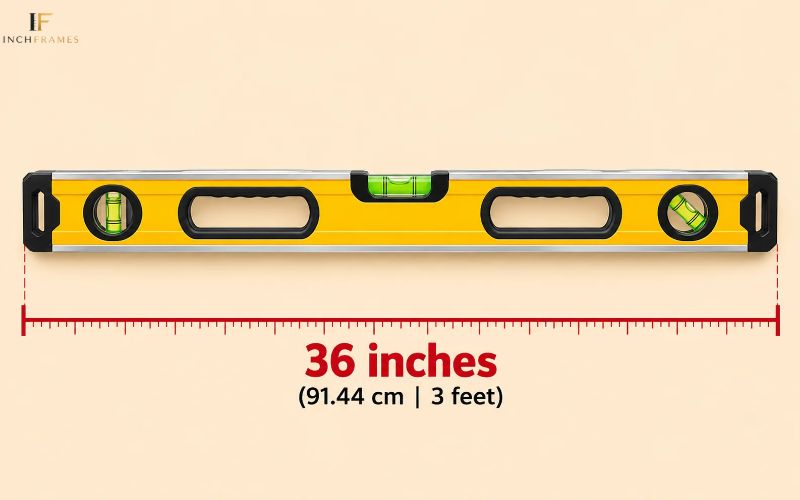
A 36-inch spirit level is a useful reference if you enjoy DIY projects. This tool helps you check whether a surface is level or whether a wall or post is upright. Many longer levels are made for jobs where a short ruler would not give enough reach.
Set a 36-inch level on the floor or a workbench and compare its length with the space around it. You will see how far 3 feet stretches in a straight line. The tool’s length also makes it handy when fitting cabinets, hanging shelves, or checking a long surface.
Not every spirit level measures 36 inches, so check the label or product details before using one as a reference. A level that is exactly 3 feet long gives you a reliable comparison.
Related Post: How Long Is 19 Inches? Compared to 12 Everyday Objects
Curtain Rod
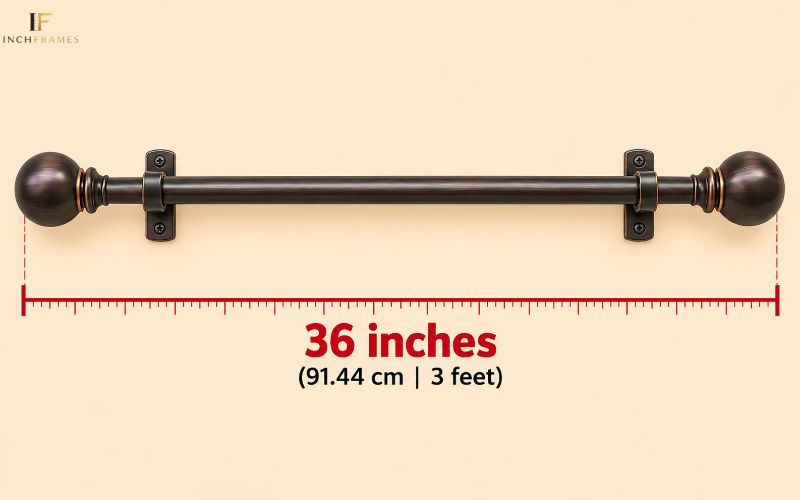
A curtain rod set to 36 inches offers another practical way to picture this measurement. Rods of this size are often used for small windows or narrow spaces, although the correct length depends on the window and the curtain style.
Imagine holding the rod horizontally in front of you. The distance from one end to the other is 3 feet when it is set to exactly 36 inches. That can help you judge whether a narrow window covering or a small wall space might need a similar length.
Many curtain rods extend or shorten, so their advertised size may be a range rather than one fixed measurement. Check the adjustment range before buying. If you need a rod that measures exactly 36 inches, make sure that length is supported by the model you choose.
Standard Door
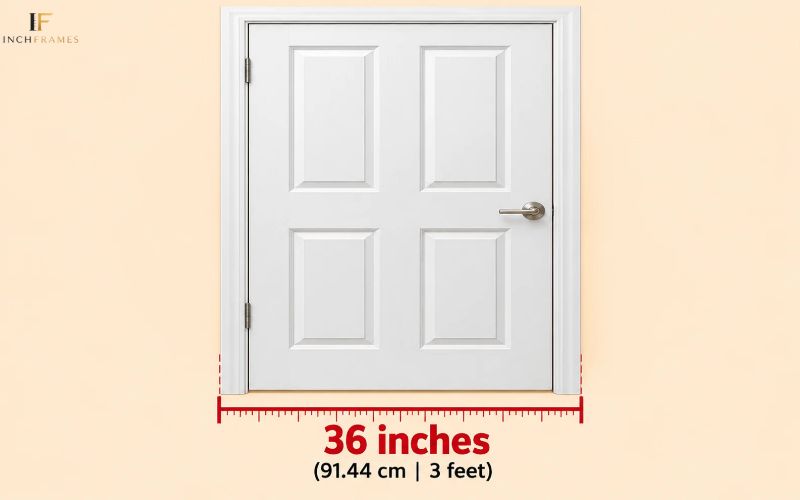
A door that is 36 inches wide provides a familiar real-world comparison. This width is commonly used for some exterior doors and accessible doorways, though actual door sizes vary with the building and the type of door.
Stand in front of a door and look across its width rather than up its height. A 36-inch-wide door stretches 3 feet from one side to the other. This is a useful visual reference because most people walk through doors every day without thinking about their measurements.
Remember that a door’s width is not always the same as the clear opening. The frame, hinges, and the way the door swings can affect the usable space. If you are replacing a door or checking whether furniture will pass through, measure the opening itself instead of relying on a visual estimate.
Bathroom Vanity
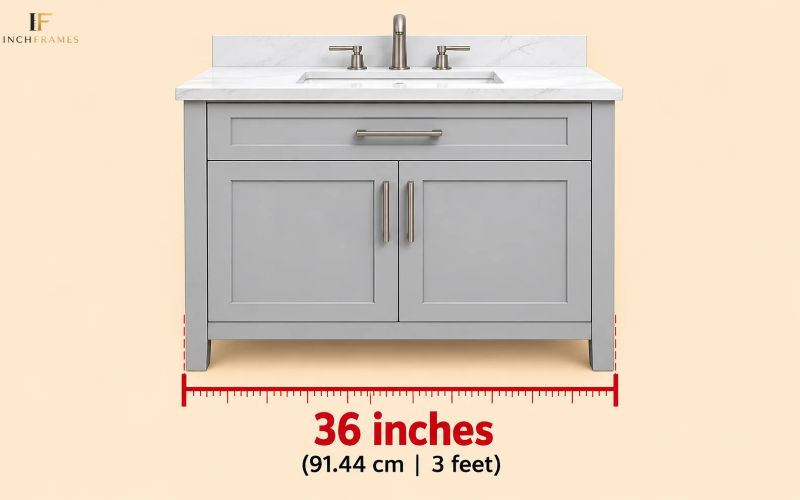
A bathroom vanity with a width of 36 inches is a helpful example of how long 3 feet looks on a piece of furniture. This size can work in many small or medium bathrooms, depending on the layout and the space available for the sink, storage, and walking area.
Picture the cabinet running along the wall beneath a bathroom mirror. Its width stretches 3 feet from one side to the other. If you have a narrow bathroom, that comparison may help you judge whether a vanity of this size could fit.
Vanities come in many widths, and the top may extend slightly beyond the cabinet. Check both the cabinet dimensions and the full countertop dimensions before ordering. Leave enough space for doors, drawers, plumbing, and comfortable movement around the fixture.
Round Dining Table
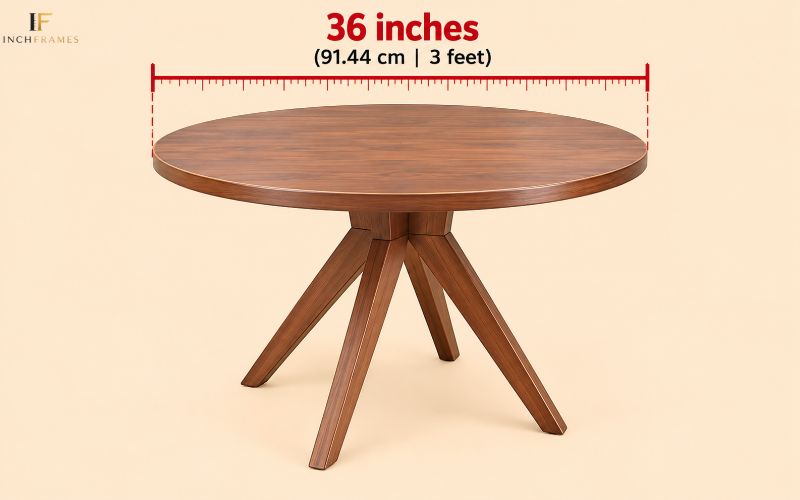
A round dining table with a 36-inch diameter measures 3 feet straight across its top. This does not mean the table is 36 inches around its edge. Diameter is the distance from one side of the circle to the other, passing through the centre.
This is a useful comparison when you are planning a breakfast nook, a small dining area, or a compact kitchen. Imagine drawing a straight line across the middle of the tabletop. That line would measure 36 inches on a table with this diameter.
Before buying a table, check its listed dimensions and the amount of room needed for chairs. A table may fit neatly into a corner, but people still need space to sit down and move around it. The 36-inch measurement describes the tabletop, not the full area required for dining.
Related Post: How Long Is 25 Inches? Compared to 13 Everyday Objects
Folding Table
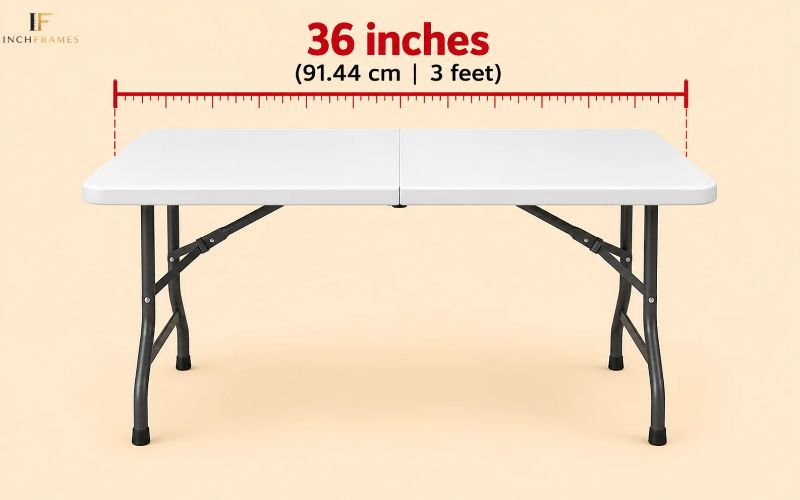
A small folding table with a side measuring about 36 inches can help you picture this length in a home or outdoor setting. Tables of this type are often used for crafts, snacks, market stalls, extra serving space, or temporary work areas.
When the table is open, look at the length of one side that measures 3 feet. This is a practical way to picture how much tabletop space you get from 36 inches. You might use a table like this for wrapping gifts, sorting school supplies, or setting out food during a family gathering.
Folding tables come in many shapes and sizes. Some are longer rectangles, while others have square tops. Check the length and width separately, and remember that the table’s height is a different measurement.
Garden Edging Section
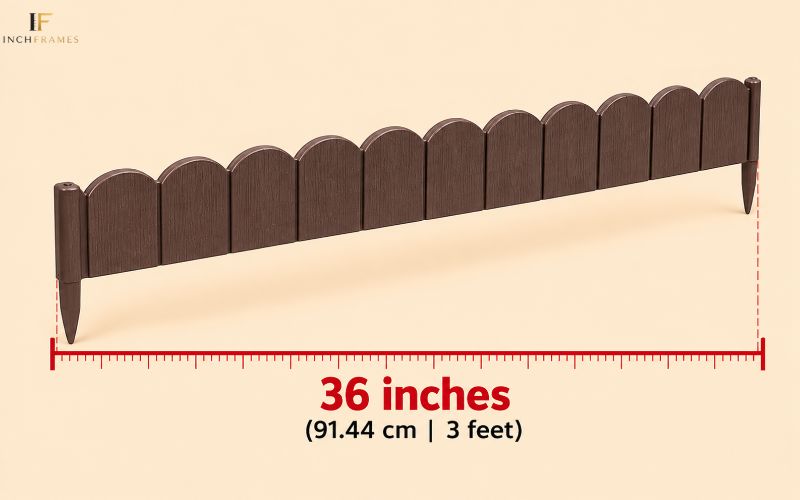
Garden edging is used to separate areas such as a lawn and a flower bed. Some edging products come in sections that measure 36 inches long, making them a useful reference for a 3-foot distance.
Picture one section laid flat along the edge of a garden bed. It covers 3 feet in a straight line. If you are planning a small border, this helps you estimate how many sections might be needed. For instance, a straight border of 9 feet would need three 3-foot sections if they fit end to end with no overlap or gaps.
Actual edging products vary. Flexible rolls may be sold in longer lengths, while rigid pieces may come in shorter or longer sections. Check the product dimensions before calculating how many you need for your garden.
Shelving Board
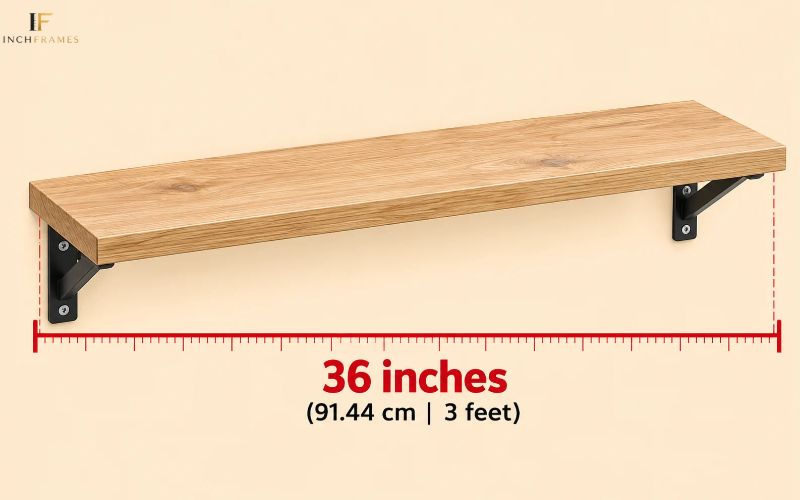
A shelving board that is 36 inches long is a useful reference for anyone organising a bedroom, cupboard, garage, or utility room. Boards of this length are sold for home projects, though their thickness and depth can differ.
Lay the board on the floor and look from one end to the other. The long edge stretches 3 feet. That makes it easier to imagine how much wall space a short shelf might cover. It could be enough for a row of books, small storage boxes, or a few decorative items, depending on the board’s depth and the weight it can support.
If you plan to cut or install a shelf, do not rely on the advertised length alone. Measure the available space, check the brackets, and leave room for nearby walls or fittings. Wood may also need cutting to fit your exact space.
Metal Measuring Stick
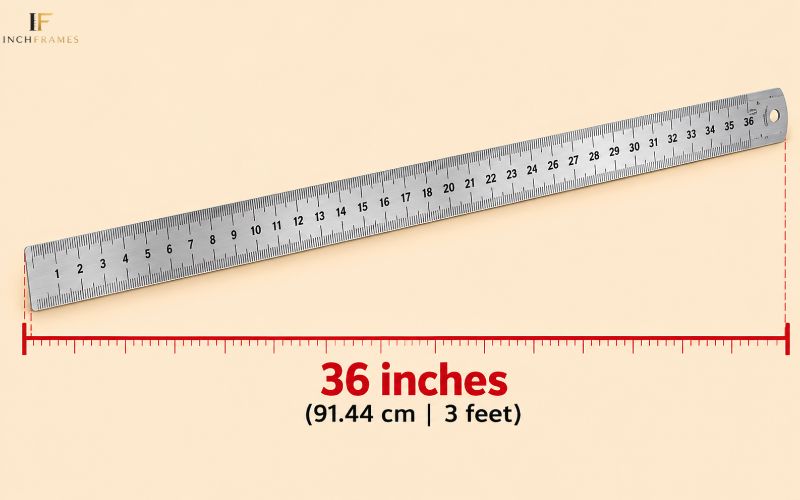
A metal measuring stick that is 36 inches long gives you another fixed reference. It may be used in a workshop, classroom, craft room, or other place where straight measurements are needed. Some measuring sticks have markings along one or both edges, making it easier to read different lengths.
The full stick measures 3 feet from end to end. Because the body is long and narrow, you can lay it beside a piece of material and compare the two without taking up much space.
Be careful not to confuse a 36-inch measuring stick with a 36-inch tape measure. A tape measure can be much longer while still showing the same mark at 36 inches. If you are using a metal stick for a project, check that its starting edge and markings are clear and easy to read.
Related Post: How Long Is 30 Inches? (Compared to 14 Everyday Objects)
Wall-Mounted Grab Bar
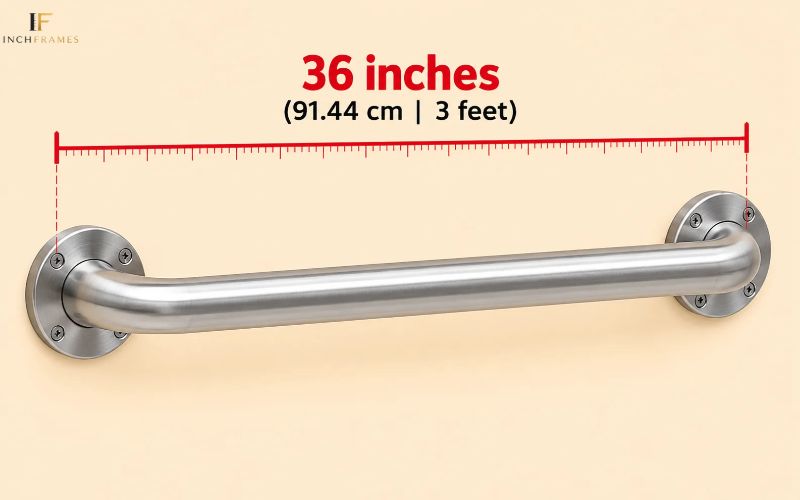
A wall-mounted grab bar with a length of 36 inches is used in some bathrooms and other spaces to provide a steady handhold. It may help people maintain balance when moving around, but the right size and position depend on the user and the room.
Look at the bar from one end to the other. A 36-inch model spans 3 feet along the wall. This gives you a clear idea of how much wall space it occupies before you plan its position.
A grab bar is not just a decorative rail. Its mounting points, the wall structure, and the fasteners all matter for safety. If you are installing one for support, follow the manufacturer’s instructions and use a suitable installer if needed. Never assume that a bar is safe simply because it is the right length.
Drawer Slide
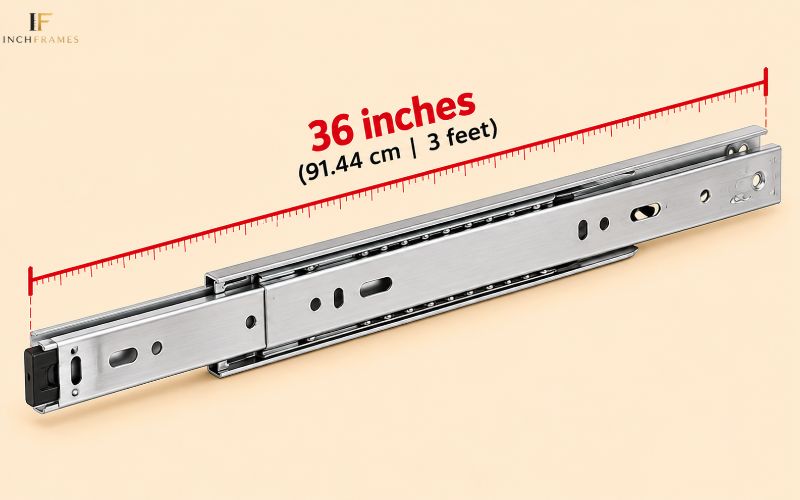
A 36-inch drawer slide is a long metal rail used in some storage systems, workbenches, cabinets, or specialist drawers. It guides a drawer as it moves in and out. This type of slide is not found in every household drawer, but it is a useful example for people working on larger storage projects.
Set the rail on a flat surface and compare its length with a 3-foot line. Its long, narrow shape makes the measurement easy to picture. If you are building a deep drawer or storage unit, a slide of this length may be one of the parts you need to consider.
Drawer slides come in different lengths and weight ratings. Check the full closed length, the required cabinet depth, and the load limit before choosing a model. A rail that is too long will not fit properly in a smaller cabinet.
Wide Workbench Top
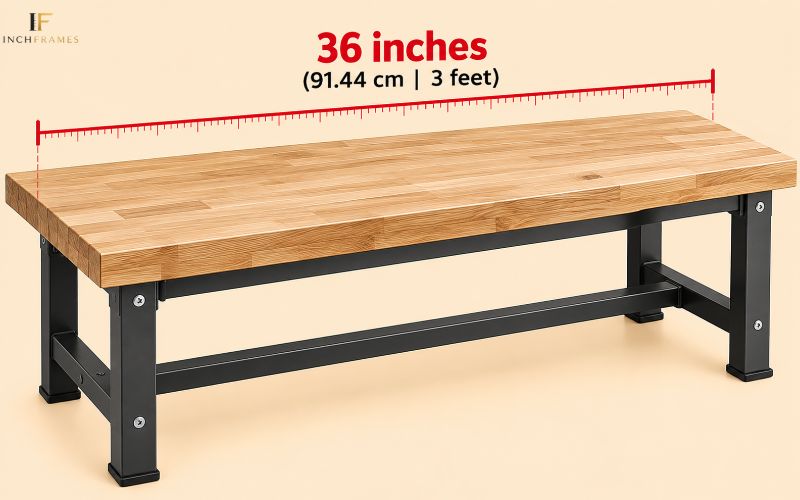
A workbench with a top measuring 36 inches across provides a practical way to imagine a 3-foot span. Workbenches are used for repairs, woodworking, hobby projects, and other tasks that need a steady surface. Some are small enough for a home garage, while larger models cover much more space.
Look across the worktop from one side to the other. If that dimension is 36 inches, the width is exactly 3 feet. This can help you judge whether a bench might fit along a wall or provide enough space for the jobs you have in mind.
Do check the workbench’s width and depth separately. Product descriptions sometimes list the full size as length by width by height, and the order can differ between sellers. The top may also extend beyond the frame, so use the stated overall dimensions when planning your layout.
How to Measure 36 Inches Without a Ruler
You do not always need a ruler or tape measure to estimate 36 inches. These simple methods can help when you are planning a space or checking a rough size.
- Count your steps: Take three normal walking steps and compare the distance with your target. This may get you close to 3 feet, but step length varies, so it is not an exact method.
- Use your arm span: Stretch both arms out to the sides. Your fingertip-to-fingertip distance is often close to your height, so you can use a portion of that span to estimate 3 feet.
- Use a known 12-inch length: If you have a reference that measures 12 inches, place it end to end three times. The total will be 36 inches.
- Mark the floor: If you have a piece of string, mark a starting point and estimate a 3-foot section using a familiar reference. Check it later with a tape measure if accuracy matters.
These methods work for rough estimates. For cutting materials or fitting furniture, measure properly before making a final decision.
What Is the Difference Between 36 Inches and 36 Centimetres?
It is easy to mix up inches and centimetres, especially when shopping online or reading instructions. Although both units measure length, they represent different distances.
36 inches equals 91.44 cm, while 36 cm equals approximately 14.17 inches. That means 36 inches is much longer than 36 centimetres. The difference is easy to miss if you look only at the number and overlook the unit.
For another useful comparison, 12 inches equals 1 foot, so 24 inches equals 2 feet and 36 inches equals 3 feet. These simple relationships can help you work out measurements in your head.
When reading a product listing, always check whether the dimensions are given in inches, centimetres, or millimetres. If a product is being shipped internationally, look for all available measurements before ordering. A quick conversion can prevent an item from arriving much smaller or larger than you expected.
Related Post: How Long Is 40 Inches? (Compared to 12 Everyday Objects)
Frequently Asked Questions
1. How long is 36 inches in feet?
36 inches equals exactly 3 feet. There are 12 inches in every foot, so dividing 36 by 12 gives 3.
2. How long is 36 inches in centimetres?
36 inches equals 91.44 centimetres. This is slightly more than 90 cm.
3. Is 36 inches the same as 1 yard?
Yes. One yard is exactly 36 inches, which is also equal to 3 feet.
4. What does 36 inches look like?
Imagine a straight line measuring 3 feet from end to end. A yardstick or a product specifically measuring 36 inches can help you picture the distance.
5. Is 36 inches a long measurement?
It depends on what you are measuring. For a small household object, it may be quite long, while for a sofa or a room, it is a relatively short distance.
6. How many millimetres are in 36 inches?
36 inches equals 914.4 millimetres. This conversion can be useful when working with metric plans or product specifications.
7. How can I measure 36 inches without a tape measure?
You can estimate the distance using a known 12-inch reference repeated three times, or by comparing it with an object whose dimensions you know. These methods are useful for rough estimates, but they cannot replace an accurate measurement.
8. Is 36 inches a good size for a small table?
A table measuring 36 inches across can work well in some small dining areas or kitchens. Check the shape, seating space, and room layout before deciding whether it will fit.
Final Remarks
36 inches is exactly 3 feet, 1 yard, or 91.44 cm. Once you connect that measurement with familiar things, it becomes easier to picture when shopping, planning a home project, or checking available space.
A yardstick is one of the simplest references because it measures exactly 36 inches. Other items, such as a wide door, a shelving board, or a small round table, can also help you visualise the distance when their dimensions are known.
Here is one tip worth keeping in mind: always check which side of an object is being measured. A table’s width is not its height, and a door’s width is not its height. That small detail can save you time, money, and an unnecessary trip back to the shop.
