
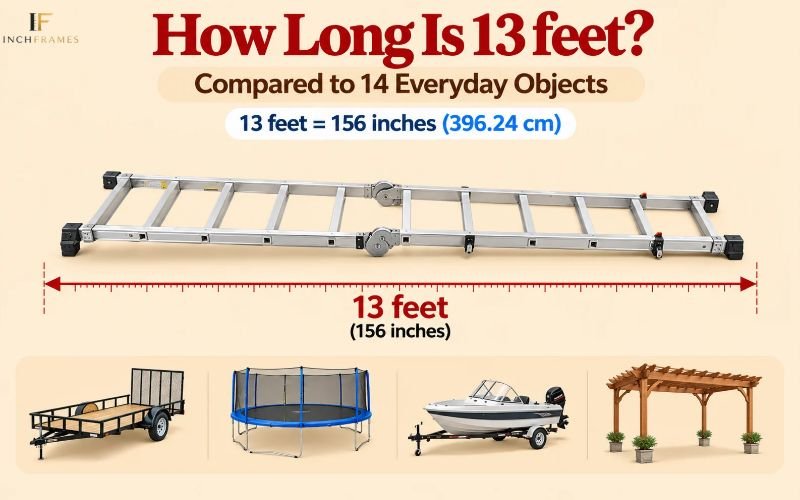
13 feet is exactly 156 inches, or about 396.24 centimeters (3.9624 meters). That makes it a fairly long measurement. It is just a little shorter than 4 meters, so you can think of 13 feet as a distance that stretches across a large part of a room or outdoor area.
The tricky part is that most people do not have a strong mental picture of 13 feet. A number on a tape measure does not always tell you how much space it really takes up. Comparing it with familiar things makes the length easier to understand.
You might come across 13 feet when checking the size of a room, planning a backyard project, measuring furniture, choosing outdoor equipment, or looking at the dimensions of a trailer. Some products are made specifically around this length, too. For example, 13-foot ladders, trailers, trampolines, and awnings are available.
How Long Is 13 Feet, Really?
13 feet equals 156 inches and 396.24 centimeters. In meters, that is 3.9624 meters, which means 13 feet is just a little shorter than 4 meters.
One simple way to picture the length is to imagine a straight path made from four sections of 3 feet, followed by another 1-foot section. Put together, those sections give you the full 13 feet.
You can also think about a doorway. A typical interior doorway is nowhere near 13 feet wide, so imagine placing several door-widths end to end rather than thinking of 13 feet as one small household measurement. A standard sheet of letter paper is only 11 inches long, which shows how much larger 13 feet is than the small measurements you use at a desk.
A length close to 13 feet can be useful when measuring a long wall, planning furniture placement, or checking whether a large item will fit in a room.
13 Feet in Real-World Use
Thirteen feet can matter when you are planning floor space, outdoor layouts, or building projects. If you are working with a long wall or open area, being off by a foot can make a noticeable difference.
For example, a 13-foot span can be useful when planning the width of a covered outdoor area. Some pergola plans are built with a 13-foot outside dimension, so this is a size you may actually see when planning a backyard structure.
The same idea applies to home improvement. If you have a space that measures 13 feet across, you have 156 inches to work with. That number can help when comparing furniture, flooring, lighting, or other materials.
Most people are surprised by how much space 13 feet covers once they mark it out. A tape measure makes the number feel real very quickly.
Everyday Things That Are 13 Feet Long
The easiest way to understand 13 feet is to compare it with things that have a similar length. The examples below come from furniture, outdoor equipment, recreation, building materials, and home spaces.
Exact sizes can vary by model or design, so these should be treated as real-world reference points, not a claim that every version of an item measures exactly 13 feet.
| Everyday Thing | Approximate Length |
|---|---|
| Large Sectional Sofa | 13 feet |
| Utility Trailer | 13 feet |
| Multipurpose Ladder | 13 feet |
| Large Round Trampoline | 13 feet |
| Pergola | 13 feet |
| RV Awning | 13 feet |
| Wall-to-Wall Carpet | 13 feet |
| Playground Spiral Slide | 13 feet |
| Large Dining Table | 13 feet |
| Large Workbench | 13 feet |
| Small Fishing Boat | 13 feet |
| Room Wall | 13 feet |
| Decorative Wooden Beam | 13 feet |
| Large Christmas Tree | 13 feet |
Large Sectional Sofa
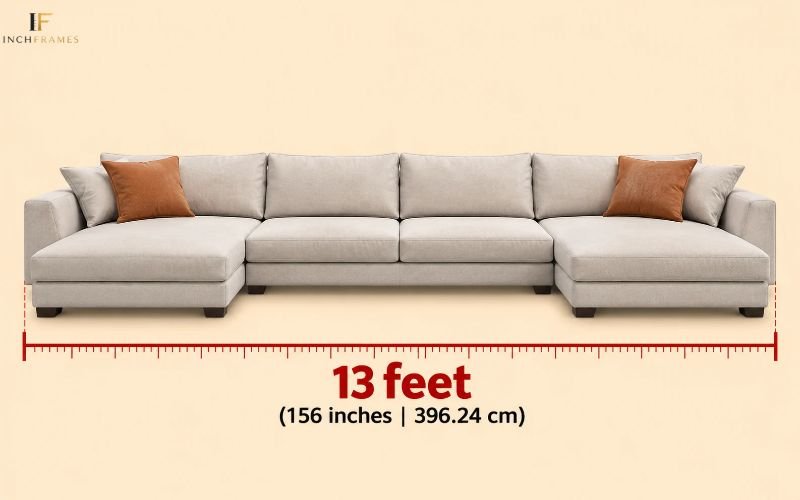
A large sectional sofa can give you a surprisingly good idea of how long 13 feet is. Some oversized sectional designs stretch across a large living room, especially when several seating sections are joined together.
Imagine standing at one end of a very long sectional and looking all the way to the other side. The distance can take up a big part of the wall behind it. That makes it useful for visualizing 13 feet because sofas are something you can easily picture inside a home.
A sectional also shows why length matters when arranging furniture. You need room not only for the sofa itself but also for walking space, tables, doors, and other furniture. A 13-foot sofa would need careful planning before you bring it home.
Utility Trailer
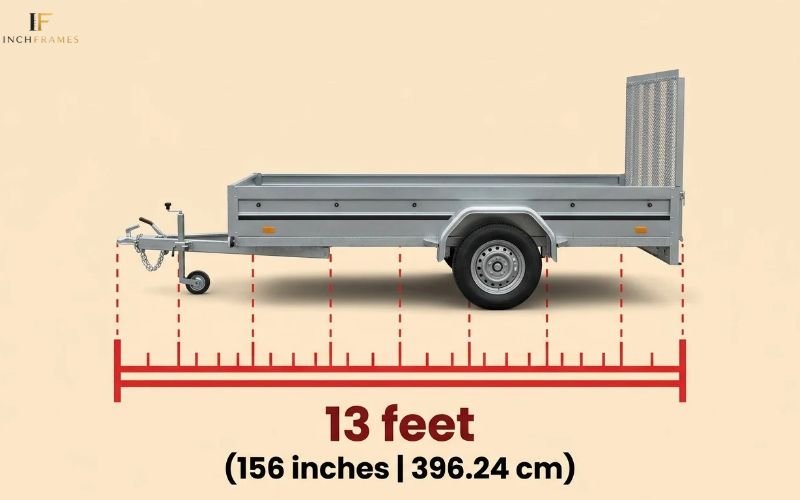
A 13-foot utility trailer is another practical reference. Specific models are sold with a 13-foot bed length, although their total outside length can be longer because of the hitch and other parts. One current Karavan utility trailer, for example, has a 13-foot bed and an overall length of 204 inches.
This makes a trailer a useful comparison when you are trying to picture a long, low object.
Imagine one parked in a driveway. The main cargo area would already stretch about 13 feet. Add the hitch, and the full trailer takes up even more space. If you have ever seen a utility trailer being loaded with lumber, landscaping supplies, or equipment, you have a good visual reference for this kind of length.
Multipurpose Ladder
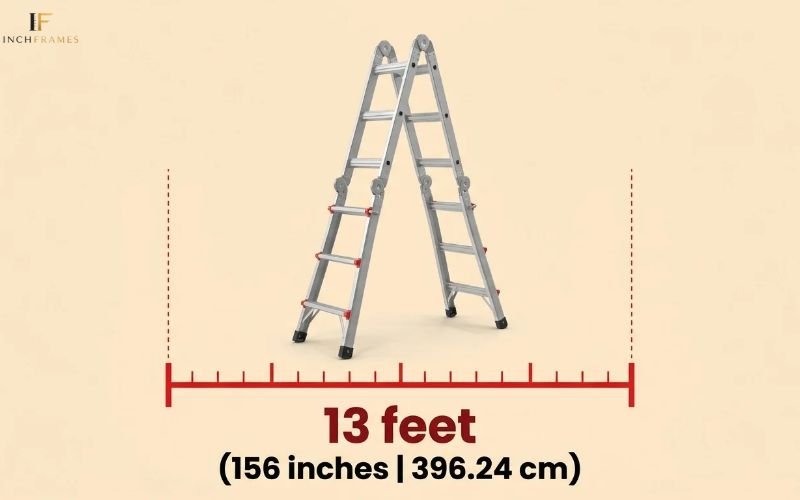
A 13-foot multipurpose ladder gives you a very direct reference because its advertised size is actually 13 feet. DEWALT, for example, makes a 13-foot aluminum multipurpose ladder that can be used in several configurations. Its listed assembled height is 156 inches, which is exactly 13 feet.
Picture the ladder standing upright beside a house. It would reach well above the height of a person and extend toward the roofline.
This is also a nice reminder that length and height can describe the same measurement depending on how an object is positioned. Lay the ladder flat and you have a 13-foot span. Stand it up and you have roughly 13 feet of vertical reach.
Related Post: How Long Is 12 Feet? Compared to 10 Everyday Things
Large Round Trampoline
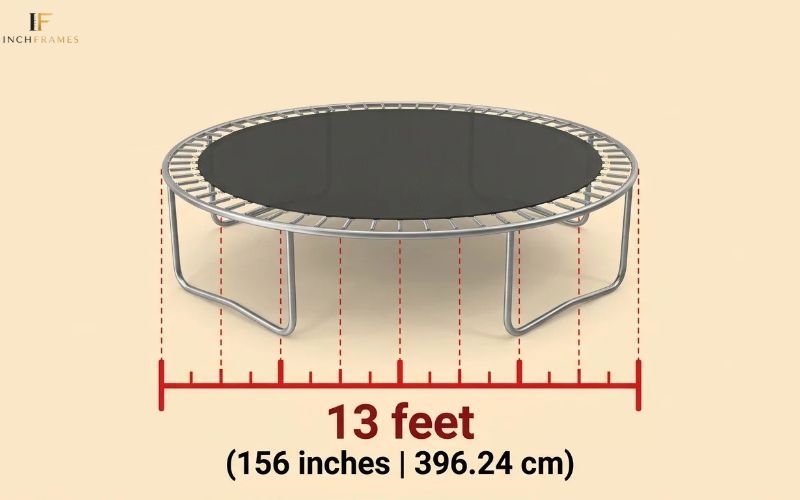
A large backyard trampoline can make 13 feet easy to picture because some models are specifically built with a 13-foot diameter. A 13-foot trampoline has a circular footprint measuring about 4 meters from one side to the other.
Imagine standing at one edge and looking straight across the jumping surface to the opposite edge. That is roughly 13 feet.
This comparison is especially helpful because you can see the full distance at once. It is not a narrow line like a ladder or beam. Instead, it creates a large open circle in the yard. If you have ever seen a family-size trampoline, its footprint gives you a good sense of how much ground 13 feet can cover.
Pergola
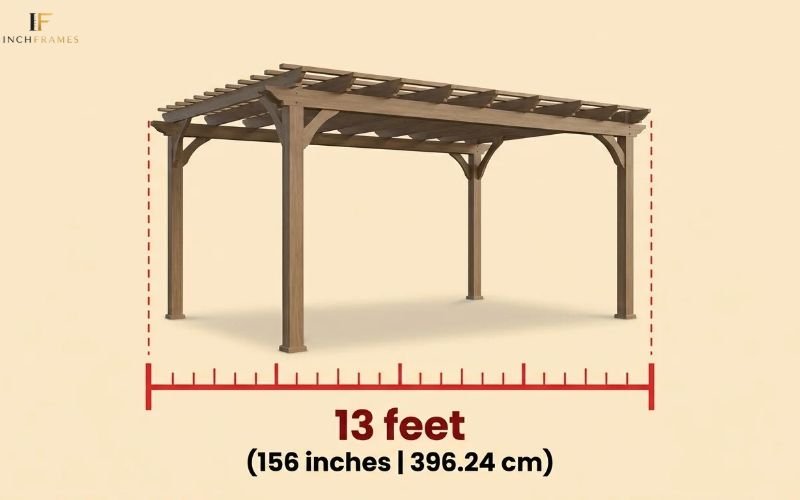
A pergola with a 13-foot outside dimension can help you understand how large this measurement feels in a backyard. Some pergola plans use a 13-foot width, giving you a real construction example rather than an abstract number.
Imagine standing at one post and looking across to the opposite side. The space between those points is 13 feet.
This comparison is useful because a pergola is something people often build around patios, gardens, or outdoor seating areas. A 13-foot width gives enough room for a noticeable covered space without becoming enormous. If you are planning a similar project, marking the 13-foot distance on the ground before building can help you understand the final size.
RV Awning
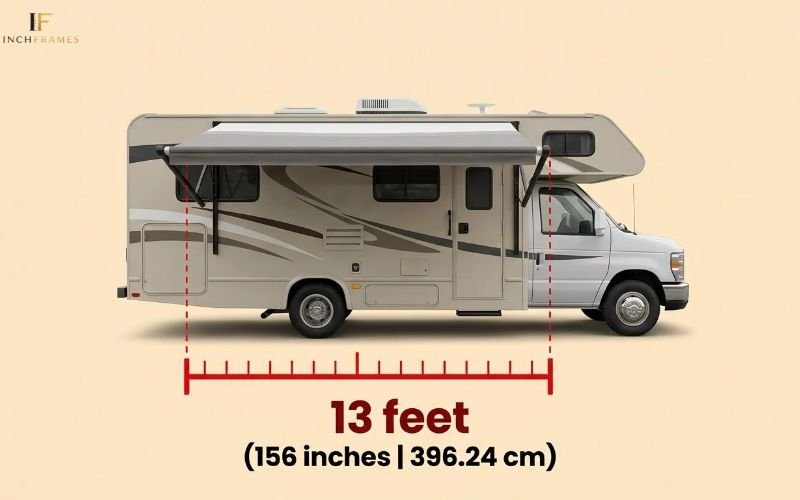
A 13-foot RV awning is another real product-sized example. RV awnings are available in 13-foot lengths, giving campers a practical way to picture this distance. One current RV supplier lists multiple 13-foot awning options and gives the length as 156 inches, or 3.96 meters.
Think about the awning extended from the side of a camper. It creates a long shaded area where people can sit, eat, or relax.
The useful part of this comparison is that you can picture 13 feet horizontally above a campsite. It is not just the length of the awning itself; it also gives you an idea of how much outdoor space can be covered by something around this size.
Wall-to-Wall Carpet
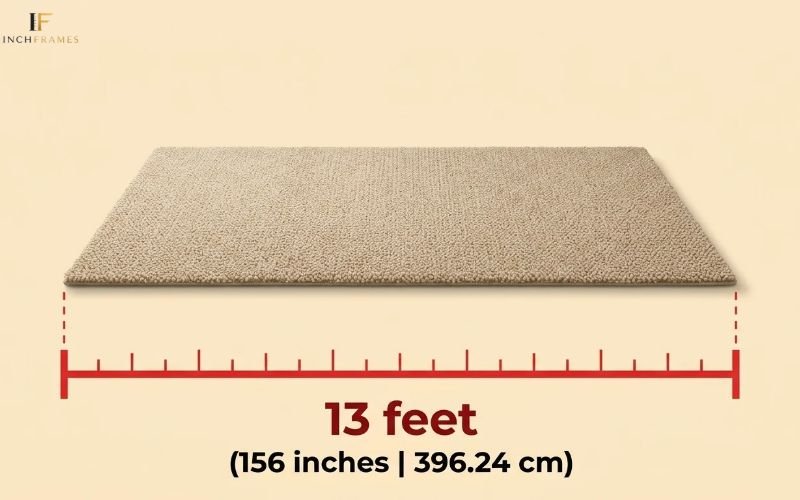
A 13-foot-wide piece of carpet provides another clear indoor reference. Some wall-to-wall carpet products are made with a fixed 13-foot width, while the length can be customized for the room.
Imagine rolling out a carpet across a large room. If the carpet is 13 feet wide, the distance from one edge to the other is 156 inches.
This can be especially helpful when planning flooring. You might have a room that is just under or around this width and need to think about how the carpet will cover the floor. It also shows why carpet measurements are often given in feet rather than inches. Once the measurement gets this large, feet are much easier to work with.
Playground Spiral Slide
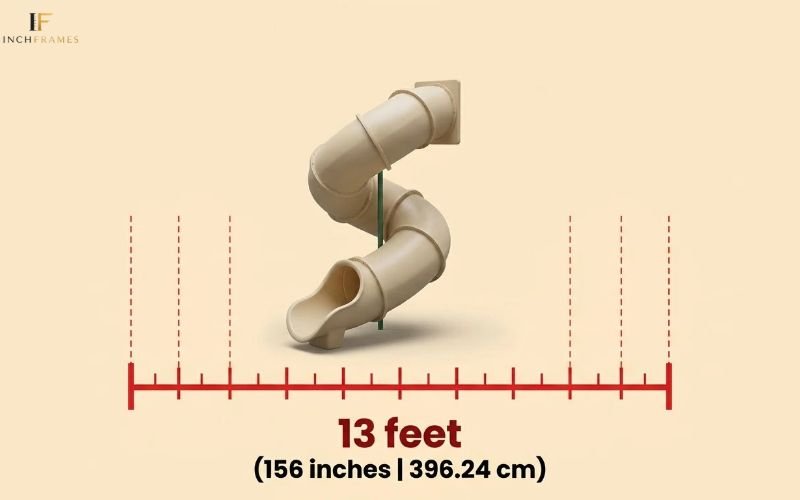
A 13-foot playground slide gives children and parents a very visual way to understand this measurement. Commercial playground equipment is available with a 13-foot spiral tube slide, with the slide itself measuring 13 feet.
Imagine looking at the slide from the top platform down through its curved path. The full slide length is much greater than the straight-line distance you see from one point to another.
This example is useful because it turns 13 feet into something you can experience rather than simply measure. If you have visited a large playground, you may have seen slides of this scale. It gives you a good feeling for how much material and space can be involved in a 13-foot structure.
Related Post: How Long Is 9 Feet? Compared to 12 Everyday Objects
Large Dining Table
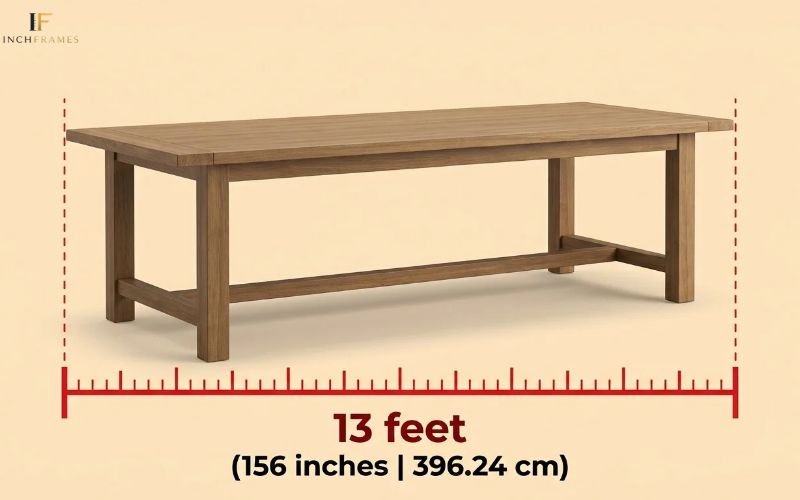
A 13-foot dining table is a much longer table than you would normally see in a small home. Large custom dining tables are made at this size for big gatherings, conference-style spaces, and large dining rooms. One example is listed at exactly 13 feet long and 50 inches wide.
Picture a long table stretching across a dining room. Walking from one end to the other would take noticeably more time than walking past an ordinary four- or six-seat table.
This comparison works well because tables are familiar. You already know roughly how large a normal table looks. Stretching that idea to 13 feet helps show that this is a substantial length, especially when combined with the width needed for chairs and walking space.
Large Workbench
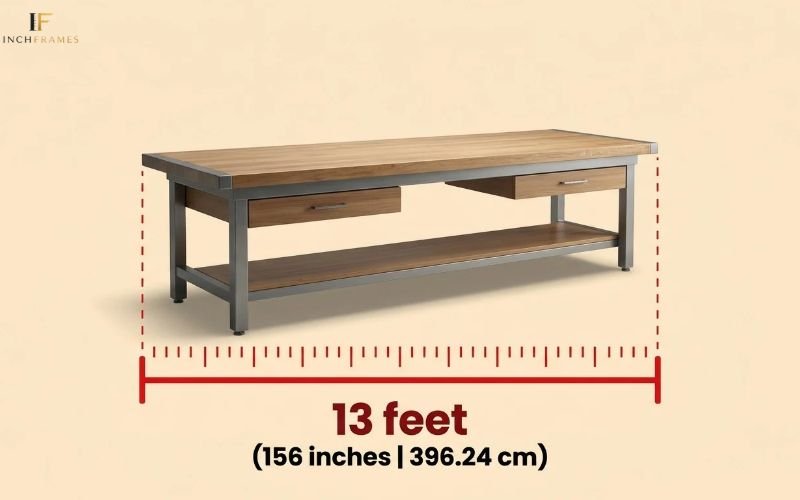
A long workbench can also reach around 13 feet, particularly in a workshop or commercial workspace. One heavy-duty workbench listing, for example, gives an estimated length of 13 feet.
Picture a bench running along the wall of a workshop. It could hold tools, equipment, materials, or several work areas side by side.
The reason this is a useful comparison is that you can imagine actually using the full length. One person could work at one end while another person uses the other end. In a home garage, a 13-foot bench would take up a serious amount of wall space, so you would want to measure carefully before building one.
Small Fishing Boat
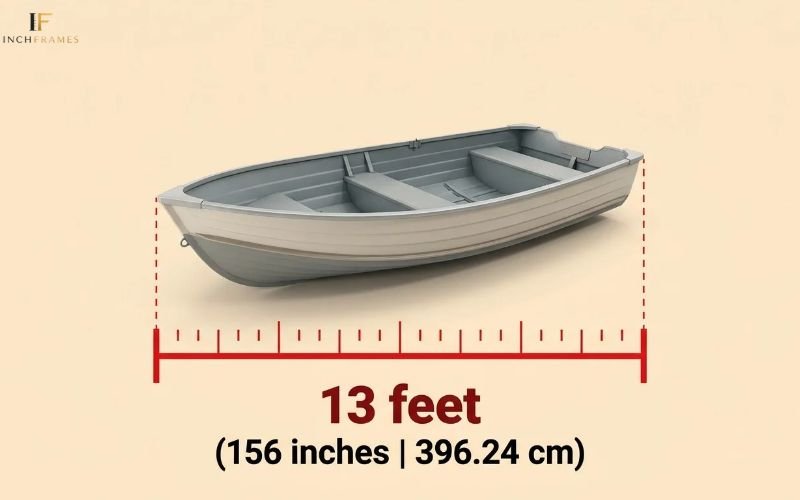
A small fishing boat around 13 feet long gives you a strong outdoor reference for the measurement. Boats in this range are compact enough to handle on smaller waterways while still providing useful space for fishing or recreation.
Imagine seeing the boat sitting on a trailer. From the bow at the front to the stern at the back, the hull can stretch close to 13 feet.
This example also helps because a boat’s length is easy to understand visually. Unlike a room where walls and furniture can hide the full distance, a boat usually has a clear front-to-back shape. If you have stood beside a small fishing boat before, you may already have a good sense of how long 13 feet feels.
Room Wall
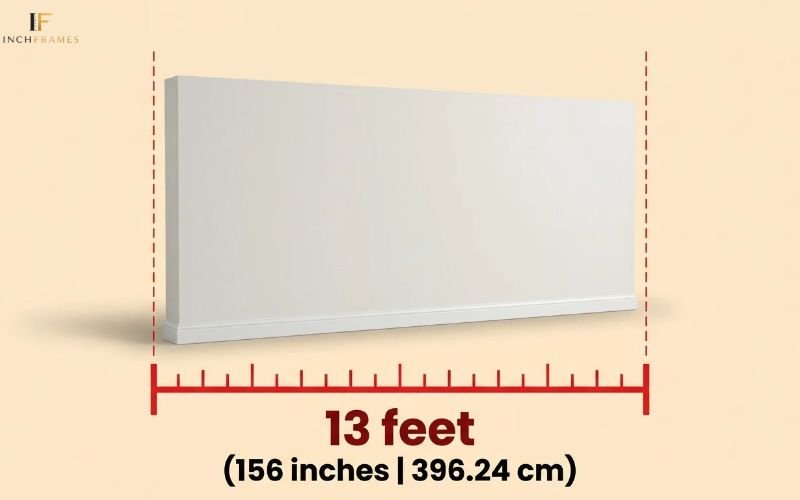
A room wall measuring about 13 feet gives you one of the most useful household comparisons. Instead of picturing an object, picture a straight wall from one corner to another.
Stand at one end of the wall and look toward the opposite corner. If the wall is 13 feet long, you are looking across a distance of 156 inches.
This comparison is handy when planning furniture. A sofa, television stand, bookshelf, or desk may need to fit along that wall. Knowing the wall is 13 feet gives you a starting point for deciding how much space is available.
It also helps explain why measuring the room before buying large furniture is so useful. A few inches can make a surprising difference when several pieces need to share the same wall.
Related Post: How Long Is 8 Feet? Compared to 10 Everyday Objects
Decorative Wooden Beam
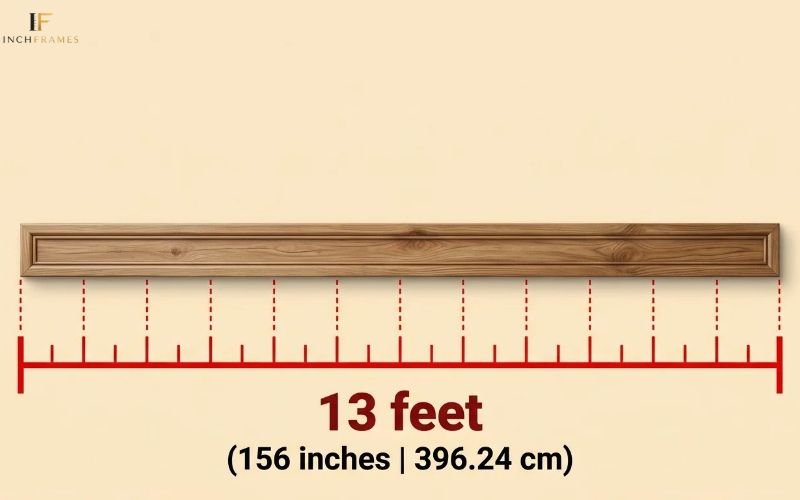
A decorative wooden beam can also be around 13 feet long. Long beams are used in construction, pergolas, porches, ceilings, and other building projects.
Picture a straight timber lying on the ground. If it stretches 13 feet from end to end, it is almost 4 meters long. You would need a fairly large vehicle or enough open space to handle it comfortably.
This is a useful reference for DIY projects because lumber is often sold in standard lengths. A long beam may look manageable when viewed in a store, but once you bring it home, its full length becomes much more obvious.
If you are working with a beam this long, measure the path through doors, gates, and around corners before moving it.
Large Christmas Tree
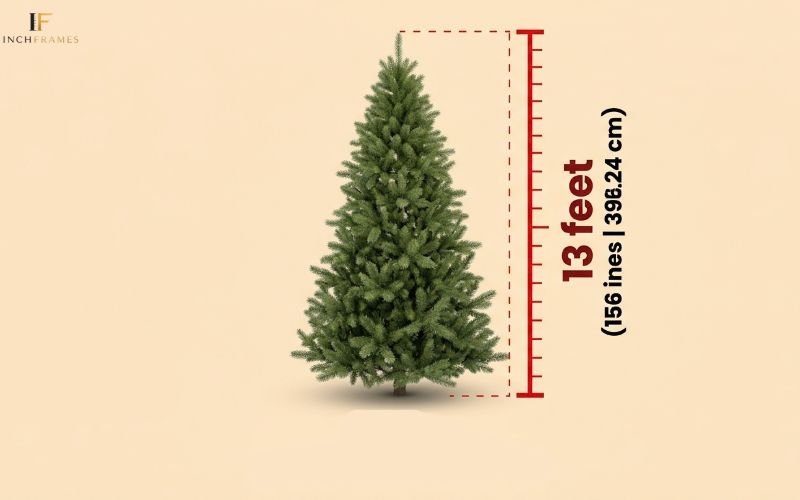
A 13-foot Christmas tree is a tall holiday display rather than the small tree you might place in an ordinary living room. Trees around this height are more common in large homes, public spaces, churches, stores, and event venues.
Imagine standing at the bottom and looking toward the top. A 13-foot tree would rise well above most people and would require a large room or open area.
This gives you a useful vertical comparison. Many everyday measurements are horizontal, but 13 feet can also describe height. If you have seen a very large Christmas display in a shopping center, you may have already encountered something around this scale.
For a home, ceiling height and tree clearance would need to be checked carefully before choosing a tree this tall.
How to Measure 13 Feet Without a Ruler
You can estimate 13 feet even when you do not have a tape measure nearby. One easy method is walking it out. A comfortable adult walking step is often close to 2.5 to 3 feet, so about five normal steps will put you somewhere around 13 feet. This is only an estimate because everyone’s stride differs.
Another method is to use your arm span. If your fingertip-to-fingertip span is close to your height, repeat that distance several times and adjust for the remaining space.
You can also mark 10 feet first, then add another 3 feet. This is easier than trying to judge all 13 feet at once.
For anything involving construction, safety, or a tight fit, use a real tape measure. Body-based estimates are great for visualization, but they are not precise enough for important measurements.
How Much Space Does 13 Feet Cover?
One helpful way to understand 13 feet is to think about the area around the measurement, not just the line itself. A 13-foot length may sound simple, but the width and height of an object can greatly change how much space it actually uses.
For example, a 13-foot-long object that is only a few inches wide is easy to fit in some places. A 13-foot-long sofa or structure needs much more floor space because it also has considerable depth.
This matters when shopping or planning a project. Always check all three dimensions when they are available: length, width, and height. A product that is listed as 13 feet long may still be difficult to fit through a doorway or around a corner.
Related Post: How Long Is 16 Inches? (Compared to 14 Everyday Objects)
FAQs About 13 Feet
How many inches are in 13 feet?
There are 156 inches in 13 feet. You simply multiply 13 by 12 because every foot contains 12 inches.
How many centimeters is 13 feet?
13 feet equals 396.24 centimeters. That is also 3.9624 meters.
Is 13 feet close to 4 meters?
Yes. 13 feet is 3.9624 meters, so it is only about 3.76 centimeters shorter than 4 meters.
How long is 13 feet compared with 12 feet?
13 feet is exactly 1 foot longer than 12 feet. In inches, that is a 12-inch difference.
Is 13 feet a long distance?
For an everyday household measurement, yes. Thirteen feet is long enough to span a large part of a room and is also used for things such as ladders, trailers, awnings, trampolines, and other large equipment.
How can I picture 13 feet?
Think of a straight distance that is just under 4 meters. A 13-foot trampoline across, a long utility trailer bed, or a 13-foot ladder can make the size easier to imagine.
How many yards are in 13 feet?
13 feet is 4⅓ yards. Since one yard equals 3 feet, you divide 13 by 3.
Is 13 feet the same as 13 inches?
No. They are very different measurements. 13 feet equals 156 inches, so 13 feet is 12 times longer than 13 inches.
Final Remarks
13 feet is a length of 156 inches, 396.24 centimeters, or 3.9624 meters. The easiest way to understand it is to stop thinking about the number alone and connect it with something you can picture.
A 13-foot ladder gives you a sense of vertical height. A large trampoline shows the distance across an open area. A utility trailer, long table, carpet width, or room wall can help you picture the same measurement in other settings.
If you need a quick estimate, think “almost 4 meters.” That mental shortcut is surprisingly useful. And if the measurement really matters for a project, skip the guesswork and grab a tape measure. A few minutes of measuring can save a lot of trouble later.
