
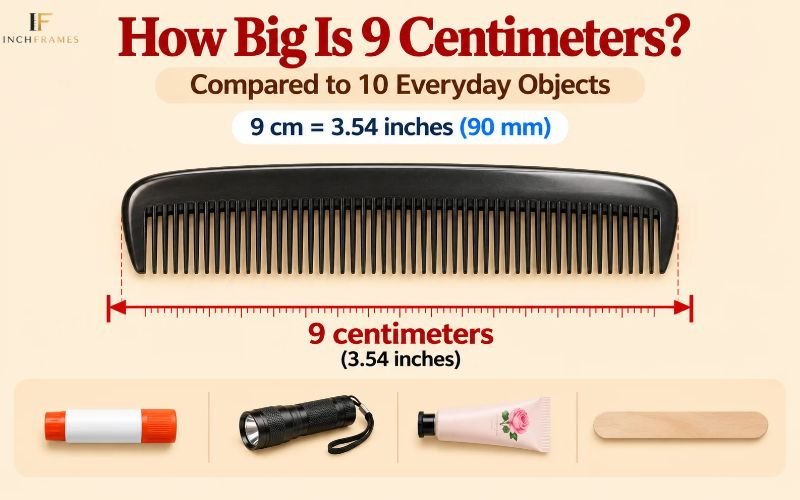
9 centimeters is exactly 90 millimeters, or about 3.54 inches. It is a little longer than 3½ inches, so it is still a fairly small measurement that you can easily hold in your hand.
But numbers alone do not always make size easy to picture. A 9 cm distance can look very different when it is the length of a straight object, the width of something flat, or the diameter of a round item. That is why everyday comparisons are useful.
You might come across 9 cm when measuring a craft project, checking the size of a small package, choosing a compact item, or marking a short section of material. It can also help when instructions give measurements in centimeters and you normally think in inches.
In this guide, we’ll use familiar objects to make 9 centimeters easier to see in your mind. Once you have a few good references, you will not need to reach for a ruler every time you hear the number.
How Long Is 9 Centimeters, Really?
9 centimeters measures 90 millimeters and converts to about 3.54 inches. If you picture a line just over 3½ inches long, you are very close to the real size.
Another useful way to think about it is that 9 cm is 3 cm longer than 6 cm and only 1 cm shorter than 10 cm. That makes it a handy middle-size measurement for small household parts and personal items.
Imagine marking a 9 cm section on a piece of cardboard. The line would be long enough to notice clearly but short enough to fit comfortably across a small area. You might see a measurement like this when cutting material for a craft, checking a small storage compartment, or measuring part of a package.
For comparison, 1 inch is 2.54 cm, so 9 cm stretches beyond three inches by a little more than half an inch.
9 Centimeters in Real-World Use
Nine centimeters can be useful when you need to measure a small section rather than an entire large object. In crafts, for example, a 9 cm mark can help you cut paper, fabric, cardboard, or other materials to a specific size.
It can also come up when checking small spaces around the home. You might measure the depth of a narrow shelf area, the opening for a small accessory, or the space needed for a compact item.
Nine centimeters is also easy to convert when instructions use inches. At about 3.54 inches, it is a little longer than 3½ inches.
One practical trick is to mark 9 cm on a scrap piece of cardboard. Keep it nearby while working on a project. That gives you a quick physical reference instead of repeatedly measuring the same distance.
10 Everyday Items That Are About 9 cm Big
Nine centimeters is about 3.54 inches, making it a useful size to picture with everyday objects. Comparing 9 cm with familiar items can make the measurement much easier to understand.
From small combs and glue sticks to compact flashlights and makeup items, these objects give you a simple real-world reference for how big 9 centimeters is.
| Item | Approx. Size |
|---|---|
| Large Paper Clip | 9 cm |
| Small Hair Comb | 9 cm |
| Spatula Handle | 9 cm |
| Short Pencil | 9 cm |
| Makeup Brush | 9 cm |
| Small Notebook | 9 cm |
| Paintbrush | 9 cm |
| USB Cable Section | 9 cm |
| Toothbrush Head | 9 cm |
Large Paper Clip
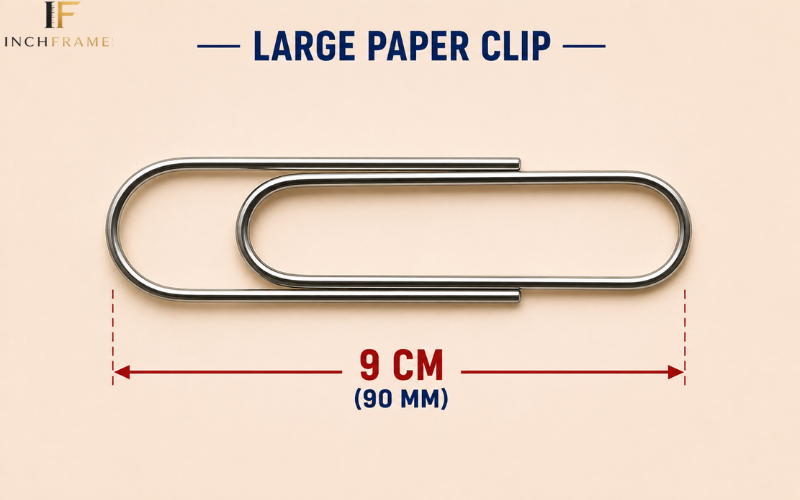
A large paper clip is one of the easiest office objects to use when visualizing a small measurement. Some large paper clips are close to 9 centimeters from end to end, although their exact length depends on the design and manufacturer. Looking at a paper clip gives you a quick idea of how compact this measurement really is.
Paper clips are especially useful as a reference because their shape makes the length easy to see. You can place one on a flat surface and compare its longest dimension with a ruler if you have one available. Once you become familiar with that size, you can use the paper clip as a rough visual guide later.
A smaller paper clip may be closer to 3 inches, while a larger style can approach the length we are discussing. This makes paper clips useful for understanding small differences in size. They are also common in classrooms and offices, so many people can find one without searching for a special measuring object.
Small Hair Comb
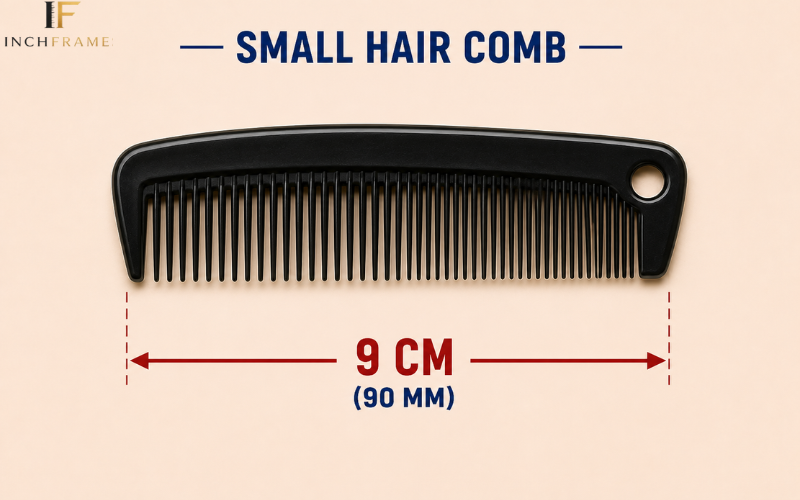
A small pocket hair comb can also help you visualize a length close to 9 centimeters. Compact combs are designed to fit easily inside a purse, pocket, travel bag, or small drawer. Many are short enough to give you a useful idea of what a few centimeters look like.
The useful thing about a comb is that it has a straight edge and a clearly defined overall length. If you place it next to a ruler once, you can remember its approximate size and use it as a reference later. The teeth also make the object easy to recognize, so it is simple to compare its length with other objects.
A travel comb may be shorter than a regular household comb, while a full-size comb can be much longer. This means you should use a small pocket-sized model when making a visual comparison. For another reference, 5 inches is already considerably longer than the measurement being discussed, which shows that 9 centimeters is still a fairly compact length.
Related Post: How Big Is 8 Centimeters? Compared to 13 Everyday Objects
Small Kitchen Spatula Handle
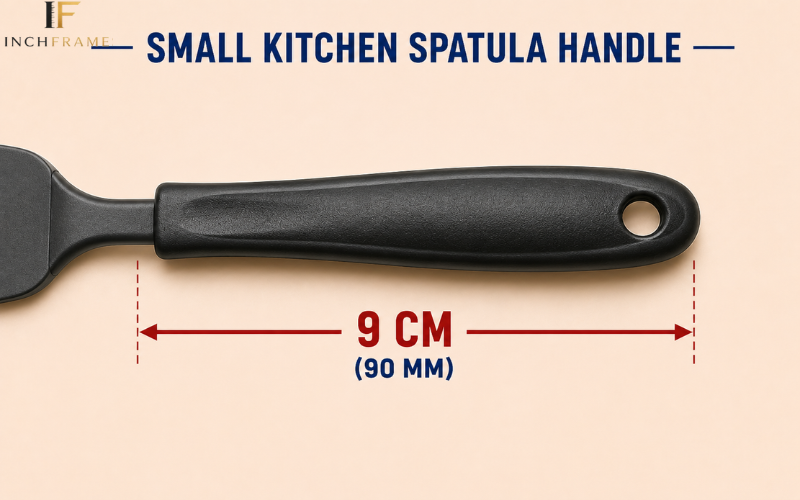
Some small kitchen spatulas have handles that are close to this length. The handle of a compact silicone spatula or mini cooking tool can provide a useful everyday comparison. Because the handle is usually straight, it is easy to look at and estimate without needing to measure the curved or working end of the utensil.
This comparison can be helpful when thinking about kitchen tools, especially when deciding whether a small utensil will fit inside a drawer or container. A mini spatula may be shorter or longer depending on its purpose, so it should only be treated as a rough visual example.
When you compare the handle with a ruler, you can see how a length around 9 centimeters fits into the space between the smaller centimeter marks. For context, 6 inches is significantly longer, so a 9-centimeter handle will look quite compact beside an average ruler.
Short Pencil
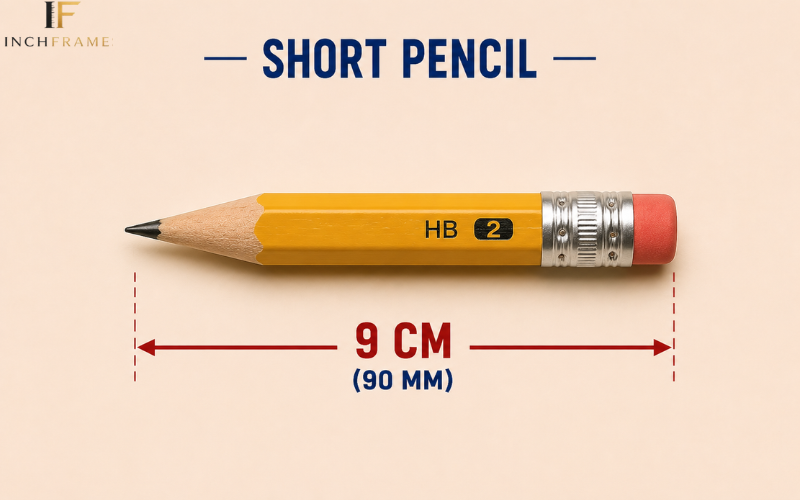
A short pencil can be another useful way to understand this measurement. Pencils become shorter as they are sharpened and used, so an old pencil may eventually become close to this size. This makes a short pencil a practical real-world example rather than something you need to imagine.
A new standard pencil is much longer, but a well-used pencil can become surprisingly small. If you have an old pencil in a desk drawer, place it beside a ruler and check its length. You may find that it gives you a good visual reference for a measurement around this range.
This example also shows why the length of an object does not always stay the same. A pencil that starts long can become much shorter through normal use. For comparison, 7 inches is nearly twice the length of 9 centimeters, so the difference becomes easy to notice when both measurements are placed side by side.
Small Makeup Brush
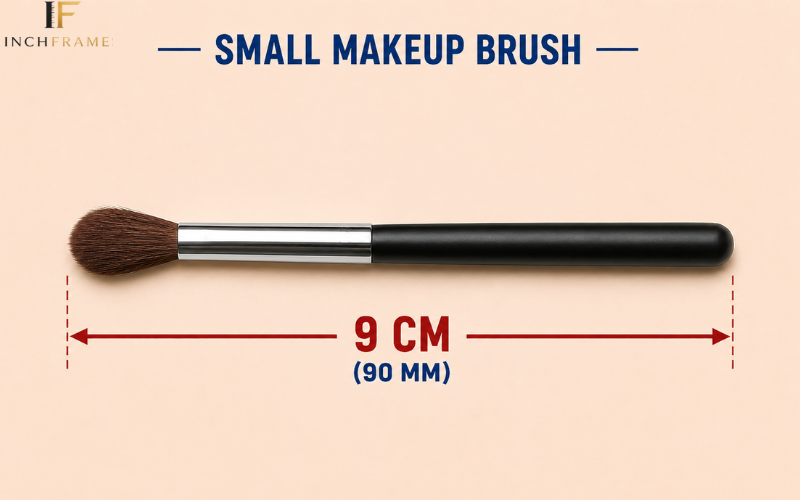
A compact makeup brush can provide another simple visual comparison. Some small brushes, especially travel-sized ones, have handles that are around this general length. Their exact dimensions vary, but the overall size can help you understand how much space 9 centimeters occupies.
Small brushes are useful examples because they are narrow and easy to hold. You can place one horizontally on a table and estimate its length at a glance. If you have several brushes of different sizes, comparing them can also help you understand how small measurements change.
A travel brush may fit comfortably inside a small cosmetic bag, while a full-sized brush can be considerably longer. A length of 8 inches would be more than twice as long as 9 centimeters, making the difference clear when you compare the two visually.
Small Notebook Width
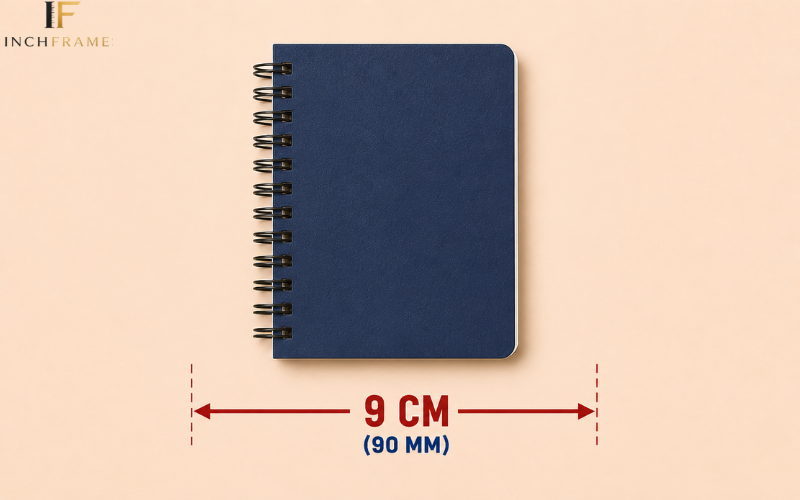
Some compact notebooks have a width close to this measurement, although notebook sizes vary widely. A small pocket notebook can be a useful reference because its straight edges make its dimensions easy to understand. Looking at the shorter side can give you a rough visual idea of a small measurement.
Notebook dimensions are particularly useful when thinking about space. For example, if you are planning a small shelf, drawer, box, or storage area, understanding short lengths can help you judge whether an item is likely to fit.
A pocket notebook that is around this width will look noticeably smaller than many standard notebooks. For another size reference, 10 inches is considerably longer, so putting a 10-inch ruler beside a compact notebook makes the difference easy to see.
Small Paintbrush
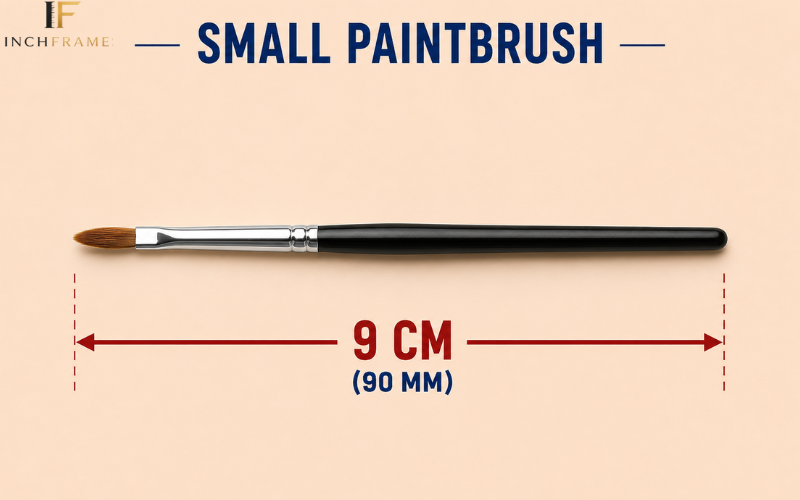
A small paintbrush, especially one designed for detailed artwork, can also help you visualize this length. The handle of a small brush is often fairly short, and some models can be close to 9 centimeters. Because the brush is narrow and straight, its length is easy to compare visually.
This is particularly useful for students, artists, and people who enjoy small craft projects. When working on detailed designs, knowing whether a brush or tool is short enough to fit into a small container can be helpful.
Of course, paintbrush sizes vary, so you should not assume every small brush measures exactly 9 centimeters. Instead, use the general shape and size as a visual guide. A 11-inch object would look much longer, showing how quickly the difference becomes noticeable as measurements increase.
Related Post: How Big Is 7 Centimeters? Compared to 10 Everyday Objects
Short USB Cable Section
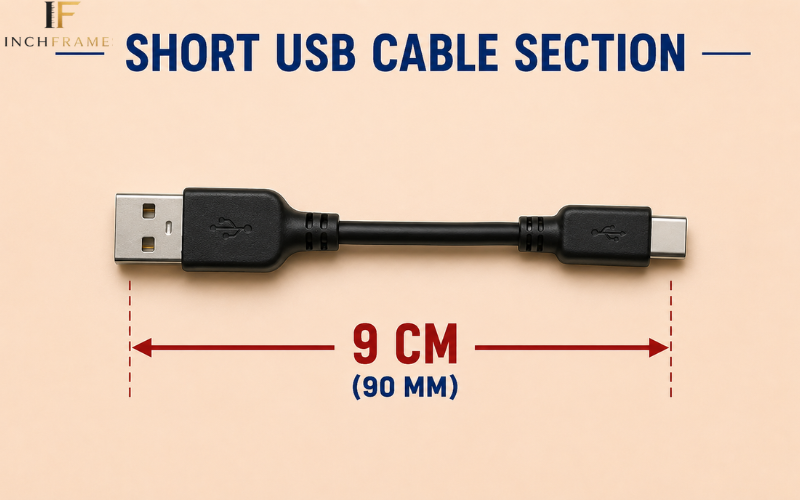
A short section of a USB charging cable can give you another practical way to understand this measurement. The cable itself may be much longer, but measuring a section of its length can help you picture how much space 9 centimeters covers.
This example is especially useful because cables are common in homes, offices, and classrooms. If you stretch a cable straight across a desk, you can visually mark a small section near one end. That section gives you a rough idea of the length without needing to hold a ruler every time.
A complete charging cable may be several feet long, but a small section is much easier to compare with a centimeter measurement. For example, 1 foot is 12 inches, which is far longer than the small length discussed here.
Small Toothbrush Head
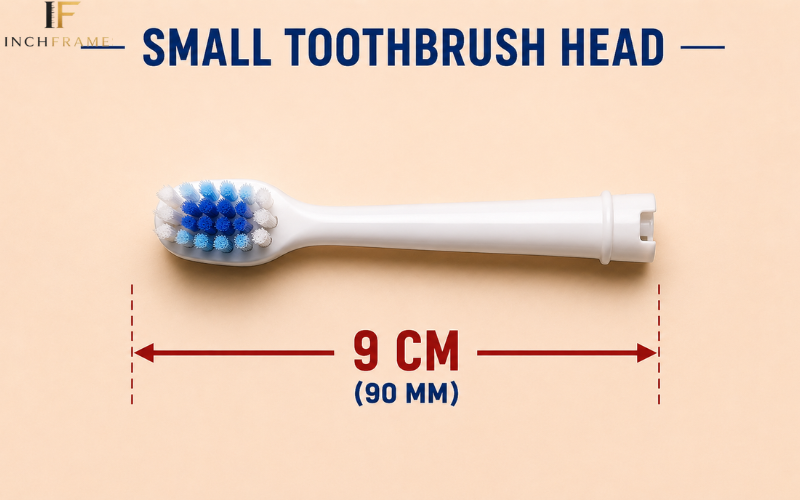
The head of a toothbrush can also help you understand a measurement around this size. The brush head itself is usually much shorter than the entire toothbrush, and some larger toothbrush heads can approach this general length.
This is a useful household comparison because almost everyone is familiar with the size and shape of a toothbrush. Looking at the brush head gives you a better sense of scale than simply reading the number 9 on a ruler.
A complete toothbrush is usually much longer, but focusing only on the head makes the comparison more appropriate. For perspective, 2 feet is more than six times this length, so a toothbrush head looks very small when compared with something that long.
Small Ruler Segment
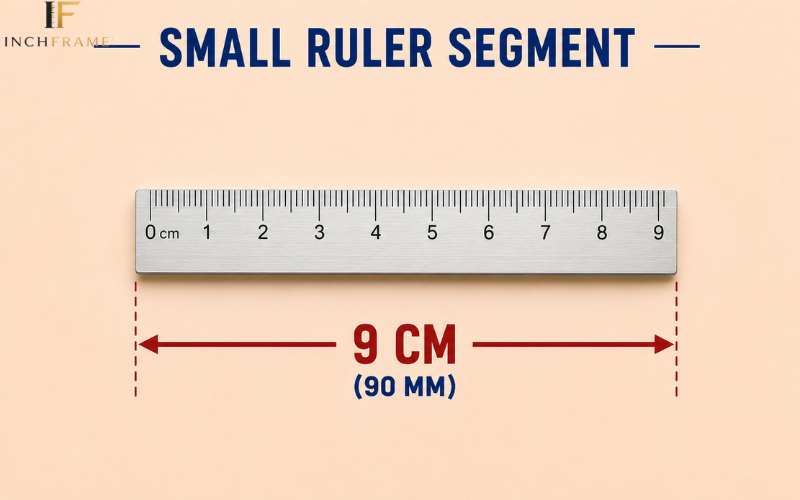
A ruler itself is one of the clearest ways to understand this measurement. On a standard metric ruler, you can find the 9-centimeter mark by starting at zero and counting nine centimeter intervals. The distance between these points shows the exact length.
Even if you do not have a ruler with you, remembering this short segment can help you estimate measurements later. You can also compare it with the inch side of a ruler. The same distance reaches a little beyond the 3-inch mark and stops before 4 inches.
This makes the ruler segment a strong reference because it connects the metric and imperial systems. A 12-inch ruler, for example, gives you plenty of room to see how much shorter 9 centimeters is compared with a full ruler.
Related Post: How Big Is 4 Centimeters? Compared to 12 Everyday Objects
A Simple Way to Visualize 9 Centimeters
The easiest approach is to imagine a little more than 3½ inches. Think of a straight line beginning at zero and extending slightly past the 3-inch point. That gives you a practical visual idea without needing to remember the exact decimal conversion.
You can also compare it with objects around your home. Place a small item on a table and imagine a line running from one end to the other. If the object looks close to the size described above, it may give you a useful estimate.
For larger measurements, the difference becomes much easier to notice. 4 feet is already several times longer than this small measurement. Moving upward to 5 feet creates an even larger difference, which shows why using familiar objects is helpful when trying to understand centimeters.
Measurement Without a Ruler
You can estimate 9 centimeters without a ruler by using familiar objects and simple body references. These methods will not give you a perfect measurement, but they can help you understand the size quickly.
Use Your Fingers
Your fingers can give you a rough idea of small measurements. The width of one finger is different for everyone, so do not treat it as an exact ruler. Instead, compare the object with the width of your finger several times. This can help you judge whether something is close to 9 centimeters.
Use a Large Paper Clip
A large paper clip is another useful reference. Many large paper clips are close to this general size, so looking at one can help you picture the length. Place the paper clip straight on a table and compare the object with it.
Compare With 3½ Inches
Since 9 centimeters is about 3.54 inches, you can think of it as a little longer than 3½ inches. If you already understand what 3½ inches looks like, this is one of the easiest ways to visualize the measurement.
Use a Short Everyday Object
Look for a small comb, short pencil, makeup brush, or similar object around this size. Once you compare one of these objects with an actual ruler, you can remember its approximate length and use it as a reference later.
These methods are useful for quick estimates, but when you need an exact measurement, a ruler or measuring tape is always the better choice.
Frequently Asked Questions
Is 9 centimeters the same as 3 inches?
No. 9 centimeters is approximately 3.54 inches, so it is a little longer than 3 inches.
Is 9 centimeters a small length?
Yes. It is a relatively small measurement, making it useful for describing small household objects, tools, stationery, and other compact items.
How many millimeters are in 9 centimeters?
There are 90 millimeters in 9 centimeters because 1 centimeter contains 10 millimeters.
How can I measure 9 centimeters without a ruler?
You can use a familiar object as a rough reference, such as a large paper clip, small comb, or short pencil. These comparisons are not exact, but they can help you estimate the size.
Is 9 centimeters longer than 3½ inches?
Yes. 9 centimeters is about 3.54 inches, so it is slightly longer than 3½ inches.
Conclusion
So, how long is 9 centimeters? 9 centimeters is about 3.54 inches, or 90 millimeters. It is a small length that can be easier to understand when compared with familiar objects such as a large paper clip, short pencil, small comb, makeup brush, or toothbrush head.
The most useful way to remember this measurement is to picture a little more than 3½ inches. Once you connect the number with real objects, estimating small lengths becomes much easier. Whether you are checking product dimensions, working on a craft project, or simply trying to understand a measurement, these everyday comparisons can give you a practical sense of how long 9 centimeters really is.
