
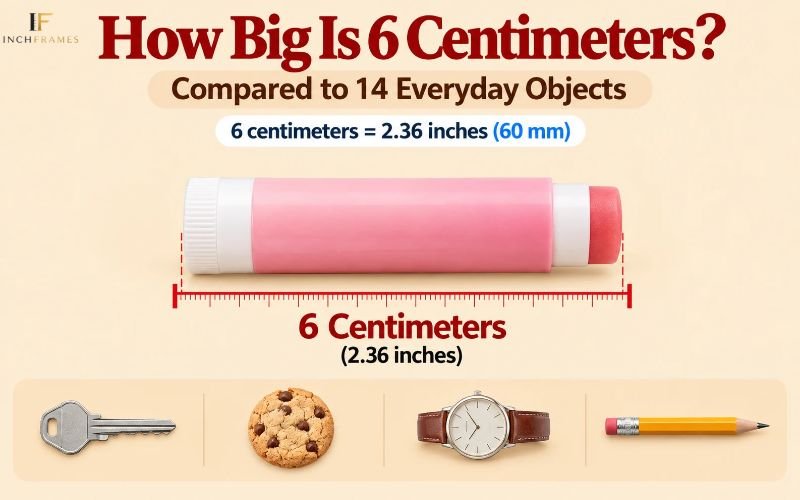
If you are wondering how big 6 centimeters is, the easiest way to picture it is to compare it with things you already see and use every day. 6 centimeters is equal to 60 millimeters, 2.36 inches, or 0.197 feet. It is a small measurement, but it is large enough to notice easily.
Imagine a straight line that is 6 cm long. It is a little shorter than 2½ inches. You can also picture it as roughly the width of a small cookie, the length of a short section of a pencil, or the distance across a small round object.
A measurement like 6 cm can be useful when checking the size of small objects, doing crafts, measuring spaces, or simply trying to understand dimensions without a ruler.
Below, we will compare 6 centimeters with 14 familiar everyday objects. These examples make the measurement much easier to visualize.
How Long Is 6 Centimeters, Really?
6 centimeters is 60 millimeters or about 2.36 inches. If you have a ruler, the distance from the 0 mark to the 6 cm mark shows exactly how long 6 centimeters is.
Another easy way to imagine it is to picture a line slightly shorter than 2½ inches. It is not a very large distance, but it is also not tiny. For many everyday objects, 6 cm can represent a width, length, diameter, height, or a marked section.
For example, a 6 cm diameter means the straight distance from one side of a round object to the other side through its center is 6 cm. A 6 cm length simply means the object or marked section extends 6 cm from one end to the other. This distinction matters because everyday objects come in different shapes.
6 Centimeters in Real-World Use
You may come across 6 centimeters when measuring small household objects, crafts, school projects, packaging, decorations, or personal items.
For example, you might need to cut a piece of material that is 6 cm long, check whether an object will fit into a small space, or estimate the size of something when a ruler is not nearby.
Six centimeters is also useful because it is easy to convert. 6 cm = 60 mm = 2.36 inches.
If you already know what 1 inch, 2 inches, or 5 centimeters looks like, 6 cm becomes easier to picture. It is just under 2½ inches and only 1 cm longer than 5 cm.
Everyday Things That Are 6cm Big or Wide
The easiest way to understand 6 cm is to compare it with familiar objects. The examples below use 6 cm as the specific dimension being measured. Depending on the object, that measurement can be its length, width, diameter, or a particular section.
| Everyday Object | 6 cm Measurement |
|---|---|
| Bottle Cap | 6 centimeter |
| Large Coin | 6 centimeter |
| Key | 6 centimeter |
| Marker Cap | 6 centimeter |
| Small Candle | 6 centimeter |
| Lip Balm | 6 centimeter |
| Small Watch | 6 centimeter |
| Cookie | 6 centimeter |
| Glue Stick | 6 centimeter |
| Drawer Knob | 6 centimeter |
| Toothbrush Head | 6 centimeter |
| Small Phone | 6 centimeter |
| Pencil Section | 6 centimeter |
| Butter Knife Handle | 6 centimeter |
Bottle Cap — 6 Centimeters
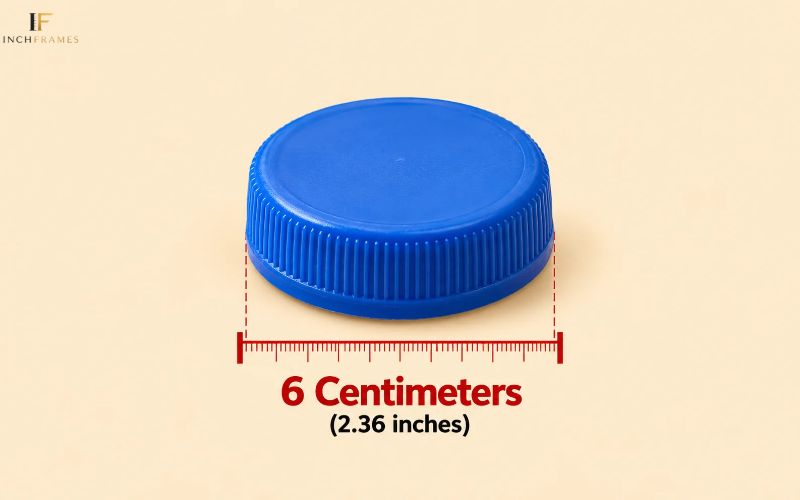
A 6 cm bottle cap gives you a simple round reference for understanding the measurement. Imagine measuring straight across the cap from one outside edge to the opposite edge. That distance is 6 centimeters. A round object is especially useful because you can easily see where the measurement begins and ends. The full diameter would be 6 cm, which is the same as 60 millimeters or about 2.36 inches.
Picture placing a ruler across the middle of the cap. From one edge to the other, the 6 cm mark would cover the entire width. This is a handy visual because most people are familiar with bottle caps and lids. You do not need to imagine a complicated shape. Just think of a circular object that measures 6 cm across. If you hold your hand beside it, you can also get a rough visual feeling for how much space 6 cm takes up.
Large Coin — 6 Centimeters
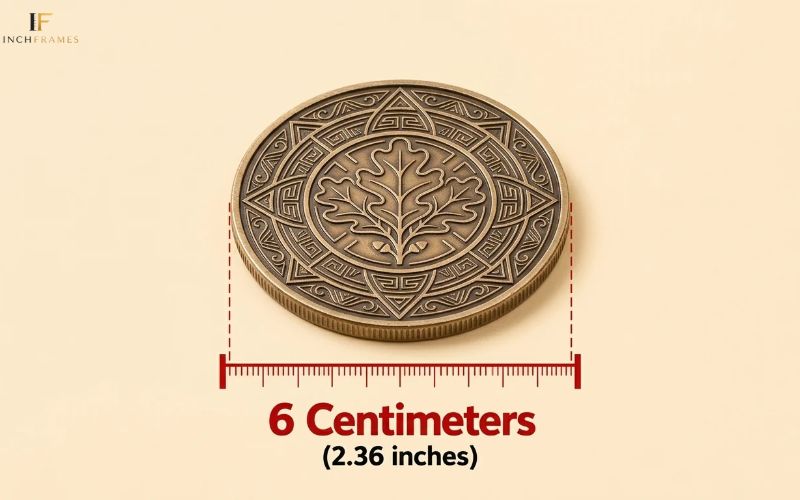
A large round coin can help you picture 6 centimeters from side to side. In this comparison, imagine a coin with a 6 cm diameter. That means the straight line passing through the center of the coin from one edge to the other measures 6 centimeters. In other words, you would need a line 60 mm long to cross the coin through its widest point.
Six centimeters is about 2.36 inches, so this coin would be noticeably wider than a standard small coin. The nice thing about using a coin as a reference is that its round shape makes the measurement easy to understand. You can visualize the full circle first and then imagine a ruler laid across the middle.
Whenever you see a round object that measures 6 cm across, you can use it as a quick mental picture of 6 centimeters.
Related Post: How Big Is 5 Centimeters? Compared to 14 Everyday Objects
Key — 6 Centimeters
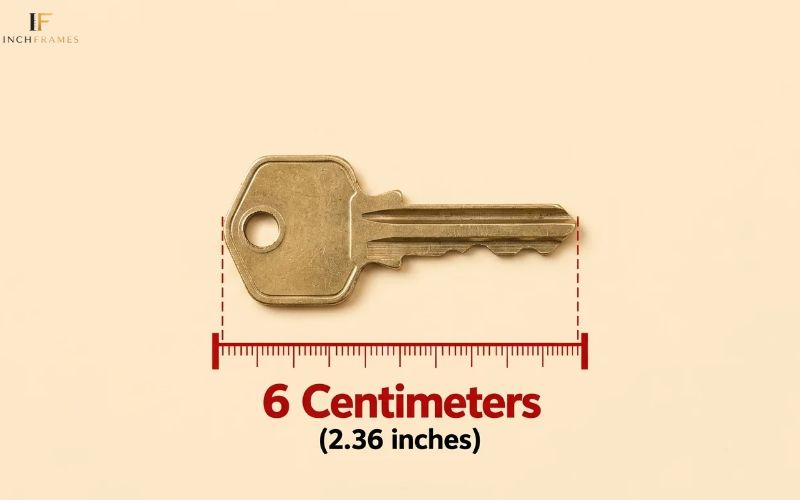
A key that measures 6 centimeters from end to end is another easy way to picture this size. Imagine placing the key flat on a ruler. The tip of the key starts at 0, and its opposite end reaches the 6 cm mark. That complete length represents 6 centimeters.
Six centimeters is 60 millimeters, so this is a relatively short object. It is also about 2.36 inches long. Keys are useful comparisons because most people carry or use them regularly. You can picture a short key sitting across your palm and imagine its full length measuring 6 cm.
If you are trying to estimate 6 cm without a ruler, a key can help you build a rough visual reference. Just remember that actual keys come in many sizes, so the key in this example is specifically being used as a 6 cm length reference.
Marker Cap — 6 Centimeters
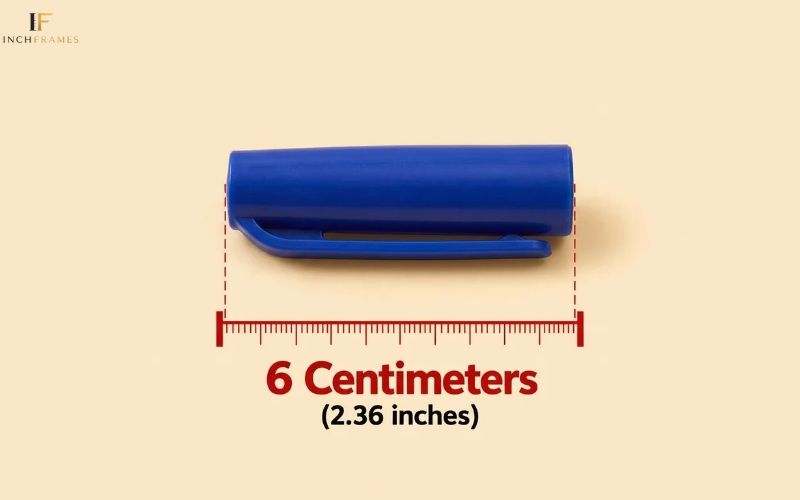
A marker cap measuring 6 centimeters long gives you another familiar comparison. Picture a marker cap lying flat on a table. Measure from one end of the cap to the other, and the distance is 6 cm. That is the same as 60 mm or about 2.36 inches.
Six centimeters is short enough to fit easily in your hand. A marker cap is also easy to compare with a ruler because it has a straight shape. You can imagine placing the cap beside the first 6 cm of a ruler. The cap would stretch from the starting point to the 6 cm mark.
This example also helps show that 6 cm does not have to mean the width of a round object. Here, it represents length. When visualizing measurements, this is a useful trick: look for familiar objects with straight edges and imagine measuring one specific section that is 6 cm long.
Small Candle — 6 Centimeters
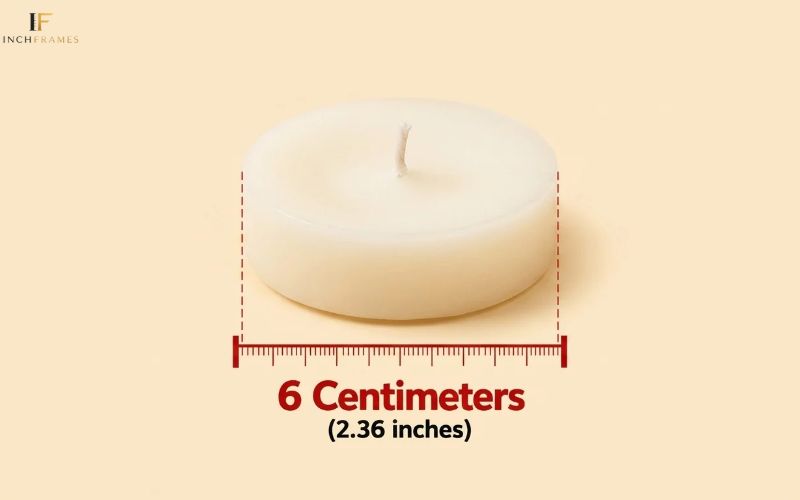
A small candle that measures 6 centimeters across gives you a wider, round example of the measurement. Imagine looking at the candle from above. The distance from one side of the candle to the opposite side is 6 cm. That is its diameter. Six centimeters equals 60 mm, so the candle would have a noticeable width without being particularly large.
You can picture a ruler placed across the top of the candle. The ruler would show 0 cm at one edge and 6 cm at the other edge. This makes the comparison easy because you are not measuring the candle’s height. You are measuring its width from side to side.
A 6 cm candle can also help you understand why the same measurement can look different depending on the object. Six centimeters stretched in a straight line looks different from 6 cm across a round candle, but the actual distance is exactly the same.
Related Post: How Big Is 4 Centimeters? Compared to 12 Everyday Objects
Lip Balm — 6 Centimeters
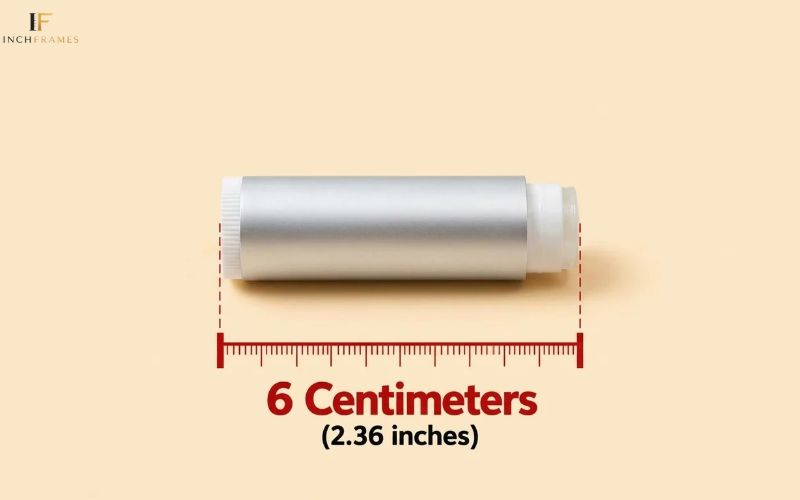
A lip balm that measures 6 centimeters from one end to the other is a useful everyday comparison. Imagine placing the lip balm beside a ruler. Its full length reaches from 0 to the 6 cm mark. That gives you a simple picture of 6 centimeters.
Six centimeters is equal to 2.36 inches, so the lip balm would be a little shorter than 2½ inches. Because lip balm containers are small and familiar, they can help you understand just how compact 6 cm really is. You could comfortably hold a 6 cm object between your fingers.
For this comparison, the important measurement is the 6 cm length, not the thickness of the lip balm. When you hear someone say something is 6 cm long, you can mentally picture a small personal-care item extending about the same distance as this example.
Small Watch — 6 Centimeters
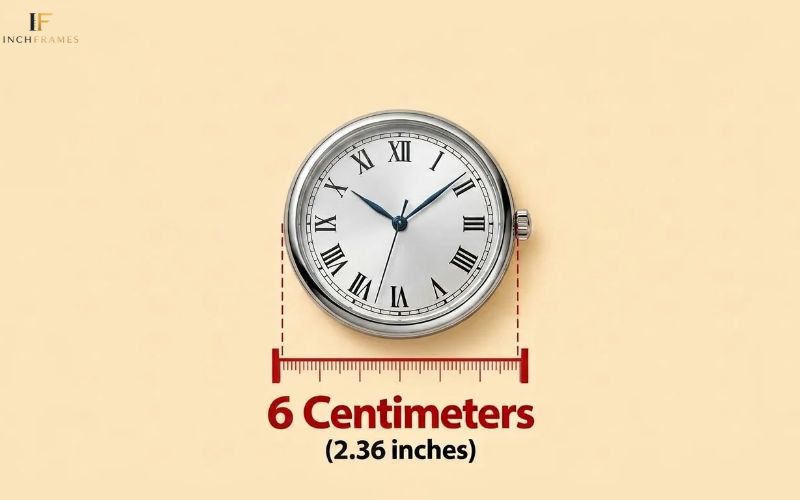
A small watch can also help you visualize 6 centimeters when its face measures 6 cm across. Imagine the watch face as a circle. Draw an imaginary straight line from one edge through the center to the opposite edge. If that distance is 6 centimeters, the watch face has a 6 cm diameter.
That equals 60 millimeters or approximately 2.36 inches. A 6 cm watch face would be easy to notice on your wrist because it has a fairly visible round face. This comparison is useful because watches are familiar objects. You already know what a watch looks like, so imagining a 6 cm watch face gives your brain a practical reference. Just remember that watches come in many sizes. For this example, we are talking specifically about the 6 cm diameter of the watch face.
Cookie — 6 Centimeters
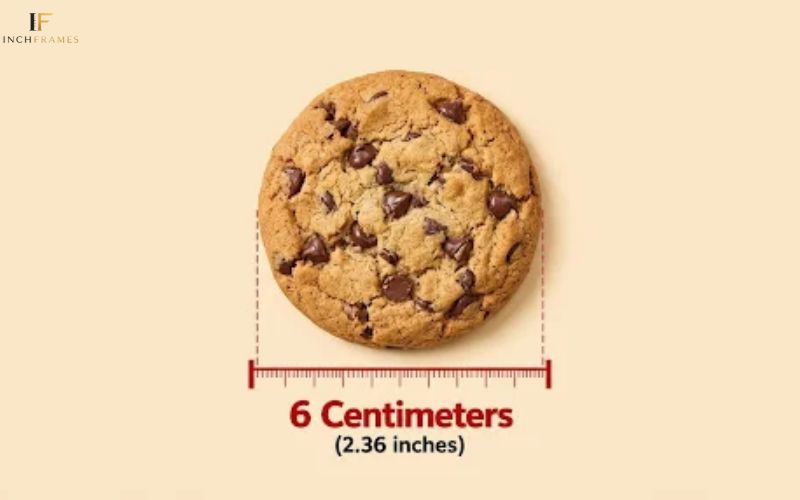
A cookie with a 6 cm diameter is probably one of the easiest food comparisons for this measurement. Imagine a round cookie sitting on a plate. Measure straight across its widest point, and the distance is 6 centimeters. That is about 2.36 inches, so the cookie would be a little smaller than 2½ inches across.
You can easily picture the size because cookies come in many familiar shapes and sizes. A 6 cm cookie is large enough to hold comfortably in your fingers but still small enough to fit easily on a plate. This example also shows why diameter is useful when talking about round objects. Instead of measuring around the outside edge, you simply measure straight across the middle.
So when you think of 6 centimeters, imagine a round cookie measuring exactly 6 cm from one side to the other.
Glue Stick — 6 Centimeters
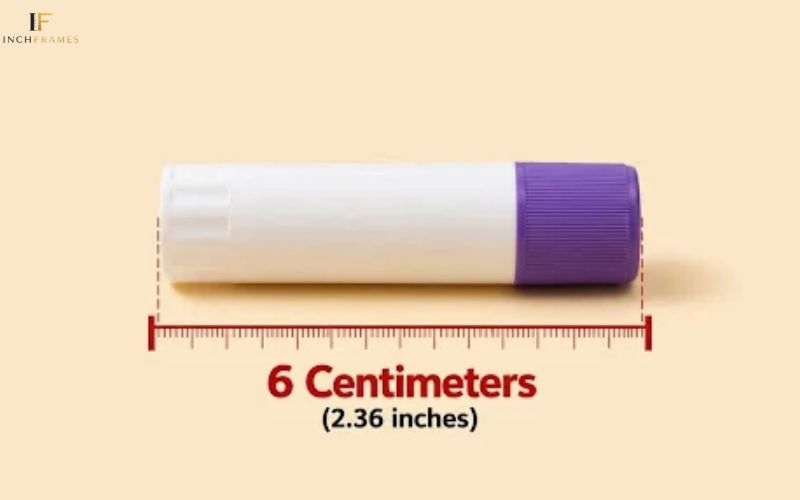
A glue stick can give you a straight-line reference for 6 centimeters. Imagine measuring a section of the glue stick that is exactly 6 cm long. Place one end at the 0 mark on a ruler, and the other end reaches the 6 cm mark. That is 60 millimeters, or about 2.36 inches.
Glue sticks are common in homes, classrooms, and offices, so they can make the measurement easier to picture. Instead of thinking about an abstract number, you can imagine a short section of a familiar stationery item. The important part here is the 6 cm length being measured. Different glue sticks have different overall dimensions, so we are using a specific 6 cm section as the reference. This is a useful way to understand measurements when an object is longer than the measurement you are trying to visualize.
Related Post: 11 Everyday Things That Are 7 Centimeters Big
Drawer Knob — 6 Centimeters
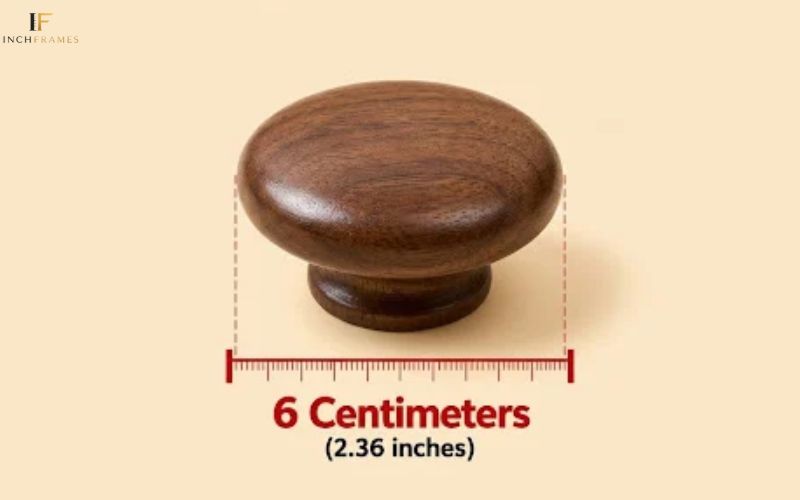
A drawer knob measuring 6 centimeters across gives you another simple round comparison. Imagine looking at the knob from the front. Measure straight across its widest part. The distance from one outside edge to the other is 6 cm.
That is equal to 60 mm or 2.36 inches. A 6 cm knob would be large enough to notice immediately when you see it on a drawer or cabinet. You could place a ruler across the front and see the 6 cm distance clearly.
This example is useful because knobs are common household objects. You may have them on kitchen cabinets, bedroom drawers, desks, or storage furniture. Whenever you need to picture 6 cm, imagine a round drawer knob with a diameter of exactly 6 centimeters. The shape makes the measurement easy to understand.
Toothbrush Head — 6 Centimeters
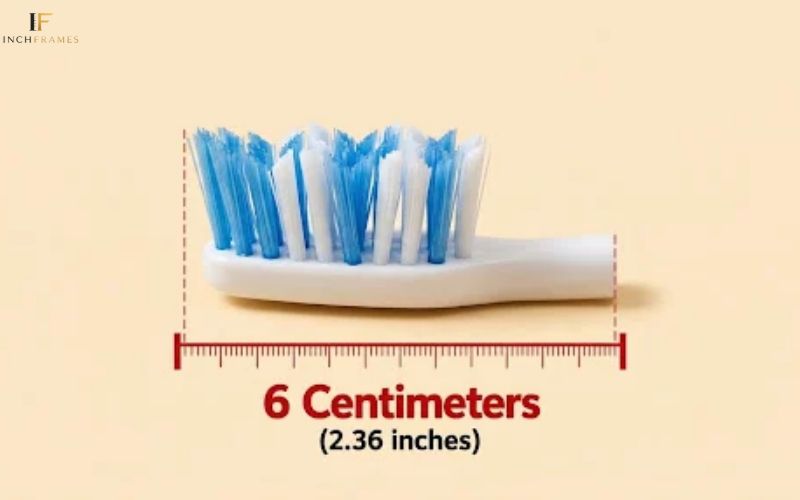
A toothbrush head that measures 6 centimeters from one end to the other can help you visualize a straight 6 cm length. Place the toothbrush head beside a ruler and measure along its longest section. The distance from the first end to the other end is 6 centimeters.
That equals 60 millimeters or about 2.36 inches. The toothbrush head is a useful comparison because it is a familiar object with a clear beginning and ending point. You can easily imagine holding one in your hand and seeing how much space 6 cm covers.
For this comparison, we are measuring the length of the toothbrush head, not the handle. The next time you see a toothbrush head, you can mentally imagine a 6 cm line running along it. That gives you a much better sense of the measurement than simply seeing the number “6” written down.
Small Phone — 6 Centimeters
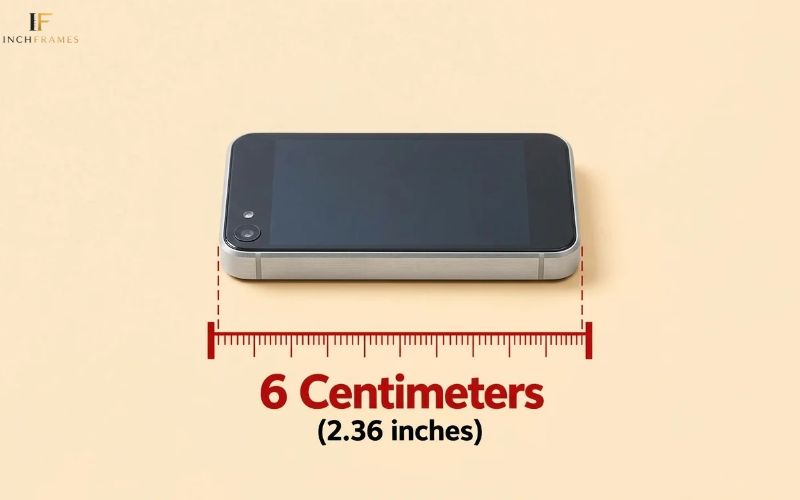
A small phone can help you understand 6 cm when you focus on its width. Imagine a compact phone that is 6 centimeters wide from one side to the other. Place a ruler across the shorter edge, and the measurement reaches exactly 6 cm. Six centimeters is about 2.36 inches, so a 6 cm width is relatively narrow compared with many modern smartphones.
This comparison can be especially useful because most people know roughly how wide a phone feels in their hand. Instead of imagining an unfamiliar measurement, you can picture a phone that is 6 cm across.
Phone sizes vary greatly, though, so the important part of this example is the 6 cm width rather than the overall phone size. It shows how 6 cm can describe the width of a larger object even when the object itself is much longer.
Pencil Section — 6 Centimeters
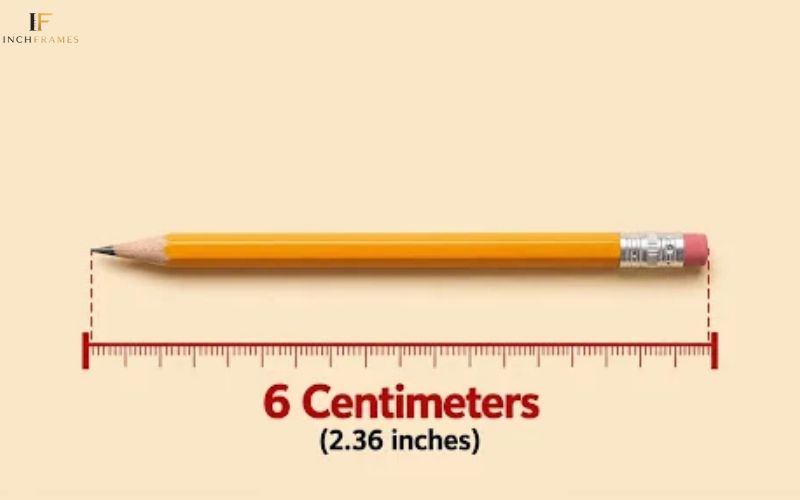
A pencil is longer than 6 cm, but you can use a 6 cm section of the pencil to understand the measurement. Imagine placing the pencil beside a ruler and marking a line at the 6 cm point. The section from the pencil’s tip to that mark is 6 centimeters long.
That is equal to 60 mm or approximately 2.36 inches. This is a useful comparison because pencils are straight and easy to measure. You can clearly see where the 6 cm section begins and ends.
If you do not have a ruler, you can still picture a short part of a pencil that is a little less than 2½ inches long. The entire pencil does not need to be 6 cm. We are using a specific 6 cm section of it as our visual reference.
Butter Knife Handle — 6 Centimeters
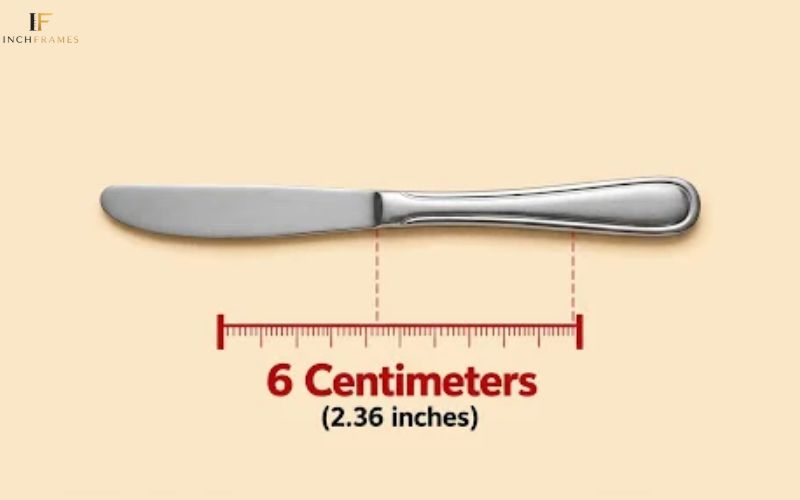
A butter knife handle can provide another familiar straight-line reference. Imagine measuring a 6 cm section of the handle from one point to another.
That distance is 6 centimeters, which is 60 millimeters or about 2.36 inches. The handle gives you a practical way to imagine the length because it is straight and easy to hold. You can picture a ruler placed along the handle with the 6 cm mark showing where the measured section ends.
The entire handle will usually be longer than 6 cm, so the key here is the 6 cm section. This example is helpful because it reminds us that a measurement can describe only part of an object. When someone says something is 6 cm long, always check which part or dimension they mean.
How to Measure 6 Centimeters Without a Ruler
You can estimate 6 centimeters even when you do not have a ruler nearby. These methods will not replace an actual measurement, but they can help you get a useful visual estimate.
Use the Width of Your Fingers
Look at your fingers and choose a short section that is close to 6 cm. Hand sizes vary, so this is only an estimate.
Use Your Thumb
The length or width of your thumb can provide a rough comparison. Place an imaginary 6 cm line beside your thumb and compare the two.
Use a 2.36-Inch Reference
Since 6 cm equals about 2.36 inches, you can picture a little less than 2½ inches. If you already understand what 2 inches looks like, add another 0.36 inch.
Use a Known Object
Choose a familiar object and mark a 6 cm section on it. A pencil, key, or straight handle can work well. Once you have seen that distance several times, it becomes easier to recognize.
Is 6 Centimeters Big or Small?
Six centimeters is generally considered a small measurement.
It is only 2.36 inches, so it would not describe a large household object. However, 6 cm is large enough to be easily seen and measured.
For small objects such as buttons, cookies, caps, handles, craft pieces, and other household items, 6 cm can be a very useful size.
Think of it as a distance that is a little longer than 2 inches but clearly shorter than 3 inches.
Related Post: How Big Is 8 Centimeters? 10 Everyday Things That Are 8 CM Big
FAQs About 6 Centimeters
How big is 6 centimeters?
6 centimeters is 60 millimeters or about 2.36 inches. It is a little less than 2½ inches long.
Is 6 cm the same as 2 inches?
No. 2 inches equals 5.08 cm, while 6 cm equals about 2.36 inches. So 6 cm is slightly longer than 2 inches.
Is 6 cm bigger than 5 cm?
Yes. 6 cm is exactly 1 centimeter longer than 5 cm.
How many inches are in 6 centimeters?
There are approximately 2.36 inches in 6 centimeters.
What does 6 cm look like?
A straight 6 cm line looks a little longer than 2 inches and shorter than 2½ inches. You can also picture a round object measuring 6 cm across.
How many millimeters are 6 centimeters?
6 centimeters equals 60 millimeters.
Can I measure 6 cm without a ruler?
Yes, you can estimate it using your fingers, thumb, or a familiar object. These methods are useful for rough estimates, but a ruler or measuring tape is needed for an exact measurement.
Is 6 centimeters a large measurement?
No. Six centimeters is a relatively small measurement. It is commonly useful for describing small objects, short sections, widths, and diameters.
Final Thoughts
6 centimeters is equal to 60 millimeters, 2.36 inches, and about 0.197 feet. The easiest way to picture it is as a straight line a little longer than 2 inches but shorter than 2½ inches.
Everyday objects can make the measurement much easier to understand. A 6 cm bottle cap, 6 cm coin, 6 cm key, 6 cm marker section, 6 cm cookie, or 6 cm object width gives your mind something familiar to work with.
The main thing to remember is that 6 cm is not a huge distance. It is a small, noticeable measurement that works well for everyday objects and short distances. Once you compare it with a few familiar things, you will have a much better idea of what 6 centimeters actually looks like.
